
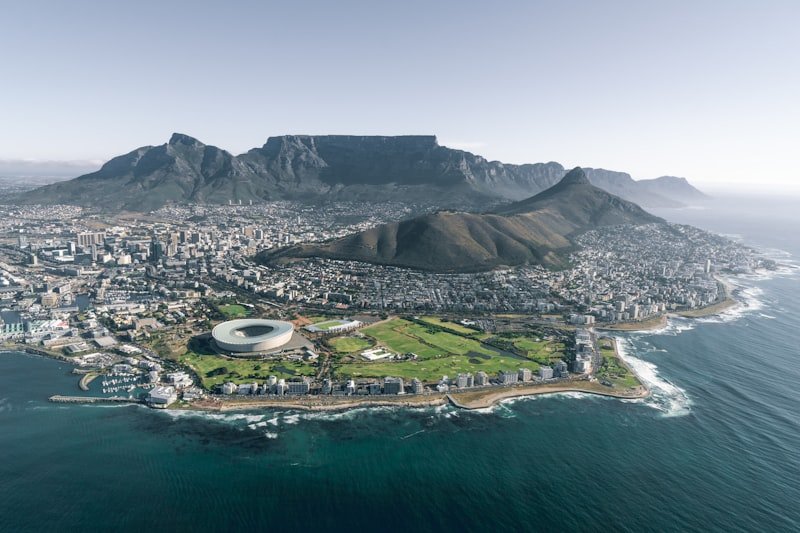
South Africa's government has deployed the South African National Defence Force (SANDF) to Cape Town's violence-plagued townships, launching a security intervention aimed at reasserting state authority over neighbourhoods that have long operated beyond the reach of regular policing. The deployment, confirmed by France 24 on April 9, 2026, comes after months of escalating gang violence, murder rates that have reached crisis proportions, and the near-complete breakdown of public safety in communities including Mitchell's Plain, Khayelitsha, and Bishop Lavis. The army on the streets of Cape Town is a dramatic escalation — and an admission that the South African Police Service (SAPS) is overwhelmed by the scope of the crisis.
A Crisis Years in the Making
Cape Town's townships have for years been contending with gang violence that international observers have compared to urban warfare. Criminal organisations control territory, weapons, and drug supply chains with a sophistication that frequently outmatches local police. Murder rates in some townships exceed 100 per 100,000 residents annually — more than twenty times the global average. The immediate trigger for military deployment was a spate of killings in late March and early April 2026 that left over 60 people dead in a two-week period, many of them bystanders including women and children caught in crossfire.
The Limits of Police and the Case for Military Intervention
SAPS is chronically understaffed, underfunded, and demoralised. The police budget has failed to keep pace with population growth and urbanisation, leaving patrol units undermanned and detectives overloaded. The Independent Police Investigative Directorate received over 4,000 complaint cases against police officers in the most recent reporting year, ranging from corruption to torture. Critics of military deployment point to the risk of human rights abuses by soldiers untrained for civilian policing, and the failure to address root causes of criminality: school dropout rates, unemployment, the drug trade, and the intergenerational trauma of apartheid.
Community Responses: Relief and Scepticism
Reactions in the affected townships have been divided. Some residents welcomed the sight of army patrols, noting that criminal groups had largely withdrawn from main roads since the deployment began — though underlying criminal infrastructure remains intact. Sceptics pointed out that previous military deployments had produced temporary improvements followed by deterioration once troops were withdrawn. Analysts have warned that without a parallel programme of economic investment, education, and youth development, the intervention risks being little more than a security short-term fix.
Conclusion
The sight of soldiers patrolling the streets of Cape Town is a stark illustration of the gap between South Africa's post-apartheid aspirations and its daily reality in its most marginalised communities. Gang violence in the city's townships is a multi-decade problem that will not be solved by a military deployment. What is needed — alongside immediate security stabilisation — is a sustained, funded, and coordinated strategy that treats the townships as partners rather than problems. Until that commitment is made in earnest, the army will keep being called in, and the same cycles will keep repeating.