 (No Ratings Yet)
 Loading...
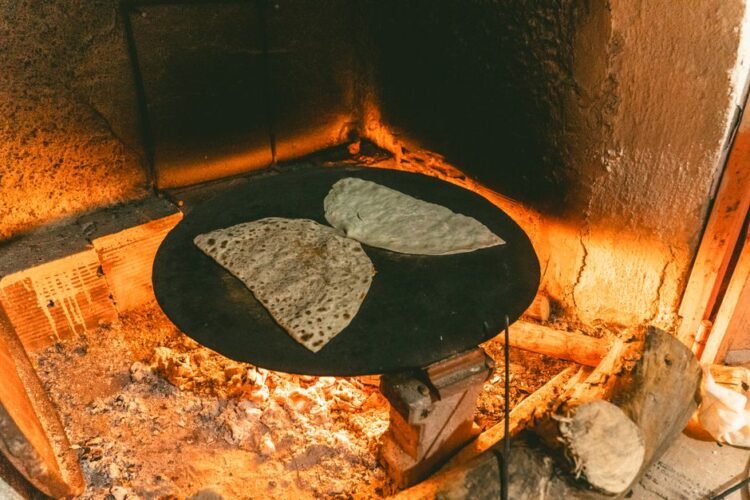
A traditional Scandinavian flatbread made from riced potatoes and flour, rolled paper-thin and cooked on a hot dry griddle. Lefse is tender, pliable, and perfect folded around butter, sugar, and cinnamon or layered with savory fillings.
Prep Time35 mins
Cook Time25 mins
Total Time60 mins
Servings8
Yield8 flatbreads
Nutrition Facts
Per serving (estimated)
- 215 kcalCalories
- 7 gFat
- 4 gSaturated Fat
- 33 gCarbs
- 2 gFiber
- 1 gSugar
- 4 gProtein
- 135 mgSodium
- 290 mgPotassium
- 25 mgCalcium
- 1.2 mgIron
- 6 mgVitamin C
- 185 mcgVitamin A
Ingredients
For the Dough
- 2 lbs russet potatoes, peeled and quartered
- 1 tsp salt
- 4 tbsp unsalted butter, melted and slightly cooled
- 1/3 cup heavy cream
- 1 1/2 cups all-purpose flour, plus more for dusting
For Rolling and Griddling
- 1/2 cup all-purpose flour, for dusting the work surface
- 2 tbsp melted butter, for brushing cooked lefse
Directions
- Place the quartered potatoes in a large pot, cover with cold salted water, and bring to a boil. Cook for 15-18 minutes until completely tender when pierced with a knife.
- Drain the potatoes thoroughly and return them to the warm pot for 1-2 minutes to evaporate excess moisture. Press them through a potato ricer or food mill into a large bowl while still hot.
- Stir in the salt, melted butter, and heavy cream. Mix just until combined, then cover and refrigerate the potato mixture until completely cool, about 1 hour.
- Working on a generously floured surface, gently knead 1 1/2 cups flour into the cold potato mixture until a soft, pliable dough forms that barely sticks to your hands. Avoid overworking.
- Divide the dough into 8 equal pieces and roll each into a smooth ball. Cover with a clean kitchen towel to prevent drying out.
- Using a floured rolling pin, roll one ball at a time into a very thin round about 10-12 inches across, lifting and turning frequently to prevent sticking. The lefse should be almost translucent.
- Heat a dry nonstick griddle or large skillet over medium-high heat (around 400°F). Carefully transfer the rolled dough to the hot griddle using a floured spatula or lefse stick.
- Cook for 1-2 minutes until small brown spots appear on the underside, then flip and cook 1 minute more. Transfer to a plate, brush lightly with melted butter, and cover with a clean kitchen towel to keep soft. Repeat with remaining dough.
- Stack the cooked flatbreads between parchment paper or a clean towel. Serve warm folded with butter, a sprinkle of cinnamon sugar, or with smoked salmon and sour cream.
Cook’s Notes
- Use starchy russet potatoes for the fluffiest, most authentic texture; waxy potatoes will produce gummy dough.
- The potato mixture must be completely cold before adding flour, otherwise the dough will be sticky and difficult to roll.
- For best results, roll the dough as thin as possible — traditional lefse is nearly translucent.
- Lefse improves with resting; wrap cooled flatbreads in foil and store at room temperature up to 2 days, or freeze layered between parchment for up to 3 months.
- Lefse sticks are the traditional Scandinavian turning tool, but a thin metal spatula works well for flipping the delicate rounds.