 (No Ratings Yet)
 Loading...
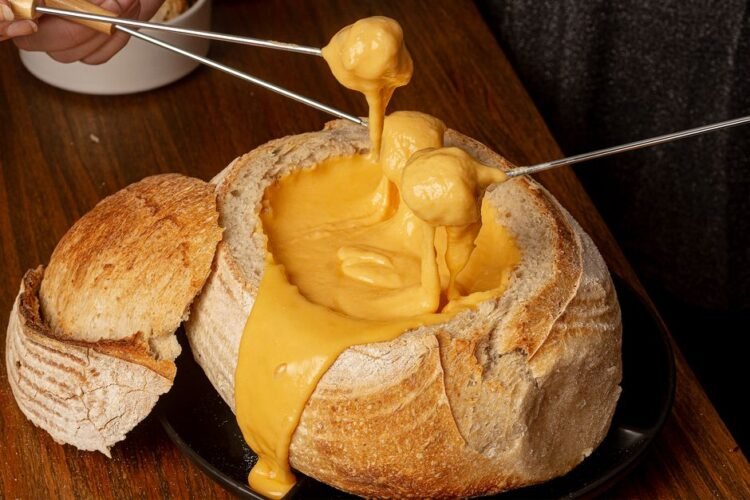
A bubbling caquelon of melted Gruyère and Emmental whisked with white wine, kirsch, and a whisper of garlic is Switzerland's most iconic shared meal. Cubes of crusty baguette are speared on long fondue forks and swirled through the silky, golden pot until stretchy strands of cheese coat the bread.
Prep Time15 mins
Cook Time25 mins
Total Time40 mins
Servings4
Yield4 servings
Nutrition Facts
Per serving (estimated)
- 560 kcalCalories
- 28 gFat
- 16 gSaturated Fat
- 38 gCarbs
- 2 gFiber
- 3 gSugar
- 28 gProtein
- 720 mgSodium
- 220 mgPotassium
- 650 mgCalcium
- 1.5 mgIron
- 1 mgVitamin C
- 220 mcgVitamin A
Ingredients
For the Fondue Base
- 1 large garlic clove, halved crosswise
- 1 1/2 cups (360 ml) dry white wine, such as Sauvignon Blanc or Swiss Fendant
- 8 oz (225 g) Gruyère AOP cheese, grated
- 8 oz (225 g) Emmentaler AOP cheese, grated
- 1 tbsp cornstarch
- 2 tbsp kirsch (cherry brandy)
- 1/4 tsp freshly grated nutmeg
- Pinch of white pepper
For Dipping
- 1 large crusty baguette or country loaf, cut into 1-inch cubes (about 8 oz / 225 g)
- Optional: 1 lb (450 g) baby potatoes, boiled until tender
- Optional: 2 cups blanched broccoli or cauliflower florets
- Optional: cornichons and small pickled pearl onions, for serving
Directions
- Rub the inside of a fondue pot (caquelon) all over with the cut sides of the garlic clove to coat the walls, then discard the garlic.
- Pour the white wine into the pot and set it over medium heat on the stovetop; warm the wine until small bubbles rise to the surface, but do not let it boil.
- In a mixing bowl, toss the grated Gruyère and Emmental with the cornstarch until every shred is lightly dusted — this helps stabilize the fondue and prevents splitting.
- Add the cheese to the warm wine a generous handful at a time, stirring slowly in a continuous figure-eight motion with a wooden spoon, letting each addition melt fully before adding the next.
- Once all the cheese has been incorporated and the mixture is silky and glossy, stir in the kirsch, nutmeg, and white pepper; taste and adjust seasoning.
- Transfer the pot to its stand over a fondue burner, tea light, or canned heat source and adjust the flame so the fondue keeps a gentle, lazy bubble — never a rolling boil.
- Spear a bread cube (or potato or blanched vegetable) on a fondue fork and dip it into the cheese, stirring the pot gently every few minutes to keep the surface smooth.
- If the fondue thickens too much as you eat, loosen it with a splash of warm white wine; if it seizes and looks grainy, whisk 1 tsp cornstarch into 1 tbsp cold wine and stir that in vigorously to bring it back together.
- Serve immediately while hot and stretchy, with extra cubed bread and any optional dippers arranged around the pot.
- Dunk, swirl, eat — and remember the Swiss custom: whoever drops their bread in the pot buys the next round of drinks.
Cook’s Notes
- Use true Alpine cheeses labeled AOP (Gruyère and Emmentaler from Switzerland) for the best nutty, tangy flavor; pre-shredded cheese is coated in anti-caking starch and will make the fondue grainy.
- Never let the fondue come to a full boil — high heat causes the cheese proteins to seize and the emulsion to break, leaving you with a separated, rubbery pot.
- A splash of lemon juice stirred in at the end brightens the cheese if the wine was on the sweet side.
- Bread cubes should be crusty on the outside and slightly open-crumbed so they cling to the cheese without falling apart.
- If no caquelon is available, a small enameled cast-iron pot warmed over a low candle or tea light works beautifully as a substitute.