 (No Ratings Yet)
 Loading...
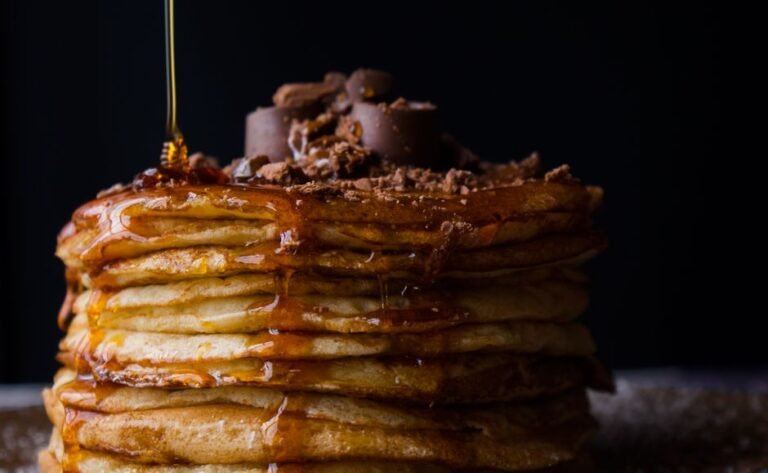
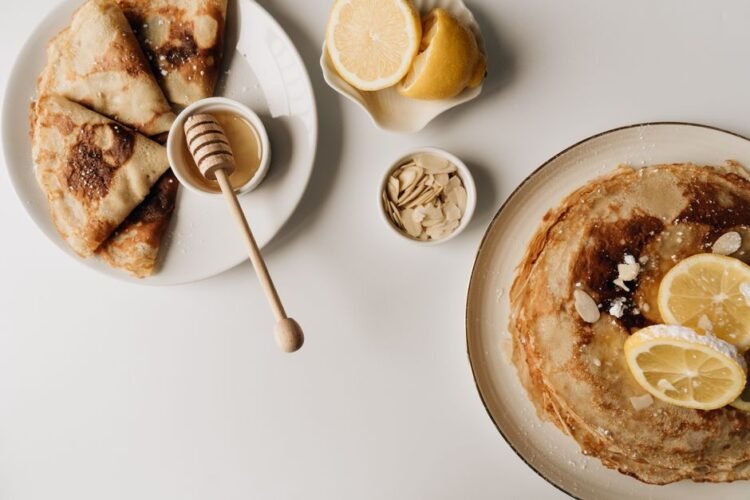
A traditional Djiboutian breakfast bread, this spongy, slightly tangy pancake is made from a simple flour-and-water batter that's briefly fermented to develop its signature honeycomb texture. Cooked on a hot griddle and served warm with honey, ghee, or alongside savory stews, it is a beloved street food across Djibouti.
Prep Time15 mins
Cook Time25 mins
Total Time40 mins
Servings4
Yield4 servings (about 8 pancakes)
Nutrition Facts
Per serving (estimated)
- 280 kcalCalories
- 6 gFat
- 1 gSaturated Fat
- 50 gCarbs
- 2 gFiber
- 2 gSugar
- 7 gProtein
- 300 mgSodium
- 95 mgPotassium
- 20 mgCalcium
- 3 mgIron
- 0 mgVitamin C
- 5 mcgVitamin A
Ingredients
For the batter
- 2 cups (250 g) all-purpose flour
- 1 1/2 cups (360 ml) warm water, about 105°F / 40°C
- 1 tsp active dry yeast
- 1/2 tsp granulated sugar
- 1/2 tsp fine sea salt
- 1 tsp nigella seeds or toasted cumin seeds (optional)
For cooking and serving
- 2 tbsp vegetable oil or clarified butter, for greasing the pan
- Warm honey, for serving
- Softened butter or ghee, for serving
- Plain yogurt or a savory tomato-chili sauce, for serving (optional)
Directions
- In a large bowl, whisk the yeast and sugar into the warm water and let stand 5 to 10 minutes, until foamy on top.
- Add the flour, salt, and nigella seeds (if using) and whisk vigorously for 1 to 2 minutes until completely smooth with no lumps; the batter should be pourable, about the consistency of heavy cream.
- Cover the bowl with a clean kitchen towel and let the batter rise in a warm spot for 1 to 2 hours, until bubbly, foamy, and roughly doubled in volume with a layer of small holes across the surface.
- Stir the batter gently with a spoon for a few seconds to deflate; do not overmix.
- Heat a large nonstick skillet or flat griddle over medium heat (about 350°F / 175°C) and lightly brush with a thin layer of oil.
- Pour roughly 1/3 cup (80 ml) of batter into the pan for each pancake, spacing them a few inches apart; do not spread the batter, as it will spread on its own and form natural holes.
- Immediately cover the pan with a lid and cook for 2 to 3 minutes, until the top surface is set and full of small open holes, the edges look dry, and the bottom is golden.
- Carefully flip each pancake and cook the second side for 30 to 60 seconds just to set it; transfer to a plate and keep warm, loosely tented with foil or wrapped in a clean kitchen towel.
- Repeat with the remaining batter, brushing the pan lightly with oil between batches; serve the pancakes hot, stacked and torn or folded, drizzled with honey and topped with butter, or alongside a savory stew.
Cook’s Notes
- The batter is meant to be very thin — looser than typical American pancake batter — to create the airy, honeycomb texture; resist the urge to add more flour.
- Covering the pan with a lid traps steam and helps the top of the pancake set without needing oil on that side.
- For a more deeply tangy flavor, let the batter ferment the full 2 hours, or even overnight in the refrigerator.
- Traditionally, lahoh is cooked on one side only and stacked in a clean cloth to soften the top; flipping is optional for a slightly drier, toastier result.
- Serve alongside a spiced meat stew or simply with honey and butter for a classic Djiboutian breakfast.