 (No Ratings Yet)
 Loading...
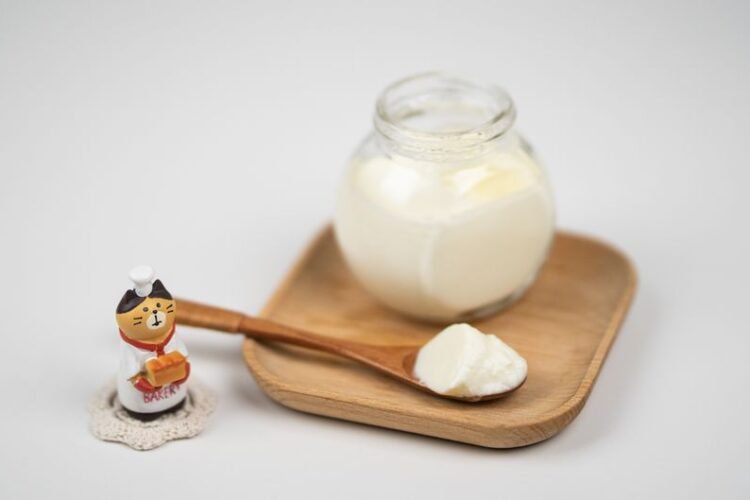
This traditional Mongolian cultured yogurt captures the tangy, slightly effervescent character of tarag, a beloved everyday dairy across Mongolia. Made by fermenting whole milk with a live culture until thick, creamy, and pleasantly sour, it can be eaten plain with honey, sipped as a cooling drink, or stirred into sauces for grilled meats. The slow, warm fermentation gives it a depth of flavor that store-bought yogurt rarely achieves.
Prep Time10 mins
Cook Time20 mins
Total Time30 mins
Servings6
Yield6 cups (about 1.4 L)
Nutrition Facts
Per serving (estimated)
- 150 kcalCalories
- 8 gFat
- 5 gSaturated Fat
- 11 gCarbs
- 0 gFiber
- 9 gSugar
- 8 gProtein
- 110 mgSodium
- 340 mgPotassium
- 280 mgCalcium
- 0.1 mgIron
- 1 mgVitamin C
- 130 mcgVitamin A
Ingredients
For the cultured yogurt
- 8 cups (2 L) whole cow's milk, preferably not ultra-pasteurized
- 1/4 cup (60 ml) plain whole-milk yogurt with live active cultures, OR 2 tablespoons kefir grains, OR 1/4 cup reserved previous batch
- 1 tablespoon heavy cream (optional, for a richer mouthfeel)
- 1 small pinch fine sea salt (optional, helps the curd set firmer)
For finishing and serving
- Cheesecloth or a clean cotton napkin for draining
- Raw honey, for drizzling
- Fresh berries or lightly toasted oats, for topping
- Cold water or fruit juice, if blending into a drink
Directions
- Pour the milk into a heavy-bottomed pot and slowly heat it to 180°F (82°C), stirring often to prevent scorching; this step denatures the whey proteins and produces a thicker final yogurt.
- Remove the pot from the heat and let the milk cool to 110°F (43°C), about 30 to 40 minutes; an ice-water bath can speed this up if you are in a hurry.
- Whisk about 1/2 cup of the warm milk into the starter culture in a small bowl until completely smooth, then pour that mixture back into the pot and stir gently to distribute.
- If using kefir grains, pour the inoculated milk into a clean glass jar, drop in the grains, and cover with a breathable cloth secured with a rubber band. If using yogurt starter, pour into a clean jar or pre-warmed thermos and seal the lid loosely.
- Cover the container with a clean kitchen towel and let it ferment in a warm, draft-free spot (75 to 85°F / 24 to 29°C) for 12 to 18 hours; the yogurt is ready when it smells pleasantly tangy and has just set, holding a spoon standing upright.
- Transfer the jar to the refrigerator and chill for at least 4 hours; this halts the fermentation and firms the texture further.
- For a thicker, spoonable tarag, line a fine-mesh sieve with cheesecloth, set it over a bowl, and spoon in the chilled yogurt. Refrigerate and let it drain for 2 to 4 hours until it reaches the consistency you like; reserve the tangy whey for bread dough or drinking.
- Stir the finished yogurt gently to smooth it out, then serve cold on its own, drizzled with honey and topped with berries, or blend with cold water and a little honey for a refreshing summer drink.
Cook’s Notes
- Use the freshest milk you can find; ultra-pasteurized milk yields a thinner, less flavorful yogurt because the proteins have been heavily denatured.
- Sanitize jars, spoons, and lids with boiling water before use; stray bacteria can throw off the flavor or cause the batch to spoil.
- In traditional Mongolian homes, tarag is often fermented in a covered pot near the cookstove, where residual warmth holds it at a steady temperature for 12 to 24 hours.
- The longer you ferment, the tangier and slightly more effervescent the yogurt becomes; aim for 12 hours for a mild flavor and up to 24 hours for the robust, traditional taste.
- Save 1/4 cup of each batch in a clean jar in the fridge to inoculate the next one, the way Mongolian families have passed their starter down for generations.