 (No Ratings Yet)
 Loading...
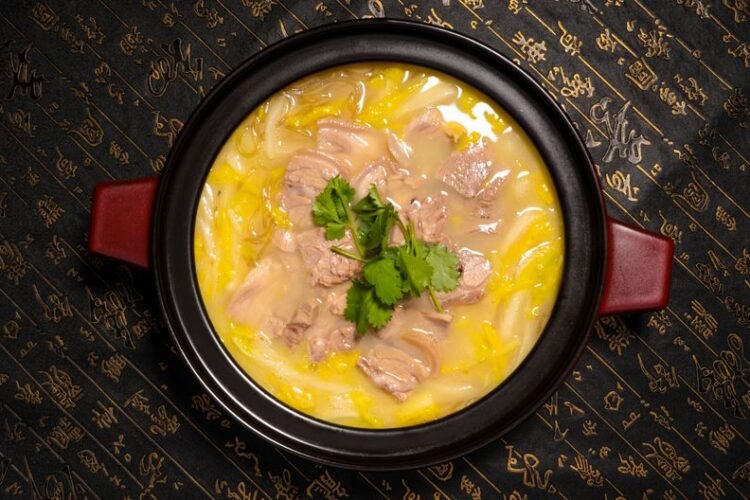
A traditional Mongolian one-pot dish of tender lamb, soft onions, and sweet carrots simmered with fresh hand-rolled flat noodles that steam right in the pot. Unlike stir-fried noodle dishes, the noodles absorb the savory lamb broth as they cook, giving every bite a rich, meaty flavor. It is hearty, simple, and perfect for cold steppe evenings.
Prep Time30 mins
Cook Time45 mins
Total Time75 mins
Servings4
Yield4 generous servings
Nutrition Facts
Per serving (estimated)
- 640 kcalCalories
- 26 gFat
- 9 gSaturated Fat
- 58 gCarbs
- 5 gFiber
- 7 gSugar
- 41 gProtein
- 780 mgSodium
- 780 mgPotassium
- 95 mgCalcium
- 5 mgIron
- 18 mgVitamin C
- 320 mcgVitamin A
Ingredients
For the hand-rolled noodles
- 2 cups all-purpose flour, plus extra for dusting
- 1/2 tsp fine salt
- 1 large egg
- 1/2 cup cool water, plus more if needed
For the lamb
- 1.5 lbs boneless lamb shoulder, trimmed and cut into 3/4-inch pieces
- 3 tbsp rendered lamb fat or vegetable oil
- 1 1/2 tsp kosher salt
- 1/2 tsp freshly ground black pepper
For the vegetables and finishing
- 2 large yellow onions, halved and sliced thin
- 2 medium carrots, peeled and cut into thin matchsticks
- 1/4 small green cabbage, cored and shredded (about 2 cups)
- 2 cloves garlic, finely minced
- 2 1/2 cups water or low-sodium lamb broth
- 1/4 cup chopped fresh flat-leaf parsley or dill, for serving
Directions
- Make the dough: In a medium bowl, whisk the flour and salt. Add the egg and water and stir with a fork until a shaggy dough forms. Turn out onto a lightly floured surface and knead for 8 to 10 minutes until smooth and elastic. Cover with a clean towel and let rest for 20 minutes.
- Shape the noodles: Divide the rested dough into two pieces. Roll each piece into a thin rectangle about 1/8-inch thick. Dust lightly with flour, fold loosely into thirds, and slice across the fold into 1/2-inch wide strips. Unfold the strips and toss with a little flour to keep them from sticking. Set aside.
- Brown the lamb: Heat the lamb fat or oil in a heavy Dutch oven or deep skillet over medium-high heat. Add the lamb in a single layer and sear, turning occasionally, until deeply browned on all sides, about 6 to 7 minutes. Transfer to a plate.
- Build the base: Pour off all but about 2 tablespoons of fat from the pot. Add the sliced onions and cook over medium heat, stirring, until soft and golden at the edges, about 6 minutes. Stir in the carrots and cabbage and cook for another 3 minutes until they begin to wilt. Add the garlic and cook for 30 seconds until fragrant.
- Simmer the broth: Return the browned lamb and any juices to the pot. Pour in the water or broth and add the salt and pepper. Bring to a gentle boil, then reduce the heat to a steady simmer and cook for 10 minutes so the lamb becomes tender and the broth is richly flavored.
- Add the noodles: Scatter the fresh hand-rolled noodles over the top of the simmering lamb mixture in an even layer. Press them down gently so they are just submerged in the broth. Cover the pot tightly with a lid, reduce the heat to low, and cook undisturbed for 18 to 22 minutes, until the noodles are tender and have absorbed most of the liquid.
- Finish the dish: Remove the lid and use tongs or two forks to toss the noodles, lamb, and vegetables together until evenly combined. The noodles should be plump and glossy, with no standing liquid left in the pot. Taste and adjust salt.
- Rest and serve: Let the pot sit off the heat, covered, for 5 minutes so the noodles firm up slightly. Spoon into warm bowls, scatter with fresh parsley or dill, and serve hot.
Cook’s Notes
- Cut the lamb while it is partially frozen for cleaner, more uniform cubes that brown evenly.
- If the noodles soak up the broth before they are fully tender, add 1/4 cup hot water and continue cooking covered for a few more minutes.
- For a smokier finish, briefly char the cooked noodles in a dry hot skillet for 1 to 2 minutes before tossing with the lamb.
- Tsuivan is traditionally eaten with a small dish of hot salted milk tea on the side, which balances the rich lamb.
- Leftover noodles reheat best in a splash of broth over low heat, since microwaving tends to dry them out.