 (No Ratings Yet)
 Loading...
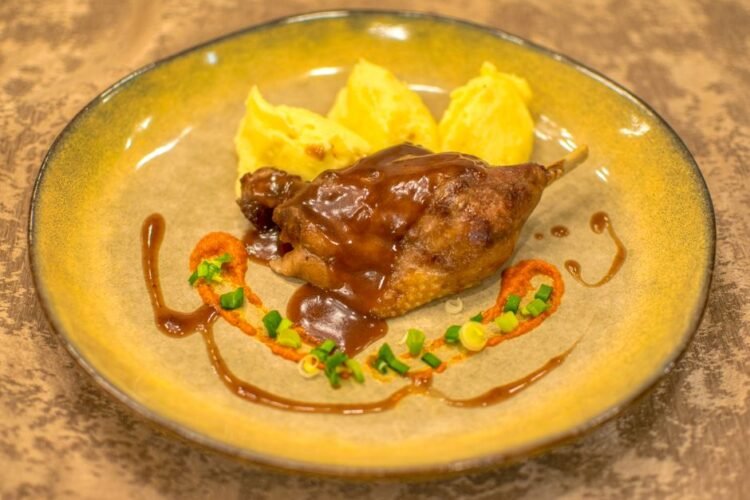
A hallmark of Gascony in southwest France, duck leg confit is the original make-ahead comfort food. Salt-cured duck legs are gently submerged in their own rendered fat and slow-cooked until the meat is meltingly tender, then crisped in a hot pan until the skin turns deep golden brown.
Prep Time20 mins
Cook Time180 mins
Total Time200 mins
Servings4
Yield4 duck legs
Nutrition Facts
Per serving (estimated)
- 540 kcalCalories
- 42 gFat
- 14 gSaturated Fat
- 1 gCarbs
- 0 gFiber
- 0 gSugar
- 38 gProtein
- 720 mgSodium
- 380 mgPotassium
- 25 mgCalcium
- 4 mgIron
- 2 mgVitamin C
- 35 mcgVitamin A
Ingredients
For the salt cure
- 4 duck legs, about 1 kg / 2.2 lb total, patted dry
- 3 tbsp coarse sea salt
- 1 tsp freshly cracked black pepper
- 6 garlic cloves, smashed
- 4 dried bay leaves, crumbled
- 1 tbsp fresh thyme leaves
- 1 tsp juniper berries, lightly crushed (optional)
For slow-cooking in duck fat
- 1.5 kg / 3.3 lb rendered duck fat (about 6 cups)
- 2 fresh bay leaves
- 4 garlic cloves, smashed
For crisping and serving
- 1 tbsp reserved duck fat
- Flaky sea salt, to finish
- Freshly cracked black pepper
- 2 tbsp chopped fresh flat-leaf parsley
Directions
- Pat the duck legs completely dry with paper towels. In a small bowl, mix the coarse sea salt, black pepper, crumbled bay leaves, thyme, smashed garlic, and juniper berries if using.
- Rub the salt mixture thoroughly over each duck leg, working it into the skin and flesh. Arrange the legs in a non-reactive dish or large resealable bag, cover, and refrigerate for 24 to 36 hours, turning once halfway through.
- Remove the duck legs and rinse off the cure under cold running water. Pat them very dry with paper towels and let stand at room temperature for 30 minutes.
- In a heavy Dutch oven or cast-iron pot, melt the duck fat with the bay leaves and garlic over low heat. Add the duck legs; the fat should cover them by at least 1 inch (2.5 cm). Add more fat if needed to fully submerge.
- Slowly bring the fat to about 80°C / 175°F and hold it at a gentle bare simmer — never a rolling boil. Cook the duck legs uncovered for 2 to 2½ hours, until the meat is completely tender and pulls cleanly from the bone when prodded.
- Carefully lift the duck legs from the fat and place them skin-side up in a shallow dish. Strain the fat through a fine sieve into a heatproof container and reserve for storage or other cooking.
- To serve, heat 1 tablespoon of the reserved duck fat in a heavy skillet over medium heat. Place the duck legs skin-side down and cook for 4 to 5 minutes until the skin is deeply golden and crisp. Flip and warm the flesh side for 1 minute.
- Transfer to warmed plates, season with flaky sea salt and a few grinds of pepper, and scatter the parsley over the top. Serve immediately with roasted potatoes, Puy lentils, or a bitter green salad dressed with sharp vinaigrette.
Cook’s Notes
- The 24 to 36 hour salt cure is essential — it seasons the meat deeply and draws out excess moisture for better texture.
- Cooked duck legs can be stored submerged in the strained fat in a sealed container in the refrigerator for up to 3 months; this is the traditional French preservation method.
- Use a thermometer to keep the cooking temperature low; anything above 90°C / 195°F will toughen the meat and scorch the fat.
- Save the rendered duck fat after cooking — it is liquid gold for roasting potatoes, sautéing greens, or making another batch of confit.
- For extra-crispy skin, pat the cooked legs dry and rest uncovered in the refrigerator for 1 hour before the final pan-sear.