 (No Ratings Yet)
 Loading...
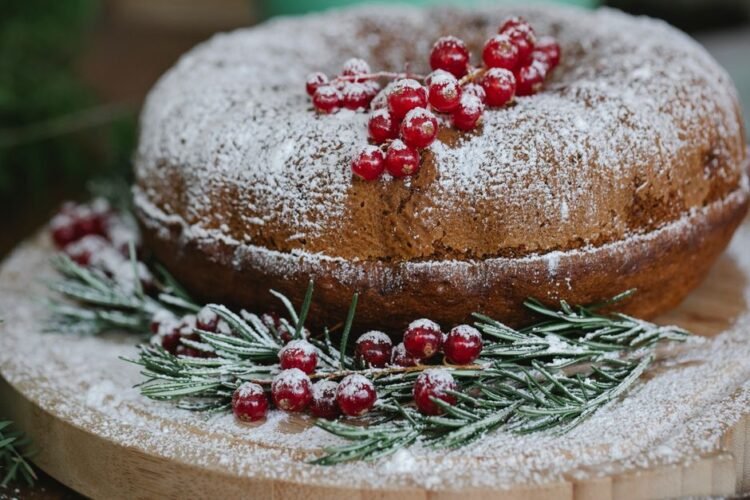
Vasilopita is the iconic Greek New Year cake, baked on January 1st to honor St. Basil and welcome good fortune for the year ahead. A wrapped coin is hidden inside, and whoever finds it in their slice is blessed with luck. This version uses semolina for a tender crumb and orange zest for bright aroma.
Prep Time20 mins
Cook Time55 mins
Total Time75 mins
Servings10
Yield10 slices
Nutrition Facts
Per serving (estimated)
- 480 kcalCalories
- 22 gFat
- 13 gSaturated Fat
- 62 gCarbs
- 2 gFiber
- 32 gSugar
- 9 gProtein
- 220 mgSodium
- 130 mgPotassium
- 80 mgCalcium
- 2.5 mgIron
- 4 mgVitamin C
- 250 mcgVitamin A
Ingredients
For the cake batter
- 3 cups (390 g) all-purpose flour
- 1 cup (170 g) fine semolina
- 1 1/2 cups (300 g) granulated sugar
- 1 cup (225 g) unsalted butter, softened
- 4 large eggs, room temperature
- 1 cup (240 g) plain Greek yogurt
- 1/2 cup (120 ml) fresh orange juice
- 1 tablespoon finely grated orange zest
- 2 teaspoons baking powder
- 1 teaspoon pure vanilla extract
- 1/4 teaspoon fine salt
For decorating and the lucky coin
- 2-3 tablespoons powdered sugar, for dusting
- About 20 whole blanched almonds
- 1 clean coin, wrapped tightly in aluminum foil
Directions
- Preheat the oven to 350°F (175°C). Grease a 10-inch (25 cm) round cake pan, line the base with parchment, and dust lightly with flour.
- In a large bowl, cream the softened butter with the sugar using an electric mixer until pale and fluffy, about 4 minutes. Add the eggs one at a time, beating well after each addition.
- Mix in the Greek yogurt, orange juice, orange zest, and vanilla extract on low speed just until smooth and combined.
- In a separate bowl, whisk together the flour, semolina, baking powder, and salt. Add the dry mixture to the wet mixture in three additions, folding gently with a spatula until no streaks of flour remain; do not overmix.
- Gently press the foil-wrapped coin into the bottom of the batter in the pan so it sinks just below the surface in the center.
- Pour the batter into the prepared pan and smooth the top. Arrange the whole blanched almonds in a decorative ring or in the shape of the new year across the surface.
- Bake on the middle rack for 50 to 60 minutes, until the top is deep golden and a wooden skewer inserted in the center comes out clean. If the surface browns too quickly, tent loosely with foil after 35 minutes.
- Let the cake cool in the pan for 15 minutes, then turn it out onto a wire rack and cool completely.
- Just before serving, dust generously with powdered sugar. Cut carefully into wedges, making sure to note who receives each piece so the coin finder can be celebrated!
Cook’s Notes
- Always wrap the coin thoroughly in aluminum foil or parchment so it never contacts the batter directly; remind guests to bite carefully.
- Tradition calls for cutting the cake in a specific order, often starting with the head of household or a saint's name carved into the top crust.
- For an even more aromatic cake, add 1 tablespoon of brandy or ouzo to the batter along with the vanilla.
- Mastiha (mastic) crystals, ground with a little sugar, give an authentic Greek bakery aroma; add 1 teaspoon if you can find them.
- The cake keeps well covered at room temperature for 3 days, and the flavors deepen by the second day.