 (No Ratings Yet)
 Loading...
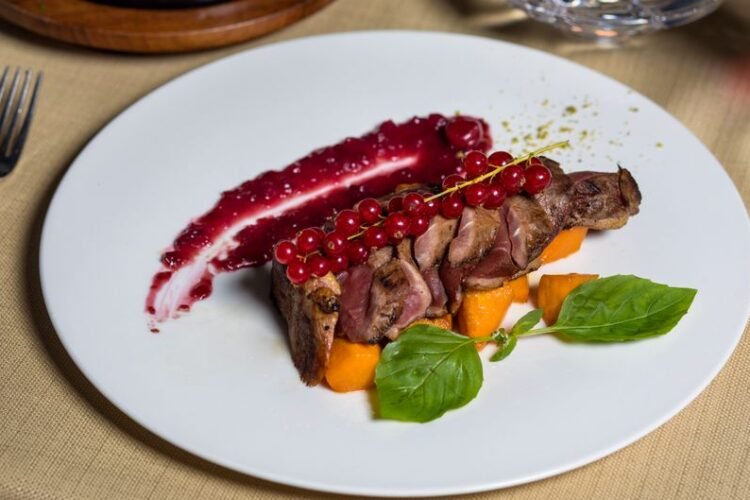
Petto d'anatra, or roasted duck breast, is a beloved second course across northern and central Italy, where duck is finished with a glossy sweet-sour glaze. The skin is scored and slowly rendered until shatteringly crisp, while the meat stays tender and rosy. Serve it sliced on the bias with a drizzle of the pan sauce for an elegant weeknight dinner.
Prep Time10 mins
Cook Time25 mins
Total Time35 mins
Servings4
Yield4 duck breasts
Nutrition Facts
Per serving (estimated)
- 465 kcalCalories
- 32 gFat
- 10 gSaturated Fat
- 10 gCarbs
- 0 gFiber
- 9 gSugar
- 28 gProtein
- 420 mgSodium
- 360 mgPotassium
- 28 mgCalcium
- 3.8 mgIron
- 3 mgVitamin C
- 28 mcgVitamin A
Ingredients
For the Duck Breasts
- 4 duck breasts, about 200-225 g each, skin on
- 1 1/2 tsp fine sea salt
- 3/4 tsp freshly ground black pepper
- 1 tbsp extra-virgin olive oil
- 4 sprigs fresh rosemary
- 3 garlic cloves, lightly smashed
For the Balsamic Rosemary Glaze
- 1/2 cup good-quality balsamic vinegar
- 1 1/2 tbsp honey
- 1/2 cup low-sodium chicken or duck stock
- 1 tbsp cold unsalted butter
- 1 tsp fresh rosemary leaves, finely chopped
- Flaky sea salt, to finish
Directions
- Pat the duck breasts completely dry with paper towels. Using a sharp knife, score the skin in a tight crosshatch pattern, taking care not to cut into the flesh. Season generously all over with salt and pepper and let stand at room temperature for 15 minutes.
- Place a large oven-safe skillet, preferably cast iron, over medium-low heat. Lay the duck breasts skin side down without oil, scatter the rosemary sprigs and garlic around them, and cook for 8-10 minutes, pressing gently and letting the fat render slowly until the skin is deep golden and crisp.
- Flip the breasts and sear the flesh side for 1 minute, then transfer the skillet to a preheated 200 °C (400 °F) oven. Roast for 6-8 minutes for medium-rare, aiming for an internal temperature of 54 °C (130 °F).
- Transfer the duck to a warm plate, discard the garlic, and tent loosely with foil. Rest the meat for 8-10 minutes so the juices redistribute.
- While the duck rests, make the glaze: pour off all but 2 tablespoons of duck fat from the skillet, set it over medium heat, and add the balsamic vinegar. Simmer until reduced by half, about 2 minutes.
- Stir in the honey and stock and simmer for another 3-4 minutes until the sauce coats the back of a spoon. Whisk in the butter and chopped rosemary and season to taste with salt and pepper.
- Slice each duck breast on the bias into 1 cm slices, arrange on warmed plates, and spoon the warm balsamic glaze over the top. Finish with a pinch of flaky sea salt and serve immediately with roasted potatoes or buttered polenta.
Cook’s Notes
- Always start duck skin-side down over gentle heat; rushing the rendering step gives rubbery skin and undercooked fat.
- A reliable instant-read thermometer is the best way to avoid overcooking; pull the duck at 54 °C as it will continue to rise while resting.
- Save the rendered duck fat from the pan; it is wonderful for roasting potatoes or frying eggs the next morning.
- If your balsamic is very thick and sweet, balance the glaze with a small squeeze of lemon juice at the end.
- Do not skip the resting period; cutting too early will send the juices streaming across the board instead of staying in the meat.