 (No Ratings Yet)
 Loading...
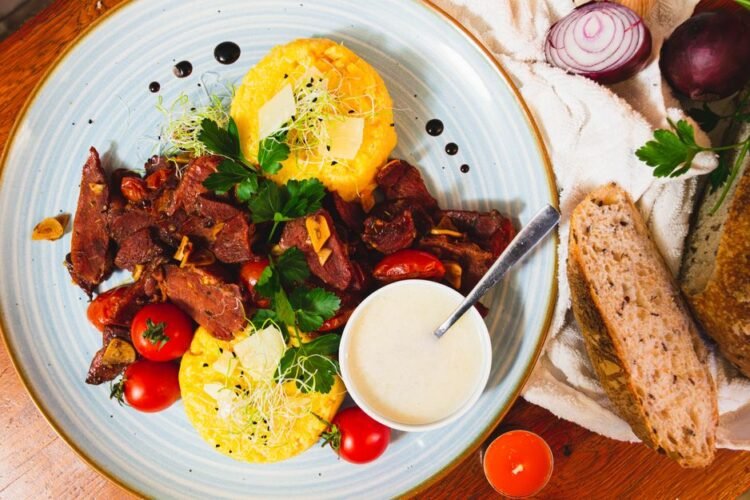
Polenta e Osei is a beloved autumn dish from the Veneto countryside, where slow-cooked creamy cornmeal meets richly browned small birds scented with sage, pancetta, and Marsala. The polenta is spooned onto a wooden board and topped with the glossy, herb-rich pan sauce in true peasant-table style. Modern cooks typically use quail in place of the traditional songbirds, which are now protected.
Prep Time20 mins
Cook Time60 mins
Total Time80 mins
Servings4
Yield4 servings
Nutrition Facts
Per serving (estimated)
- 565 kcalCalories
- 24 gFat
- 8 gSaturated Fat
- 48 gCarbs
- 4 gFiber
- 3 gSugar
- 32 gProtein
- 720 mgSodium
- 680 mgPotassium
- 60 mgCalcium
- 4.5 mgIron
- 6 mgVitamin C
- 220 mcgVitamin A
Ingredients
For the polenta
- 1 1/2 cups coarse-ground yellow cornmeal
- 5 cups water
- 1 tsp fine sea salt
- 2 tbsp unsalted butter
For the birds and pan sauce
- 4 whole quail (or 8 small game birds), trimmed
- 1/2 tsp fine sea salt
- 1/4 tsp freshly ground black pepper
- 4 oz pancetta, diced
- 1 large yellow onion, finely diced
- 2 cloves garlic, minced
- 8 fresh sage leaves, plus extra for serving
For finishing
- 2 tbsp extra-virgin olive oil
- 1/2 cup dry Marsala wine
- 1 cup low-sodium chicken stock
- 2 bay leaves
- 1 tbsp fresh lemon juice
Directions
- Bring the water and salt to a rolling boil in a heavy 4-quart pot. Slowly rain in the cornmeal in a thin stream while whisking constantly to prevent lumps.
- Reduce heat to low and cook the polenta, stirring with a wooden spoon every 3 to 4 minutes, for 35 to 40 minutes until thick and pulling away from the sides. Beat in the butter, cover, and keep warm.
- Pat the quail very dry and season the cavities and skin with the salt and pepper. Tie the legs together with kitchen twine for tidy presentation.
- Place a wide 12-inch skillet over medium heat, add the diced pancetta, and cook 6 to 7 minutes until crisp and golden. Remove with a slotted spoon, leaving the fat in the pan.
- Add the olive oil to the pancetta fat and raise the heat to medium-high. Brown the quail on the breast side first, about 3 minutes per side, until deeply golden all over. Transfer to a plate.
- Lower the heat to medium, add the onion to the same skillet, and cook 5 minutes until softened. Stir in the garlic and sage leaves and cook another minute until fragrant.
- Pour in the Marsala and scrape up the brown bits, then add the stock, bay leaves, and the reserved pancetta. Return the quail to the pan, cover, and simmer gently for 18 to 20 minutes until the juices run clear at the thigh.
- Spoon a generous bed of polenta onto each warmed plate, set a quail alongside, scatter the crispy pancetta over the top, and finish with a spoonful of pan sauce, a fresh sage leaf, and a squeeze of lemon.
Cook’s Notes
- Use a true coarse stone-ground polenta labeled 'bramata' or 'integrale' for the best nutty flavor and creamy texture.
- Stir the polenta more frequently during the final 10 minutes of cooking; this is when it is most likely to scorch.
- Traditional recipes call for songbirds such as larks, thrushes, or sparrows, which are now protected by law; quail or cornish hens are excellent modern substitutes.
- For a true Veneto finish, serve alongside a glass of Valpolicella or a light Bardolino.
- Leftover polenta can be cooled in a sheet pan, cut into triangles, and grilled the next day to make crisp crostoni.