 (No Ratings Yet)
 Loading...
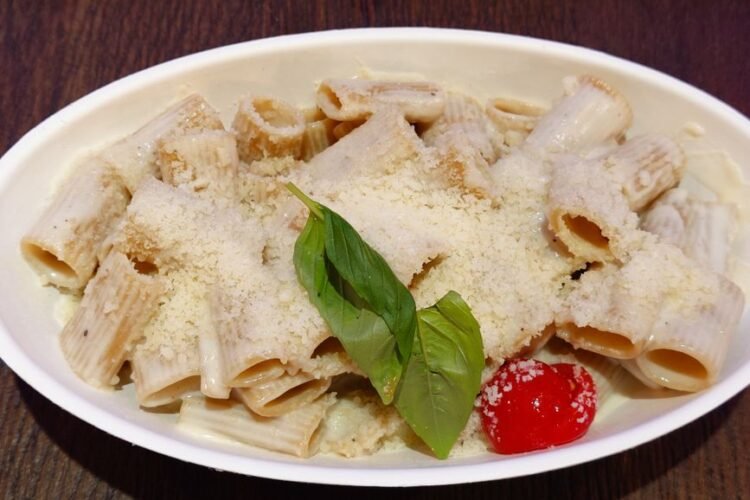
Rigatoni alla Gricia is one of Rome's oldest pasta preparations — a smoky, salty, peppery dish built on just three pantry heroes: guanciale, Pecorino Romano, and cracked black pepper. The rendered pork fat emulsifies with starchy pasta water and grated cheese to form a glossy, clingy sauce without a drop of cream or tomato.
Prep Time10 mins
Cook Time20 mins
Total Time30 mins
Servings4
Yield4 servings
Nutrition Facts
Per serving (estimated)
- 715 kcalCalories
- 37 gFat
- 14 gSaturated Fat
- 64 gCarbs
- 3 gFiber
- 2 gSugar
- 29 gProtein
- 880 mgSodium
- 310 mgPotassium
- 270 mgCalcium
- 3 mgIron
- 0 mgVitamin C
- 45 mcgVitamin A
Ingredients
For the pasta
- 1 lb (450 g) rigatoni
- 2 tbsp coarse sea salt for the pasta water
For the sauce
- 8 oz (225 g) guanciale, rind removed, cut into 1/4-inch matchsticks
- 1 cup (90 g) freshly grated Pecorino Romano, plus more for serving
- 2 tsp freshly cracked black pepper, plus more to finish
- 1 cup reserved pasta water, as needed
Directions
- Bring a large pot of water to a rolling boil, add 2 tablespoons of coarse sea salt, and drop in the rigatoni; cook until just shy of al dente (about 1 minute less than the package time), because it will finish in the sauce.
- While the pasta cooks, place the guanciale matchsticks in a wide cold skillet set over medium-low heat. Let the fat slowly render out for 8 to 10 minutes, stirring occasionally, until the strips are bronzed and crisp and you have about 3 tablespoons of liquid gold in the pan.
- Use a slotted spoon to transfer the crispy guanciale to a plate, leaving the rendered fat in the skillet. Add the cracked black pepper to the fat and let it bloom for 30 seconds so the spice infuses the pork fat.
- Reserve 1 cup of the starchy pasta water, then drain the rigatoni (do not rinse). Add the pasta directly to the skillet with the peppered guanciale fat and toss to coat over medium-low heat.
- Add a ladle of pasta water (about 1/3 cup) and most of the grated Pecorino Romano to the skillet. Toss vigorously with a wooden spoon or tongs for about 1 minute, splashing in more pasta water as needed, until the cheese melts into a creamy, clinging emulsion.
- Stir the reserved crispy guanciale back into the pan and toss once more. If the sauce looks tight, loosen with another splash of pasta water; if it looks thin, let it bubble for 30 seconds to tighten up.
- Off the heat, shower with the remaining Pecorino Romano and another grind of black pepper. Toss one final time so the residual heat melts the cheese without clumping it.
- Divide the rigatoni among four warm bowls, mounding it high so the sauce clings to each tube. Finish with an extra dusting of Pecorino and a final crack of pepper, and serve immediately while piping hot.
Cook’s Notes
- Guanciale is non-negotiable for true Roman flavor — pancetta or bacon are leaner and smokier and will not give the same silky, peppery fat base.
- Start the guanciale in a cold pan so the fat melts slowly and the meat crisps without burning; rushing it over high heat will scorch the fat and make the sauce bitter.
- Always emulsify the sauce off direct high heat; if the pan is too hot, the Pecorino will clump and become stringy instead of melting into a creamy glaze.
- Use finely grated Pecorino (not pre-shredded, which is often coated with anti-caking agents and will not melt smoothly) — a Microplane is your best friend here.
- Salt the pasta water generously (it should taste like the sea) but remember that Pecorino and guanciale are already very salty, so taste before adding any extra salt at the end.