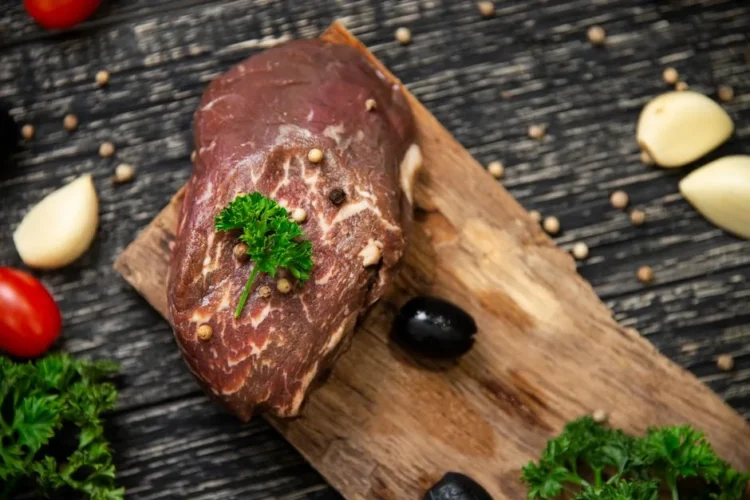
Emu is the lean, dark-red meat of the large flightless Australian ratite, prized for its very low fat content, complete protein, and high levels of heme iron and vitamin B12.
CategoryMeats
Scientific nameDromaius novaehollandiae
OriginAustralia
History & Origins
Emus have been hunted and eaten by Aboriginal Australians for tens of thousands of years as a staple source of protein, fat, and feathers across the arid interior. Commercial emu farming expanded in Australia from the late 1980s—catalyzed by the 1932 'Great Emu War' that had first drawn public attention to the species—and spread to the United States, China, and India, where today it is produced alongside by-products such as emu oil and leather.
Nutrition Facts
Per 100 g, edible portion (estimated)
- 103 kcalCalories
- 22 gProtein
- 1.7 gFat
- 0 gCarbs
- 0 gFiber
- 0 gSugars
- 320 mgPotassium
- 4.0 mgIron
- 0 mgVitamin C
- 0 mcgVitamin A
Culinary Uses
- Lean grilling steaks marinated with lemon myrtle and native pepperberry
- Slow-braised emu osso buco or stews with bush tomato and wattleseed
- Smoked emu fillet served with quandong or native plum chutney
- Ground emu formed into burgers, meatballs, and merguez-style sausages
- Emu carpaccio cured with Murray River salt and olive oil
Known Benefits
- Very low in total and saturated fat compared with beef, lamb, or pork
- High in complete protein, supporting muscle maintenance and satiety
- Rich in heme iron, useful for preventing iron-deficiency anemia
- Excellent source of vitamin B12 for red blood cell and neurological health
Hidden Benefits
- Contains meaningful amounts of conjugated linoleic acid (CLA) when pasture-raised
- Naturally low intramuscular marbling keeps calorie density low per serving
- Provides a notable amount of creatine and carnitine relative to most land-animal meats
- Free-range emu carries a more favorable omega-6 to omega-3 ratio than grain-fed beef
Cautions & Considerations
- Only farmed emu is legally sold for meat; wild birds are protected under Australian law
- The lean texture dries out quickly when overcooked—best served medium-rare to medium
- Recommended internal temperature is 63–74 °C (145–165 °F) depending on preference; vulnerable groups should cook to 74 °C
- Some individuals may experience allergic reactions to ratite meat similar to other avian proteins
- Emu oil capsules marketed as supplements are not regulated as medicine and lack consistent dosing





