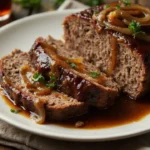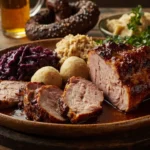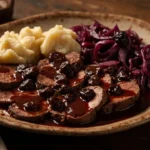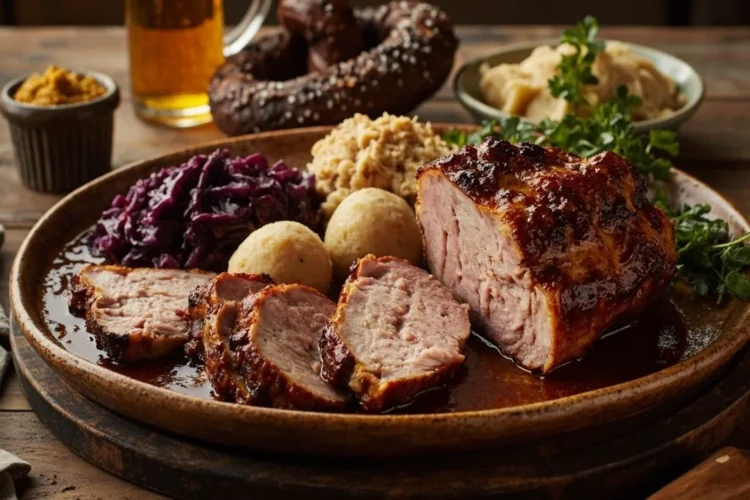
Bavarian pork roast is the centerpiece of traditional Sunday family meals across southern Germany. A bone-in pork shoulder is marinated overnight in dark beer, caraway, garlic, and onions, then slow-roasted until the fat cap turns crackling and the meat falls apart. The rich, malty gravy made from the pan drippings is poured generously over potato dumplings or warm pretzel dumplings.
Prep Time20 mins
Cook Time180 mins
Total Time200 mins
Servings5
Yield5 to 6 servings
Nutrition Facts
Per serving (estimated)
- 610 kcalCalories
- 38 gFat
- 13 gSaturated Fat
- 11 gCarbs
- 1 gFiber
- 3 gSugar
- 48 gProtein
- 1240 mgSodium
- 820 mgPotassium
- 75 mgCalcium
- 4 mgIron
- 5 mgVitamin C
- 15 mcgVitamin A
Ingredients
For the pork roast and marinade
- 1 (4 to 5 lb) bone-in pork shoulder roast with fat cap
- 2 cups dark German beer such as dunkel or schwarzbier
- 1 large yellow onion, sliced
- 6 cloves garlic, smashed
- 2 tbsp whole caraway seeds
- 1 tbsp juniper berries, lightly crushed
- 2 dried bay leaves
- 2 tbsp kosher salt
- 1 tbsp coarse black pepper
- 2 tbsp lard or vegetable oil
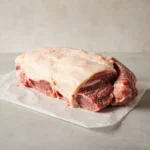 Pork shoulder roast
 Dark German beer
 Yellow onion
 Garlic cloves
 Caraway seeds
 Juniper berries
 Dried bay leaves
 Kosher salt
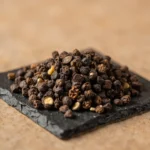 Coarse black pepper
 Lard
LardFor the dark beer gravy
- 3 tbsp all-purpose flour
- 1 1/2 cups beef broth
- 1 tbsp Bavarian sweet mustard
- 1 tsp malt syrup or honey
- Salt and freshly ground black pepper to taste
- 1 tbsp cold butter, optional for finishing
 All-purpose flour
 Beef broth
 Bavarian sweet mustard
 Malt syrup
 Salt and black pepper
 Cold butter
For serving
- Steamed potato dumplings or warm Bavarian potato salad
- Braised red cabbage or sauerkraut
- Coarse mustard and pretzels on the side
 Potato dumplings
 Braised red cabbage
 Bavarian pretzels
Directions
 Score the fat cap of the pork shoulder in a crosshatch pattern about 1/2 inch deep, taking care not to cut into the meat. Rub generously with the salt, pepper, and caraway seeds, pressing the seasonings into the cuts.
 Combine the dark beer, sliced onion, smashed garlic, juniper berries, and bay leaves in a large bowl or brining bag. Submerge the pork shoulder, cover, and marinate in the refrigerator for 12 to 24 hours, turning occasionally.
 Preheat the oven to 325 F (165 C). Remove the pork from the marinade and pat the skin completely dry with paper towels; reserve the marinade liquid. Heat the lard or oil in a heavy roasting pan over medium-high heat and sear the pork on all sides until deep golden, about 8 minutes total.
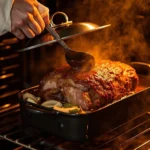 Place the seared pork fat side up in the roasting pan. Pour the reserved marinade around (not over) the roast, cover tightly with a lid or heavy foil, and roast in the lower third of the oven for 2 1/2 hours, basting every 30 minutes with the pan juices.
 Uncover, increase oven temperature to 425 F (220 C), and roast 25 to 35 minutes more until the fat cap is deeply crackled and mahogany brown and an instant-read thermometer inserted into the thickest part reads 185 to 190 F. Transfer the roast to a board and tent loosely with foil; rest at least 15 minutes.
 Pour off all but about 3 tbsp of fat from the roasting pan and place it over medium heat on the stovetop. Sprinkle in the flour and whisk constantly for 1 to 2 minutes until nutty and deep brown. Slowly pour in the beef broth while scraping up every caramelized bit.
 Stir in the mustard and malt syrup, then simmer the gravy 5 to 7 minutes until thickened and silky. Season with salt and pepper, finish with the cold butter if using, and strain if desired.
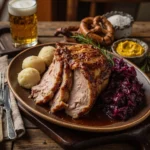 Slice the pork across the grain into thick slices, arrange on a warm platter, and spoon the gravy generously over the top. Serve with potato dumplings and braised red cabbage for an authentic Bavarian dinner.
Cook’s Notes
- Patting the skin completely dry before the high-heat finish is the secret to a truly crackling Bavarian crust.
- For a deeper, almost mahogany gravy, add 1 teaspoon of malt syrup and let the flour cook to a true dark roux before adding liquid.
- If you do not have juniper berries, substitute 1 teaspoon of crushed coriander seeds for a similar floral, piney lift.
- Leftover pork is excellent shredded and reheated in gravy as a Bavarian Brotzeit snack the next day.
- Always slice against the grain to keep every piece tender and juicy, especially on the shoulder cut.
More Germany Recipes You’ll Love
Craving more flavors from Germany? Try these traditional recipes: