 (No Ratings Yet)
 Loading...
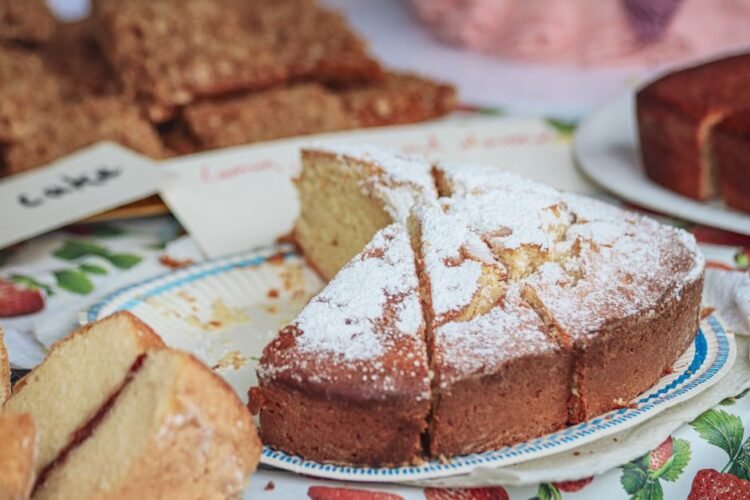
Vasilopita is a fragrant orange-scented sponge cake baked in Greek homes on New Year's Day to honor Saint Basil. Legend says the person who finds the hidden coin (or almond) in their slice will enjoy good luck all year. This version is buttery, tender, and topped with a snowy crown of powdered sugar and sliced almonds.
Prep Time20 mins
Cook Time50 mins
Total Time70 mins
Servings10
Yield10 slices
Nutrition Facts
Per serving (estimated)
- 385 kcalCalories
- 21 gFat
- 12 gSaturated Fat
- 42 gCarbs
- 1 gFiber
- 23 gSugar
- 5 gProtein
- 170 mgSodium
- 110 mgPotassium
- 45 mgCalcium
- 1.6 mgIron
- 9 mgVitamin C
- 190 mcgVitamin A
Ingredients
For the sponge
- 1 cup (225 g) unsalted butter, softened
- 1 cup (200 g) granulated sugar
- 4 large eggs, room temperature
- Finely grated zest of 2 oranges
- 1/2 cup (120 ml) fresh orange juice
- 1/4 cup (60 ml) brandy or whole milk
- 2 teaspoons vanilla extract
- 2 1/2 cups (325 g) all-purpose flour
- 2 teaspoons baking powder
- 1/4 teaspoon fine sea salt
- 1 whole blanched almond or a foil-wrapped coin (optional, for tradition)
For the topping
- 3/4 cup (90 g) powdered sugar, for dusting
- 1/3 cup (40 g) sliced almonds, lightly toasted
- 1 strip orange peel, for garnish
Directions
- Preheat the oven to 350°F (175°C). Grease a 10-inch (25 cm) round cake pan, line the bottom with parchment, and dust the sides with a little flour.
- In a large bowl, beat the softened butter and granulated sugar with an electric mixer on medium-high until pale and fluffy, about 4 minutes. Scrape down the bowl as needed.
- Add the eggs one at a time, beating well after each addition. Beat in the orange zest, orange juice, brandy, and vanilla until smooth and well combined.
- In a separate bowl, whisk together the flour, baking powder, and salt. Add the dry ingredients to the wet mixture in three additions, mixing on low just until the batter is smooth and no streaks of flour remain. Do not overmix.
- If using the traditional charm, gently press the almond or wrapped coin into the bottom of the prepared pan, then pour the batter over and smooth the top. Tap the pan on the counter a few times to release any air bubbles.
- Bake on the middle rack for 45 to 50 minutes, until the cake is deeply golden, springs back lightly when pressed, and a wooden skewer inserted in the center comes out clean.
- Cool the cake in the pan for 15 minutes, then turn it out onto a wire rack and let it cool completely. Once cool, dust generously with powdered sugar, scatter the toasted almonds around the edge, and finish with a curl of orange peel on top.
- Slice into 10 wedges at the table. Traditionally, the oldest family member distributes the first piece to honor Saint Basil, then to the household in age order, from youngest to oldest.
- Serve with Greek coffee or a glass of cold milk. Keep leftovers covered at room temperature for up to 3 days.
Cook’s Notes
- If you forget to bring the butter to room temperature, cut it into small cubes and beat it on high for 2 minutes to soften quickly.
- For an extra aromatic sponge, substitute 1 tablespoon of the brandy with 1/2 teaspoon of Greek mastic (mastiha) crystals, crushed with a pinch of sugar.
- Wrap the coin tightly in a small piece of aluminum foil so it is food-safe and easy to spot when slicing; alert guests to its presence to avoid broken teeth.
- The cake can be baked a day ahead and stored in an airtight container; the orange flavor deepens and the crumb stays moist.
- For a lighter, taller sponge, separate the eggs, beat the whites to soft peaks, and fold them into the finished batter as the last step.