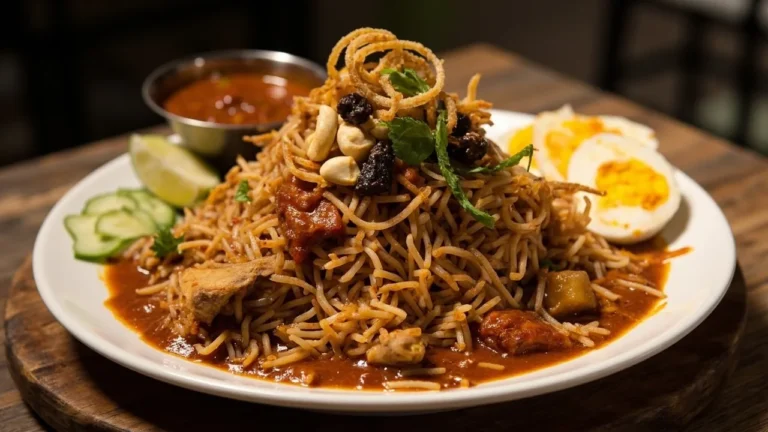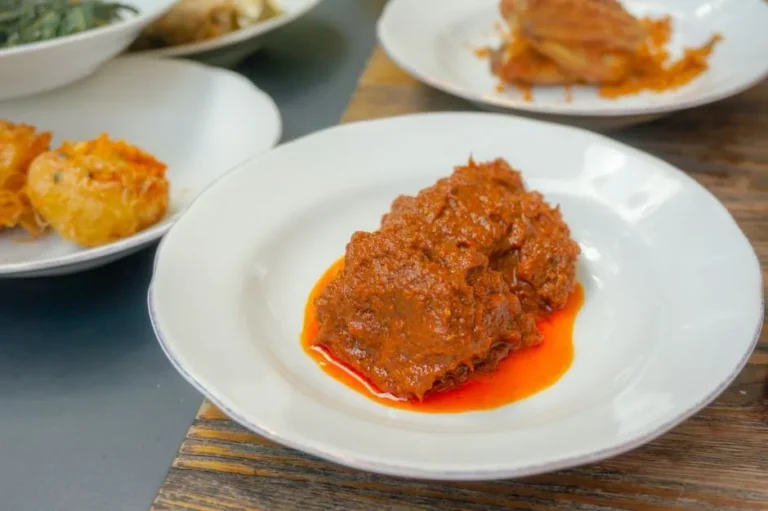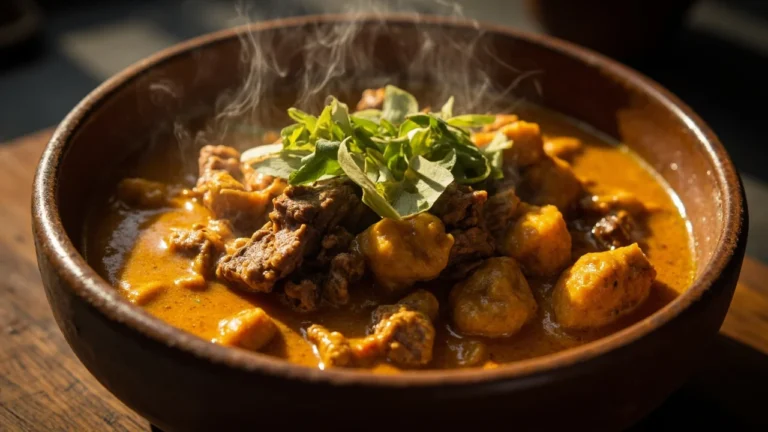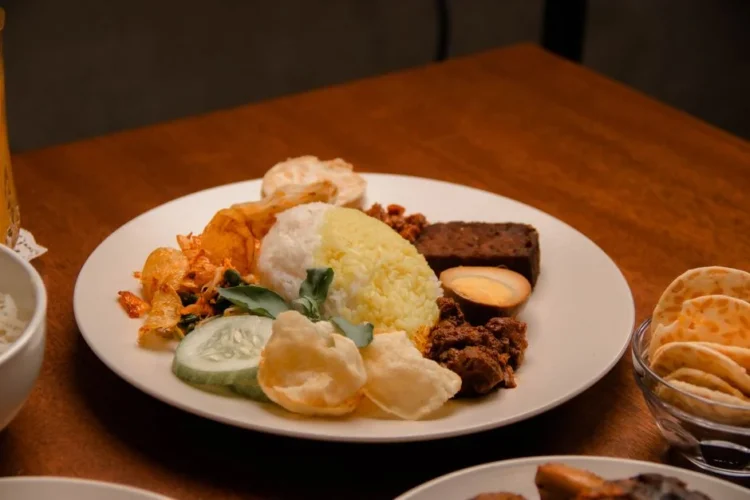
Rendang Tok Perak Royal Style is a ceremonial dry curry from Malaysia's Perak sultanate, distinguished by its aromatic whole spices—star anise, cardamom and cinnamon—and the deep caramelised flavor of kerisik toasted coconut. Slow-cooked until the meat is coated in a glossy, intensely spiced reduction, this royal version is darker, drier and more fragrant than everyday rendang.
Prep Time30 mins
Cook Time120 mins
Total Time150 mins
Servings6
Yield6 servings
Nutrition Facts
Per serving (estimated)
- 675 kcalCalories
- 52 gFat
- 32 gSaturated Fat
- 9 gCarbs
- 3 gFiber
- 4 gSugar
- 38 gProtein
- 540 mgSodium
- 880 mgPotassium
- 85 mgCalcium
- 6 mgIron
- 11 mgVitamin C
- 35 mcgVitamin A
Ingredients
For the Spice Paste (Rempah)
- 15 dried red chilies, soaked in warm water for 20 minutes
- 8 fresh red chilies, roughly chopped
- 10 shallots, peeled
- 6 garlic cloves
- 1 inch fresh ginger, sliced
- 1 inch fresh galangal, sliced
- 1 tbsp coriander seeds, dry-toasted
- 1 tsp cumin seeds, dry-toasted
- 1 tsp fennel seeds, dry-toasted
For the Aromatics and Whole Spices
- 3 tbsp cooking oil
- 2 lemongrass stalks, white part only, bruised
- 5 kaffir lime leaves, torn
- 3 salam leaves (Indian bay leaves)
- 1 stick cinnamon, about 3 inches
- 3 whole star anise
- 4 green cardamom pods, lightly crushed
- 4 whole cloves
For the Beef and Finishing
- 800 g beef chuck, cut into 4 cm cubes
- 3 cups thick coconut milk
- 3 tbsp kerisik (toasted coconut paste)
- 1 tbsp tamarind paste, mixed with 2 tbsp water
- 1 tbsp shaved palm sugar (gula melaka)
- 1 1/2 tsp fine sea salt, plus more to taste
Directions
- Drain the soaked dried chilies and blend them with the fresh chilies, shallots, garlic, ginger, galangal, toasted coriander, cumin and fennel, adding a splash of water, until a smooth, thick paste forms.
- Heat the oil in a heavy wok or deep pot over medium heat. Add the cinnamon, star anise, cardamom and cloves and fry for 30 seconds until fragrant, then add the lemongrass, kaffir lime leaves and salam leaves and stir for another minute.
- Add the spice paste and fry patiently for 8 to 10 minutes, stirring often, until the paste darkens to a deep brick red, the oil begins to separate and the raw chili smell disappears.
- Add the beef cubes and stir to coat thoroughly in the paste. Cook for 6 to 8 minutes until the meat is lightly seared and well browned on all sides.
- Pour in the coconut milk, season with the salt, and bring to a gentle boil. Reduce the heat to low and simmer uncovered for 60 minutes, stirring occasionally, until the beef is tender and the gravy has reduced by half.
- Stir in the tamarind water, palm sugar and kerisik. Continue to cook on low, stirring more frequently, for another 45 to 55 minutes, until the sauce is almost completely dry, the oil pools at the edges and the beef is glazed in a thick, dark mahogany coating.
- Taste and adjust salt or palm sugar to balance the savory, slightly sweet and gently tangy profile. Let the rendang rest off the heat for 10 minutes so the flavors settle, then serve with steamed rice or coconut rice.
- For ceremonial presentation, mound the rendang on a banana-leaf-lined platter and garnish with a few fresh kaffir lime leaves.
Cook’s Notes
- Kerisik is essential for the signature Perak flavor: toast 1 cup of fresh grated coconut in a dry pan over low heat for 15 minutes until deep caramel brown, then pound or blend to a paste.
- Use beef shank or a mix of chuck and brisket for the best balance of tenderness and rich, beefy flavor after the long simmer.
- The rendang is traditionally cooked until almost completely dry; do not rush this stage or you will miss the deep, glossy coating that defines the royal version.
- For a quicker weeknight version, substitute chicken thigh pieces and reduce the second simmer to 25 minutes.
- Toast all whole spices in a dry pan before grinding or frying to release their full aromatic oils.
More Malaysia Recipes You’ll Love
Craving more flavors from Malaysia? Try these traditional recipes:
- Malaysian Coconut Rice with Sambal and Crispy Anchovies
- Char Kway Teow Stir-Fried Flat Noodles
- Malaysian Curry Laksa Noodle Soup with Coconut and Prawns