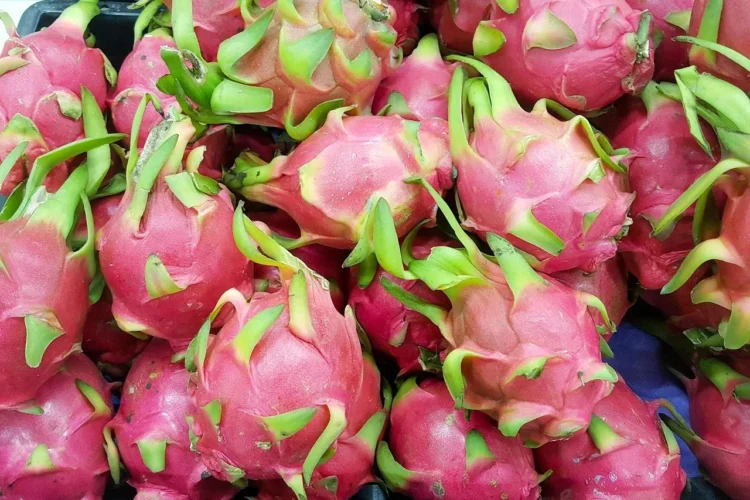
Pitaya, commonly known as dragon fruit, is the mildly sweet fruit of a climbing cactus genus, recognizable for its vivid magenta or yellow rind and creamy white or deep pink flesh dotted with tiny edible black seeds.
History & Origins
Pitaya has a long pre-Columbian history in Mesoamerica, where indigenous peoples harvested the fruit of wild cacti and revered the night-blooming flowers. French missionaries introduced the plant to Indochina in the late 19th century, and commercial cultivation took off in Vietnam during the 20th century, transforming the country into the world's leading producer. Today, pitaya is a globally traded tropical fruit grown across Southeast Asia, Israel, and increasingly in greenhouse operations worldwide.
Nutrition Facts
Per 100 g, edible portion (estimated)
- 50 kcalCalories
- 1.2 gProtein
- 0.4 gFat
- 11 gCarbs
- 3 gFiber
- 8 gSugars
- 110 mgPotassium
- 9 mgVitamin C
- 5 mcgVitamin A
Culinary Uses
- Served chilled, halved and scooped fresh
- Blended into smoothies, juices, and tropical fruit salads
- Used as a natural pink food colorant in pastries and beverages
- Featured in sorbets, granitas, and dairy-free ice creams
- Stirred into cocktails, mocktails, and Asian-style dessert soups
Known Benefits
- High in antioxidant betacyanins (in red-fleshed varieties) and vitamin C
- Provides soluble and insoluble fiber supporting gut health
- Naturally low in calories and virtually fat-free
- Contains prebiotic oligosaccharides that nourish beneficial gut bacteria
Hidden Benefits
- Tiny black seeds supply small amounts of omega-3 and omega-6 fatty acids
- Betalain pigments exhibit anti-inflammatory and hepatoprotective activity
- Provides trace magnesium, iron, and B-group vitamins often overlooked
- Red-fleshed varieties contain lycopene-like carotenoids rarely highlighted
Cautions & Considerations
- May trigger mild allergic reactions in individuals sensitive to other Cactaceae fruits
- Overconsumption can produce a mild laxative effect due to fiber and fructose load
- The thick rind is not typically eaten and may carry surface pesticide residues
- People with impaired renal function should moderate intake because of seed oxalates





