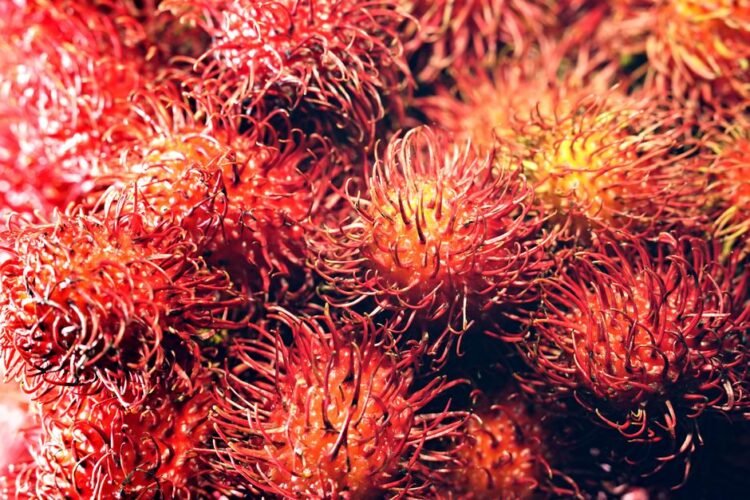
Rambutan is a tropical fruit distinguished by its hairy red or yellow shell, which encases sweet, translucent flesh similar to lychee. Named from the Malay word 'rambut' meaning hair, it has become a prized fruit across Southeast Asia and is increasingly cultivated in tropical regions worldwide.
History & Origins
Rambutan originated in the Malay-Indonesian region where wild specimens have been consumed for centuries. The fruit was first scientifically described by Carl Linnaeus in 1753 under a different classification. Dutch colonial traders introduced rambutan to Sri Lanka and the Philippines during the 16th-18th centuries, later spreading cultivation to other tropical regions including Thailand, Vietnam, and Central America. Commercial production expanded significantly in the late 20th century as refrigeration technology improved export possibilities. Today, Thailand is the largest producer, followed by Indonesia and Malaysia.
Nutrition Facts
Per 100 g, edible portion (estimated)
- 68 kcalCalories
- 81 gWater
- 0.7 gProtein
- 0.2 gFat
- 0.1 gSaturated Fat
- 17 gCarbs
- 0.9 gFiber
- 13 gSugars
- 140 mgPotassium
- 8 mgCalcium
- 0.4 mgIron
- 7 mgMagnesium
- 4.9 mgVitamin C
- 0.3 mcgVitamin A
- 0.4 mcgVitamin K
- 8 mcgFolate
Culinary Uses
- Eaten fresh by peeling the hairy shell and consuming the flesh directly
- Preserved in syrup or canned for year-round consumption
- Used in tropical fruit salads and desserts
- Made into jams, jellies, and chutneys
- Blended into smoothies, juices, and cocktails
- Featured in Southeast Asian savory dishes like som tam (green papaya salad)
Known Benefits
- Excellent source of vitamin C supporting immune function
- Contains iron which aids in preventing anemia
- Provides dietary fiber promoting digestive health
- Contains copper essential for iron metabolism
- Offers antioxidant compounds from phenolic compounds in the peel
Hidden Benefits
- The peel contains bioactive compounds including flavonoids with anti-inflammatory properties
- Seeds contain small amounts of fats and proteins and have been used in traditional medicine
- High water content contributes to hydration
- Contains thiamine (B1) supporting carbohydrate metabolism
- The tannin content may have antimicrobial properties
Cautions & Considerations
- May cause allergic reactions in individuals sensitive to other Sapindaceae family fruits
- The seeds are mildly toxic when raw and should not be consumed
- Excessive consumption may cause digestive discomfort due to fiber content
- Contains moderate amounts of sugar making it less suitable for diabetic individuals in large quantities
- The hairy shell should be properly washed before handling to avoid contamination