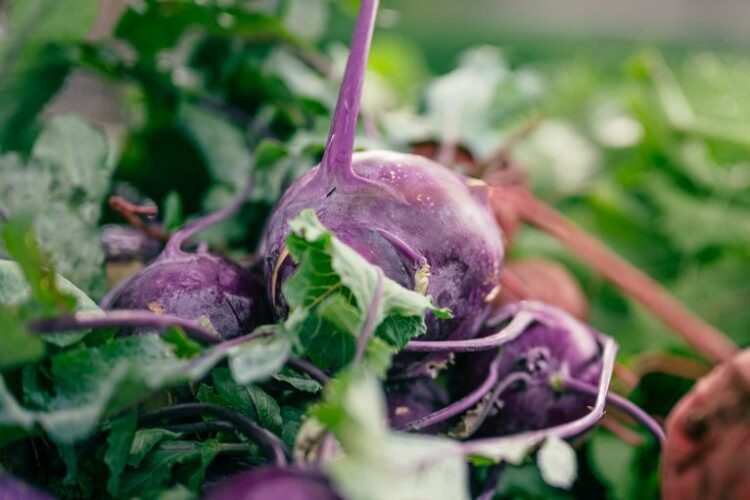
Kohlrabi is a biennial vegetable in the Brassicaceae family, grown for its swollen, bulbous stem that develops just above the soil line, producing a crisp, mildly sweet flesh reminiscent of a broccoli stem crossed with a mild radish.
History & Origins
Kohlrabi was first described in written records in 16th-century Germany, where it was cultivated in monastery gardens and later spread across Central and Eastern Europe. The name derives from the German Kohl (cabbage) and Rübe (turnip), though it is not closely related to either. By the 18th century it had become a staple in Austrian, Hungarian, and Italian cuisine, and was introduced to India by colonial traders, where it became naturalized in Indo-Gangetic cooking. It remains a cold-hardy crop prized in temperate climates worldwide.
Nutrition Facts
Per 100 g, edible portion (estimated)
- 27 kcalCalories
- 91 gWater
- 1.7 gProtein
- 0.1 gFat
- 0 gSaturated Fat
- 6.2 gCarbs
- 3.6 gFiber
- 1.7 gSugars
- 350 mgPotassium
- 24 mgCalcium
- 0.4 mgIron
- 19 mgMagnesium
- 62 mgVitamin C
- 3 mcgVitamin A
- 0.1 mcgVitamin K
- 16 mcgFolate
Culinary Uses
- Eaten raw, sliced thin in salads for a crisp, mildly sweet crunch
- Steamed or boiled and mashed as a low-starch alternative to potatoes
- Sliced into stir-fries, especially in South Asian and Central European dishes
- Roasted with olive oil, garlic, and herbs until caramelized
- Used in German-Austrian soups such as kohlrabisuppe
- Pickled as a tangy condiment or relish
Known Benefits
- Exceptionally high in vitamin C (62 mg per 100 g), supporting immune function
- Good dietary fiber content (3.6 g) promotes digestive health
- Low calorie density (27 kcal) makes it suitable for weight management
- Contains glucosinolates, compounds associated with anti-inflammatory and cancer-protective properties
Hidden Benefits
- Rich in bioactive flavonoids including quercetin and kaempferol, which act as antioxidants
- Contains sulforaphane when cut or chewed, a compound that upregulates the body's own antioxidant defense enzymes
- Provides prebiotic fiber that selectively feeds beneficial gut microbiota such as Bifidobacterium and Lactobacillus species
Cautions & Considerations
- May cause flatulence in individuals unaccustomed to cruciferous vegetables
- Contains goitrogens, which can interfere with thyroid iodine uptake if consumed in very large quantities raw; cooking significantly reduces this effect
- Individuals with Brassica (cabbage family) allergies should avoid