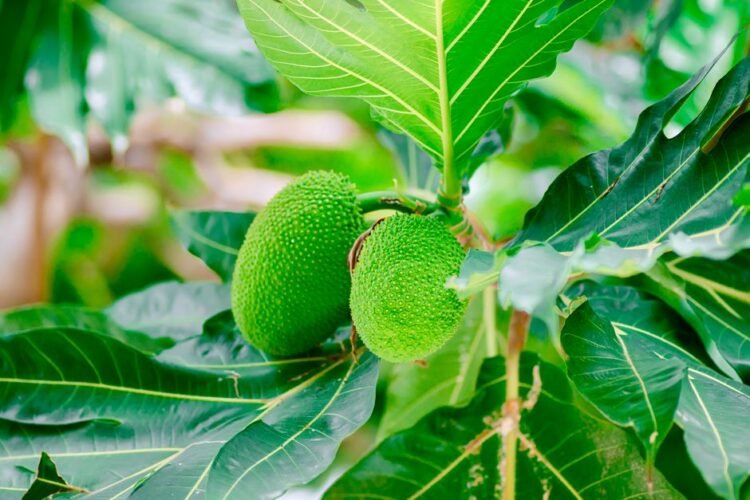
Breadfruit is a large, starchy tropical fruit that serves as a major carbohydrate source for populations across the Pacific Islands, Caribbean, and parts of South America, prized for its versatility and nutritional value.
History & Origins
Breadfruit was domesticated by Polynesians over 3,000 years ago in the New Guinea region, becoming a dietary cornerstone throughout Oceania. Captain William Bligh famously attempted to transport breadfruit seedlings from Tahiti to the Caribbean in 1789 for use as cheap food for enslaved people, though the voyage ended in the infamous mutiny. The plant was later successfully established in the West Indies in 1793. Today breadfruit remains culturally and economically significant throughout the Pacific, with renewed interest in its potential to address food security in tropical regions worldwide.
Nutrition Facts
Per 100 g, edible portion (estimated)
- 103 kcalCalories
- 70.6 gWater
- 1.1 gProtein
- 0.2 gFat
- 0.05 gSaturated Fat
- 27.1 gCarbs
- 4.9 gFiber
- 11 gSugars
- 490 mgPotassium
- 17 mgCalcium
- 0.5 mgIron
- 25 mgMagnesium
- 29 mgVitamin C
- 0 mcgVitamin A
- 0.5 mcgVitamin K
- 19 mcgFolate
Culinary Uses
- Roasted whole over open fire until skin blackens and flesh is tender
- Boiled and mashed as a starchy side dish similar to potatoes
- Fried in slices or chips as a snack food
- Baked in traditional underground ovens (imu) with coconut cream
- Ground into flour for baking bread, pancakes, and pastries
- Steamed and served with gravies or stews as a staple accompaniment
Known Benefits
- Excellent source of complex carbohydrates providing sustained energy
- High in dietary fiber promoting digestive health and satiety
- Good potassium content supports cardiovascular function
- Gluten-free making it suitable for celiac disease and gluten sensitivity
- Low fat content supports heart-healthy diets
Hidden Benefits
- Contains prebiotic fiber that supports beneficial gut microbiome bacteria
- Rich in antioxidants including flavonoids and phenolic compounds
- Provides resistant starch that acts as a prebiotic and may improve insulin sensitivity
- Contains rutin and other cardioprotective flavonoids
- Seeds (when present) are protein-dense and omega-3 fatty acid sources
Cautions & Considerations
- Raw breadfruit contains latex that can cause skin irritation and must be cooked before eating
- Contains compounds that may interfere with thyroid iodine uptake when consumed in extremely large quantities regularly
- People with latex allergies may cross-react as the plant contains similar proteins
- Overconsumption may cause digestive discomfort due to high fiber content
- Seeds contain trypsin inhibitors that are reduced by cooking