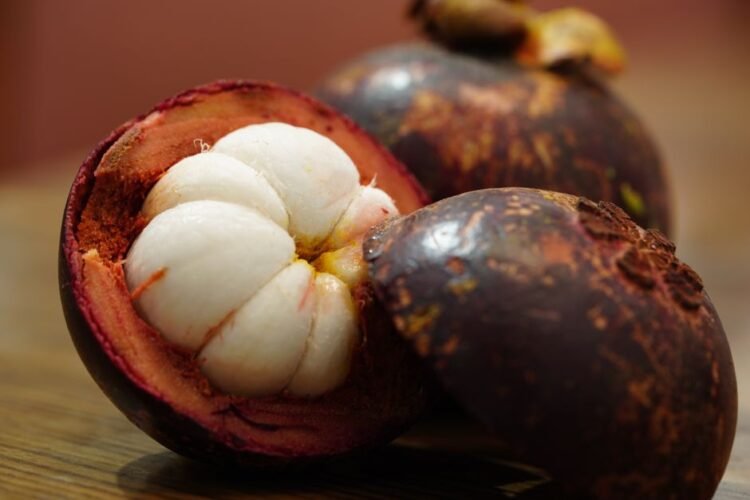
The mangosteen, often called the 'queen of fruits,' is a tropical evergreen tree bearing deep purple-red fruits with a thick rind and snowy white, segmented flesh prized for its sweet-tart flavor and delicate texture.
History & Origins
The mangosteen has been cultivated for centuries in its native Southeast Asia, where it was first described by European naturalists in the 16th century. It was introduced to European hothouses in the 1850s but has never achieved widespread commercial success in Western markets due to its extreme sensitivity to cold and brief post-harvest shelf life. The fruit remains a prestigious delicacy throughout Asia, the Caribbean, and parts of Latin America, where it is often served as a luxurious dessert at important occasions.
Nutrition Facts
Per 100 g, edible portion (estimated)
- 73 kcalCalories
- 84 gWater
- 0.4 gProtein
- 0.6 gFat
- 0.1 gSaturated Fat
- 18 gCarbs
- 1.8 gFiber
- 16 gSugars
- 48 mgPotassium
- 8 mgCalcium
- 0.3 mgIron
- 13 mgMagnesium
- 2.9 mgVitamin C
- 35 mcgVitamin A
- 13 mcgVitamin K
- 61 mcgFolate
Culinary Uses
- Eaten fresh as a dessert fruit, often chilled and halved for serving
- Flesh added to fruit salads, smoothies, and tropical cocktails
- Rind boiled to produce a tart, astringent juice or used in traditional medicine preparations
- Flavor incorporated into sorbets, ice creams, and specialty desserts in fine dining
- White flesh used as a filling in pastries and confectionery in Southeast Asian cuisine
Known Benefits
- Contains xanthones, potent antioxidant compounds found in the edible rind and flesh
- Supports immune function through modest vitamin C content
- Provides dietary fiber supporting digestive health
- Contains trace minerals including potassium and magnesium
- Low in calories and fat while offering natural fruit sugars
Hidden Benefits
- Mangosteen rind is rich in bioactive xanthones (alpha- and gamma-mangostin) with studied anti-inflammatory properties
- Rind extracts have demonstrated antimicrobial activity in laboratory research
- Traditional use in Southeast Asian medicine for treating skin infections, wounds, and fever
- Prebiotic fiber content may support beneficial gut bacteria populations
- Contains folate important for cellular metabolism and prenatal health
Cautions & Considerations
- May cause allergic reactions in individuals sensitive to other Garcinia species
- Rind and seeds contain strong tannins and should not be consumed in large quantities
- May interact with blood-thinning medications due to vitamin K content
- Unripe or overripe fruits may cause digestive discomfort
- Rind stains fabric and has a bitter taste if accidentally chewed