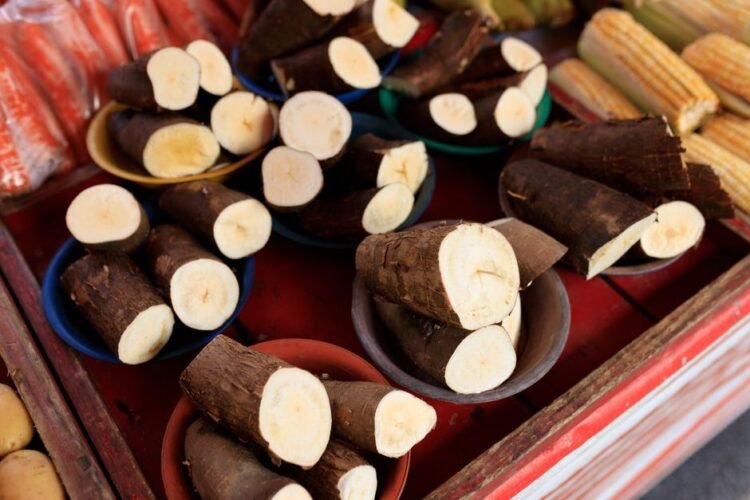
Cassava is a woody shrub widely cultivated as a staple food in tropical regions, providing a crucial source of carbohydrates for over 800 million people worldwide. The tuberous roots are processed into various forms including flour, starch, and tapioca pearls, making cassava one of the most versatile and economically important food crops globally.
History & Origins
Cassava was first domesticated in the Amazon basin of Brazil around 10,000 years ago by indigenous peoples who selectively bred the plant for larger, safer roots. Portuguese traders introduced cassava to Africa in the 16th century, where it became a vital drought-resistant crop. By the 19th century, the crop had spread throughout tropical regions of Asia, becoming a staple in countries like Indonesia, Thailand, and the Philippines. Today, Nigeria is the world's largest producer of cassava, followed by Brazil, Thailand, and Indonesia. The crop's resilience to poor soils and drought conditions has made it particularly valuable in regions facing climate challenges.
Nutrition Facts
Per 100 g, edible portion (estimated)
- 160 kcalCalories
- 60 gWater
- 1.4 gProtein
- 0.3 gFat
- 0.1 gSaturated Fat
- 38 gCarbs
- 1.8 gFiber
- 1.7 gSugars
- 271 mgPotassium
- 16 mgCalcium
- 0.3 mgIron
- 21 mgMagnesium
- 20 mgVitamin C
- 13 mcgVitamin A
- 0.5 mcgVitamin K
- 27 mcgFolate
Culinary Uses
- Tapioca pearls used in bubble tea and puddings
- Cassava flour as a gluten-free alternative for baking
- Fried cassava chips as a snack food
- Pounded cassava paste fermented into garri in West Africa
- Boiled or roasted cassava roots as a side dish
- Cassava starch used as a thickening agent in soups and sauces
Known Benefits
- Excellent source of dietary carbohydrates and energy
- Gluten-free, suitable for individuals with celiac disease
- Contains resistant starch that supports gut health
- Good source of vitamin C and potassium
- Drought-resistant crop that thrives in marginal soils
Hidden Benefits
- Resistant starch content may improve insulin sensitivity
- Contains cyanogenic glycosides that stimulate immune response
- Tapioca starch has a neutral flavor, ideal for sensitive diets
- The plant's leaves are rich in protein and vitamins A and C
- Can be used to produce biodegradable packaging materials
Cautions & Considerations
- Must be properly cooked to neutralize toxic cyanogenic glycosides
- Raw cassava consumption can cause cyanide poisoning
- High glycemic index may not be suitable for diabetics in large amounts
- Contains antinutrients that can interfere with mineral absorption
- Processing into tapioca reduces fiber and nutrient content significantly