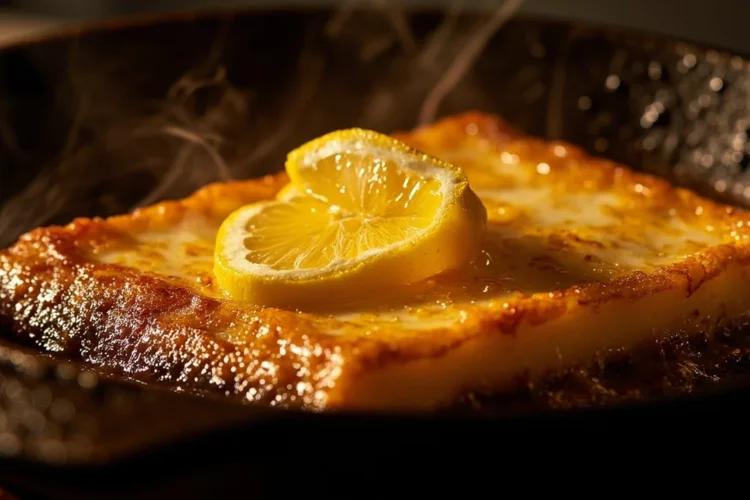
Saganaki is the classic Greek taverna showpiece: a thick slab of firm graviera or kefalograviera, dredged in flour and pan-fried until golden and crackling on the outside while staying molten inside. It arrives at the table sizzling with a squeeze of fresh lemon and, in many kitchens, a fiery flambé of brandy. This is the definitive mezze to share with ouzo and crusty bread.
Prep Time10 mins
Cook Time10 mins
Total Time20 mins
Servings4
Yield4 fried cheese slices
Nutrition Facts
Per serving (estimated)
- 520 kcalCalories
- 38 gFat
- 16 gSaturated Fat
- 18 gCarbs
- 1 gFiber
- 1 gSugar
- 26 gProtein
- 720 mgSodium
- 110 mgPotassium
- 450 mgCalcium
- 1.5 mgIron
- 4 mgVitamin C
- 280 mcgVitamin A
Ingredients
For the cheese
- 12 oz graviera or kefalograviera cheese, cut into four 3/4-inch-thick slabs
- 1/2 cup all-purpose flour, for dredging
- 1/2 tsp freshly ground black pepper
- 1/4 tsp fine sea salt
- 1 large egg, lightly beaten (optional binder)
- 1/3 cup extra-virgin olive oil, for frying
For finishing and serving
- 1 small lemon, cut into 4 wedges
- 2 tbsp brandy or Metaxa (optional, for flambé)
- Crusty Greek bread or pita, for serving
- Flaky sea salt, to finish
Directions
- Pat the cheese slabs dry with paper towels; surface moisture is the enemy of a crisp crust. If using the egg wash, lightly brush each slab so the flour adheres better, then season the flour with the salt and pepper on a wide plate.
- Dredge each cheese slab in the seasoned flour, pressing gently so it sticks in an even coat. Knock off any loose flour and rest the coated pieces on a rack for 2 minutes to let the coating set.
- Heat the olive oil in an 8-inch heavy skillet (preferably cast iron or a traditional saganaki pan) over medium heat until it shimmers and registers about 350°F on an instant-read thermometer.
- Carefully lay two cheese slabs in the pan and fry 2 to 3 minutes per side, pressing lightly with a spatula, until the crust is deep golden and crisp. Work in two batches so the pan is not crowded.
- If flambéing, tilt the pan slightly away from you, pour in the brandy, and carefully ignite with a long match. Let the flames subside, then immediately transfer the cheese to a warm plate. Repeat with the second batch.
- Finish each slice with a pinch of flaky sea salt and serve at once with a lemon wedge for squeezing over the top, alongside hot bread to catch the molten center.
- Repeat with remaining cheese. Serve immediately, because the contrast of crackling crust and flowing cheese lasts only a minute or two.
Cook’s Notes
- Use a firm, low-moisture cheese such as graviera, kefalograviera, or a firm aged kefalotyri; feta is too soft and will disintegrate in the oil.
- Oil temperature is critical: too cool and the cheese melts before browning; too hot and the flour scorches. Aim for 340 to 360°F and adjust between batches.
- Always pat the cheese dry and let the floured coating rest a couple of minutes before frying to prevent the crust from sliding off in the oil.
- If flambéing, lower the heat before adding the brandy, pour from a low angle, and keep a lid nearby to smother flames if needed.
- This dish waits for no one: fry the cheese at the very last moment and bring it straight from pan to table.
More Greece Recipes You’ll Love
Craving more flavors from Greece? Try these traditional recipes:
- Lemon-Herb Chicken and Farro Bowl
- Mediterranean Shrimp and Pearl Couscous Bowl with Whipped Feta and Charred Lemon
- Greek Shrimp and Feta Bake with Tomatoes, Capers and Charred Pita