 (No Ratings Yet)
 Loading...
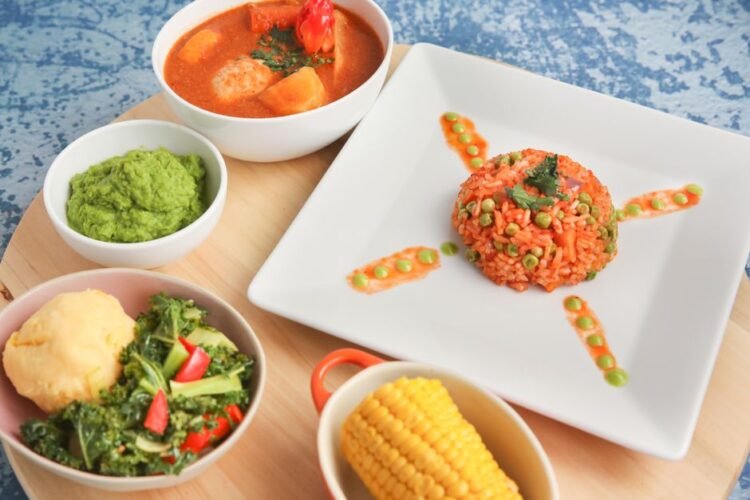
A celebrated Yoruba dish from southwestern Nigeria, this plate pairs earthy, unpolished brown rice with a fiery green pepper stew slow-simmered in palm oil and seasoned with fermented locust beans. The smoky heat, rich aroma, and deep umami from assorted meats and smoked fish make it a true Sunday and party classic.
Prep Time20 mins
Cook Time55 mins
Total Time75 mins
Servings4
Yield4 servings
Nutrition Facts
Per serving (estimated)
- 720 kcalCalories
- 38 gFat
- 14 gSaturated Fat
- 62 gCarbs
- 7 gFiber
- 6 gSugar
- 38 gProtein
- 780 mgSodium
- 920 mgPotassium
- 140 mgCalcium
- 6 mgIron
- 85 mgVitamin C
- 210 mcgVitamin A
Ingredients
For the Brown Rice
- 3 cups Nigerian brown rice (unpolished local rice)
- 4 cups water, plus more for washing
- 1 tablespoon locust beans (iru/dawadawa)
- 1 teaspoon salt
- 1 small dried thyme sprig (optional)
For the Spicy Green Pepper Stew
- 500 g assorted meats (ponmo, shaki/cow tripe, and beef)
- 150 g smoked mackerel, deboned and flaked
- 2 tablespoons ground crayfish
- 200 ml palm oil
- 6 large green bell peppers (tatashe), seeded
- 4 scotch bonnet peppers (ata rodo)
- 1 medium red bell pepper
- 2 medium onions, 1 sliced and 1 roughly chopped
- 3 tablespoons locust beans (iru/dawadawa)
- 2 seasoning cubes, crumbled
- Salt, to taste
- 2 hard-boiled eggs, peeled and halved (optional garnish)
Directions
- Wash the assorted meats with salt and warm water, then place in a pot with the chopped onion, one seasoning cube, and enough water to cover. Boil for 30 to 40 minutes until the tripe and beef are fork-tender; reserve 1 cup of the stock.
- While the meats cook, wash the brown rice in 3 to 4 changes of water until the water runs nearly clear, then drain.
- Roughly chop the green bell peppers, red bell pepper, and scotch bonnets, then blend with the remaining chopped onion and a small splash of water to a coarse purée; set aside.
- In a heavy pot, heat the palm oil over medium heat for about 3 minutes until it turns a deep red but does not smoke, then add the sliced onion and sauté for 2 minutes until softened.
- Stir in the locust beans and fry for 30 seconds until fragrant, then add the blended pepper mixture, crayfish, the remaining crumbled seasoning cube, and salt. Stir well to combine.
- Add the boiled assorted meats, flaked smoked fish, and reserved meat stock. Reduce the heat to low and simmer uncovered for 25 to 30 minutes, stirring occasionally, until the oil rises to the surface and the stew has thickened and darkened.
- Meanwhile, bring 4 cups of water to a boil in a separate pot. Add the washed brown rice, locust beans, thyme, and salt. Cover and cook on low heat for 30 to 35 minutes until the rice is tender but still slightly chewy and has absorbed the liquid.
- Taste the stew and adjust the seasoning; if a slightly thinner consistency is desired, add a splash of hot water and simmer 3 more minutes.
- Pile the steaming brown rice onto a serving platter, spoon the stew generously over and around it, and garnish with the halved boiled eggs. Serve immediately, ideally with fried ripe plantains on the side.
Cook’s Notes
- Authentic flavor depends on iru (locust beans); do not skip them, but start with less if you are new to its pungent aroma.
- Heat the palm oil carefully — hot enough to deepen in color but never smoking, which would give the stew a bitter taste.
- Traditional brown rice is best cooked in a heavy clay pot lined with banana or uma leaves for an earthy aroma; a Dutch oven is a fine substitute.
- Tatashe (large green bell peppers) gives the signature mild base, while ata rodo provides the heat — adjust the count of scotch bonnets to control spiciness.
- The stew tastes even better the next day as the locust beans and smoked fish flavors continue to meld in the refrigerator.