 (No Ratings Yet)
 Loading...
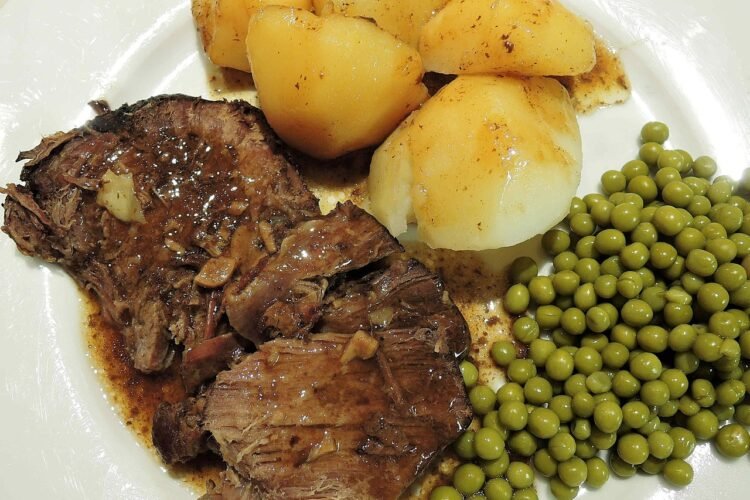
Sauerbraten is Germany's celebrated sweet-and-sour pot roast, slowly braised in a spiced vinegar marinade until the beef turns fork-tender. The signature tang comes from a multi-day soak in red wine vinegar, onions, and warming spices like cloves, juniper, and bay leaves. Crushed gingersnap cookies thicken the gravy into a glossy, slightly sweet sauce that pairs perfectly with potato dumplings or buttered spaetzle.
Prep Time30 mins
Cook Time210 mins
Total Time240 mins
Servings6
Yield6 servings
Nutrition Facts
Per serving (estimated)
- 480 kcalCalories
- 24 gFat
- 9 gSaturated Fat
- 14 gCarbs
- 2 gFiber
- 7 gSugar
- 42 gProtein
- 780 mgSodium
- 720 mgPotassium
- 85 mgCalcium
- 5 mgIron
- 6 mgVitamin C
- 210 mcgVitamin A
Ingredients
For the vinegar marinade (3-5 days)
- 2 cups red wine vinegar
- 2 cups water
- 1 large yellow onion, sliced 1/4-inch thick
- 2 medium carrots, chopped
- 2 celery stalks with leaves, chopped
- 3 bay leaves
- 10 whole black peppercorns
- 6 whole cloves
- 8 juniper berries, lightly crushed
- 2 tablespoons kosher salt
For the roast and braise
- 1 (3 1/2 to 4 pound) beef chuck roast, trimmed of excess fat
- 2 tablespoons neutral oil
- 1 large yellow onion, diced
- 2 tablespoons all-purpose flour
- 1 tablespoon tomato paste
- 1 cup low-sodium beef broth
- 1 cup reserved strained marinade
- 1/3 cup crushed gingersnap cookies (about 6 cookies)
- 2 tablespoons brown sugar
- 1 teaspoon salt, plus more to taste
- 1/2 teaspoon freshly ground black pepper
Optional finishing touches
- 2 tablespoons cold butter, cubed
- 1 tablespoon chopped fresh parsley
- 1 teaspoon red currant jelly, stirred into the sauce
Directions
- Pat the beef chuck dry and place it in a large non-reactive bowl or Dutch oven. Add the sliced onion, chopped carrots, celery, bay leaves, peppercorns, cloves, juniper berries, salt, vinegar, and water; the liquid should cover the meat (add equal parts vinegar and water if it does not). Cover and refrigerate 3 to 5 days, turning the roast once daily.
- When ready to cook, remove the roast from the marinade and pat it very dry with paper towels. Strain the marinade through a fine-mesh sieve into a bowl, reserving 1 cup of the liquid and discarding the solids.
- Heat the oil in a large Dutch oven over medium-high heat until shimmering. Sear the roast on all sides until a deep brown crust forms, about 3 minutes per side. Transfer to a plate.
- Reduce heat to medium and add the diced onion to the pot; cook, stirring, until softened and lightly golden, about 6 minutes. Sprinkle in the flour and cook, stirring, for 2 minutes to remove the raw flour taste. Stir in the tomato paste and cook for 30 seconds.
- Pour in the beef broth and 1 cup of the reserved marinade, scraping up any browned bits from the bottom of the pot. Stir in the brown sugar, crushed gingersnaps, salt, and pepper. Return the roast to the pot along with any accumulated juices; the liquid should come about two-thirds of the way up the roast (add a little water if needed).
- Bring the liquid to a gentle simmer, cover, and braise on the stovetop or in a 325°F oven, turning the roast every 45 minutes, until a fork slides in and out easily, about 2 1/2 to 3 hours.
- Transfer the cooked roast to a cutting board and loosely tent with foil. Strain the cooking liquid into a saucepan and simmer over medium heat for 5 to 8 minutes to concentrate the flavors and thicken slightly. Whisk in the cold butter for a glossy finish and stir in the red currant jelly if using; taste and adjust salt.
- Slice the roast against the grain into thick slices and arrange on a warm platter. Spoon the gingersnap gravy generously over the meat and sprinkle with chopped parsley. Serve hot with potato dumplings, spaetzle, buttered egg noodles, or braised red cabbage on the side.
Cook’s Notes
- Marinating is non-negotiable for true Sauerbraten: the 3 to 5 days of soaking in vinegar is what develops the iconic tangy flavor and tenderizes the tough chuck roast.
- If juniper berries are hard to find, simply skip them; the dish will still taste authentic, though juniper adds the classic aromatic backbone of many German braises.
- Traditional German cooks often use Lebkuchen or Pfeffernuesse cookies instead of gingersnaps for a deeper spice note in the gravy; crush them finely so they dissolve smoothly.
- Save the leftover cooking liquid to reheat the next day; Sauerbraten is famously even better on day two as the flavors continue to meld.
- For a heartier, deeper-flavored gravy, replace 1/2 cup of the beef broth with dry red wine such as a German Spätburgunder or a light Merlot.