 (No Ratings Yet)
 Loading...
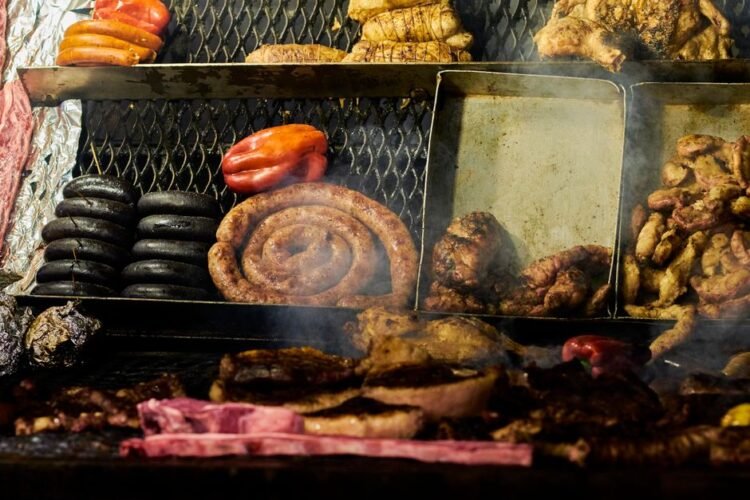
Colombian blood sausage is a beloved traditional dish across the Andean region, made with fresh pig's blood, rice, pork fat, and warm spices stuffed into natural hog casings. Each region adds its own twist, but the classic preparation delivers an earthy, rich flavor with a tender interior and a slightly crisp crust when pan-fried after boiling. It's typically served alongside boiled potatoes, peas, and white rice for a hearty, satisfying plate.
Prep Time30 mins
Cook Time45 mins
Total Time75 mins
Servings4
Yield4 to 6 sausages (4 servings)
Nutrition Facts
Per serving (estimated)
- 410 kcalCalories
- 22 gFat
- 8 gSaturated Fat
- 28 gCarbs
- 1 gFiber
- 1 gSugar
- 25 gProtein
- 620 mgSodium
- 280 mgPotassium
- 30 mgCalcium
- 14 mgIron
- 4 mgVitamin C
- 5 mcgVitamin A
Ingredients
For the filling
- 2 cups fresh pig's blood, chilled
- 1 cup cooked white rice (slightly underdone)
- 1/4 cup diced pork fat or pork belly
- 1 large white onion, finely chopped
- 3 cloves garlic, minced
- 2 scallions, finely chopped
- 1 teaspoon ground cumin
- 1 teaspoon dried oregano
- 1 1/2 teaspoons salt
- 1/2 teaspoon black pepper
For assembly
- Hog casings (about 3 to 4 feet), rinsed and soaked in warm water for 30 minutes
- Kitchen twine, for tying
For cooking and serving
- 8 cups water, for simmering
- 1 tablespoon vegetable oil, for pan-frying
- Boiled potatoes, peas, and white rice, to serve
Directions
- In a dry skillet over medium heat, render the diced pork fat for 3 to 4 minutes until some fat melts, then add the onion, garlic, and scallions. Cook for 5 to 6 minutes until soft and translucent, then remove from heat and let cool slightly.
- In a large mixing bowl, combine the cooked rice, sautéed aromatics with their fat, pig's blood, cumin, oregano, salt, and pepper. Stir thoroughly until the mixture is uniform and slightly thickened.
- Drain the soaked hog casings and flush them with fresh water. Tie one end securely with kitchen twine, then slide the open end onto a sausage stuffer nozzle or a wide-mouthed funnel.
- Carefully fill the casing with the blood-rice mixture, pressing gently to avoid air pockets. Do not overstuff; the casing should feel snug but have a little give. Tie off the other end and form into 4 to 6 individual sausages, each about 5 inches long, twisting or tying between each one.
- Bring 8 cups of water to a gentle simmer in a large pot over medium-low heat. Carefully lower the sausages into the water and prick any visible air bubbles with a pin to prevent bursting.
- Simmer gently for 35 to 40 minutes, maintaining a low temperature and never a rolling boil. The sausages are done when they feel firm to the touch and reach an internal temperature of 160°F (71°C).
- Remove the sausages with tongs and let them rest on a plate for 5 to 10 minutes to firm up. They can be served warm as-is or chilled and sliced later.
- For a traditional crispy finish, slice the cooled sausages into 1/2-inch rounds and pan-fry them in 1 tablespoon of vegetable oil over medium heat for 2 to 3 minutes per side until browned and slightly crisp.
- Serve hot with boiled potatoes, peas, and white rice, accompanied by a side of aji sauce for a classic Colombian presentation.
Cook’s Notes
- Always source fresh pig's blood from a reputable butcher and use it within 24 hours; it should smell neutral and be kept refrigerated until ready to use.
- Simmer, never boil, the sausages or the casings will burst and you will lose the flavorful filling into the water.
- For a crispy texture, slice the fully cooked and cooled sausages and pan-fry them in a little oil until golden brown on both sides.
- Traditional accompaniments include boiled potatoes with peas, white rice, and a fresh aji sauce made with tomato, onion, and cilantro.
- If you cannot find hog casings, the mixture can be cooked in a loaf pan lined with plastic wrap, then sliced and pan-fried once set.