 (No Ratings Yet)
 Loading...
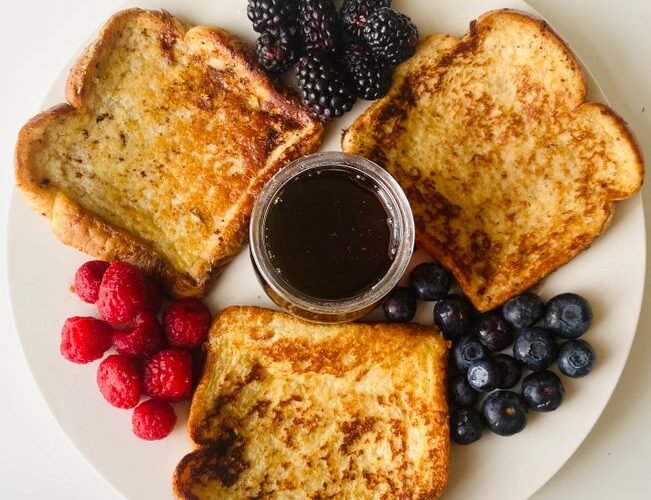
Torrejas are El Salvador's beloved answer to French toast: thick slices of bread soaked in a cinnamon-vanilla custard, pan-fried until golden, and drowned in a syrup made from piloncillo (unrefined cane sugar). Especially popular during Lent and Holy Week, this sweet, fragrant breakfast feels like dessert and is often finished with crumbled queso fresco to balance the richness.
Prep Time10 mins
Cook Time15 mins
Total Time25 mins
Servings4
Yield4 servings (8 slices)
Nutrition Facts
Per serving (estimated)
- 540 kcalCalories
- 21 gFat
- 11 gSaturated Fat
- 72 gCarbs
- 2 gFiber
- 42 gSugar
- 17 gProtein
- 430 mgSodium
- 340 mgPotassium
- 285 mgCalcium
- 3.4 mgIron
- 1 mgVitamin C
- 310 mcgVitamin A
Ingredients
For the piloncillo syrup
- 6 oz piloncillo (or 1 cup packed dark brown sugar)
- 1/2 cup water
- 1 cinnamon stick
- 1 strip orange peel (optional)
For the custard and toast
- 8 thick slices day-old French bread or bolillo (about 1 inch thick)
- 2 large eggs
- 1 cup whole milk
- 1/2 cup evaporated milk
- 1/4 cup granulated sugar
- 1 1/2 tsp ground cinnamon
- 1 tsp pure vanilla extract
- Pinch of fine salt
- 3 tbsp unsalted butter, for frying
For serving (optional)
- 4 oz queso fresco or fresh farmer cheese, crumbled
- Powdered sugar, for dusting
Directions
- Make the syrup first: combine piloncillo, water, cinnamon stick, and orange peel (if using) in a small saucepan. Bring to a gentle simmer over medium heat, stirring until the sugar fully dissolves, then reduce heat and cook 4-5 minutes until slightly thickened and syrupy. Keep warm.
- In a wide, shallow bowl, whisk the eggs, whole milk, evaporated milk, granulated sugar, cinnamon, vanilla, and salt until smooth and well combined.
- Melt 1 tablespoon of butter in a large nonstick skillet over medium heat until foamy.
- Dip each bread slice into the custard for 5-6 seconds per side, letting excess drip back into the bowl, then lay it in the hot skillet. Cook 2 slices at a time, 2-3 minutes per side, until deeply golden and crisp on the outside. Add more butter to the pan between batches as needed.
- Transfer cooked torrejas to a wire rack (not a plate) so they stay crisp while you finish the rest, keeping them warm in a 200°F oven if desired.
- Plate 2 torrejas per person, spoon the warm piloncillo syrup generously over the top, scatter with crumbled queso fresco, and finish with a light dusting of powdered sugar. Serve immediately.
Cook’s Notes
- Day-old or slightly stale bread is essential: fresh bread soaks up too much custard and turns mushy, while dried bread holds its shape and develops a custardy, almost cake-like center.
- If you can't find piloncillo, dark brown sugar plus 1 tablespoon of molasses gives a very close flavor match.
- Salvadoran cooks often serve torrejas with sliced ripe plantains or a simple fruit salad on the side to cut the sweetness.
- For an extra-authentic touch, briefly steep a few whole cloves and a star anise pod in the syrup while it simmers, then fish them out before serving.
- Never crowd the pan; torrejas need space to crisp, and the steam from overcrowding will make them soggy.