 (No Ratings Yet)
 Loading...
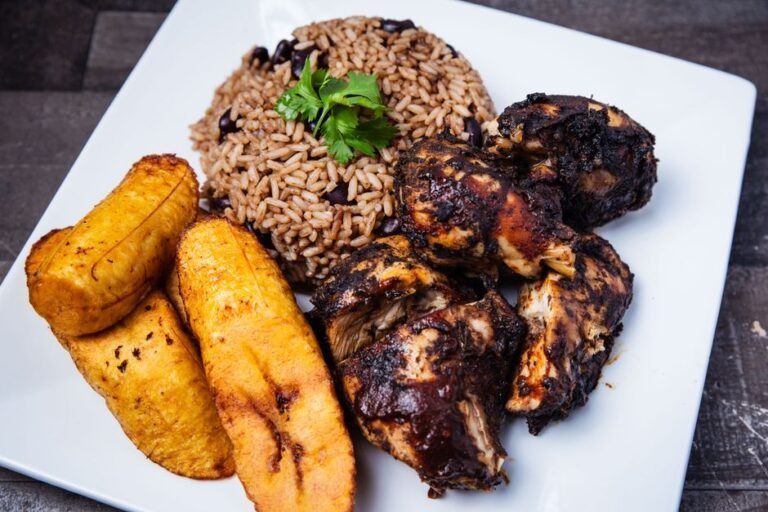
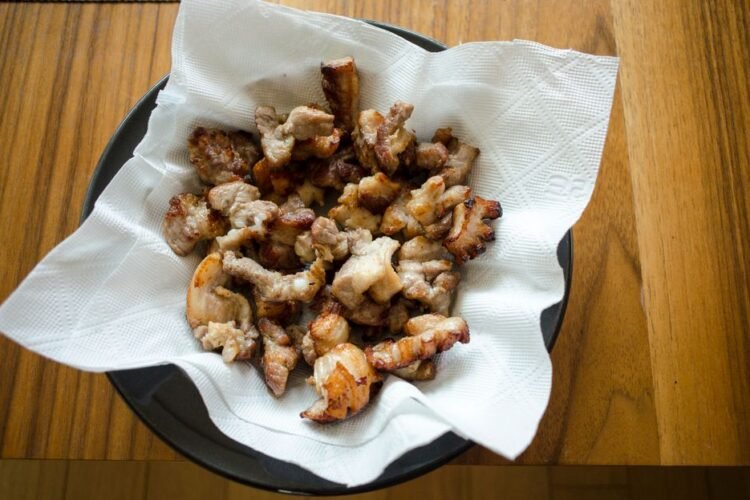
This iconic Haitian street-food classic starts with pork shoulder marinated in sour orange juice, Scotch bonnet, garlic, and thyme, then slow-braised until fork-tender and finally pan-fried until each piece develops a deep golden, crackling crust. Traditionally served with spicy pickled cabbage slaw (pikliz), rice and beans, and fried sweet plantains, it delivers bold Creole-Caribbean flavor in every bite.
Prep Time20 mins
Cook Time70 mins
Total Time90 mins
Servings4
Yield4 servings
Nutrition Facts
Per serving (estimated)
- 480 kcalCalories
- 30 gFat
- 8 gSaturated Fat
- 4 gCarbs
- 0 gFiber
- 2 gSugar
- 34 gProtein
- 640 mgSodium
- 560 mgPotassium
- 45 mgCalcium
- 2.2 mgIron
- 22 mgVitamin C
- 30 mcgVitamin A
Ingredients
For the Pork and Marinade
- 2 lbs boneless pork shoulder, trimmed and cut into 2-inch chunks
- 1 cup sour orange juice (or 1/2 cup fresh orange juice plus 1/4 cup fresh lime juice plus 1/4 cup fresh grapefruit juice)
- 6 cloves garlic, smashed
- 1 Scotch bonnet pepper, pierced with a paring knife
- 1 small yellow onion, quartered
- 2 scallions, roughly chopped
- 1 tbsp fresh thyme leaves (or 1 tsp dried thyme)
- 1 1/2 tsp kosher salt, plus more to taste
- 1/2 tsp freshly ground black pepper
For Braising and Frying
- 1 cup water or low-sodium chicken broth
- 1 cup neutral frying oil such as canola or peanut
- Lime wedges, for serving
Directions
- Combine the pork, sour orange juice, garlic, Scotch bonnet, onion, scallions, thyme, salt, and pepper in a large bowl or zip-top bag; toss well, cover, and refrigerate for at least 4 hours or preferably overnight for the deepest flavor.
- Transfer the pork and all of the marinade to a heavy Dutch oven, pour in the water or broth, and bring to a boil over medium-high heat, skimming off any foam that rises to the surface.
- Reduce the heat to low, cover, and simmer gently for 50 to 60 minutes, stirring every 15 minutes, until the pork is fork-tender and the liquid has reduced to a thick, glossy sauce that clings to the meat.
- Using a slotted spoon, transfer the pork to a rimmed baking sheet; discard the Scotch bonnet, onion, and any large herb stems, and reserve the reduced pan sauce.
- Pat the pork chunks completely dry with paper towels (this step is critical for a crisp crust and to prevent dangerous oil splatter), then let them rest at room temperature for 5 minutes.
- Heat the frying oil in a large cast-iron or heavy skillet over medium-high heat until it shimmers and reaches 350°F (175°C).
- Working in 2 to 3 batches to avoid crowding, fry the pork for 2 to 3 minutes per side, turning with tongs, until each piece is deeply browned and crisp on the outside.
- Drain the fried pork on a wire rack set over a tray (not paper towels, which can trap steam and soften the crust) and immediately sprinkle with a light pinch of fine salt.
- Mound the crispy pork on a warmed platter, drizzle with a few spoonfuls of the reserved braising sauce, and serve immediately with pikliz, diri ak pwa (rice and beans), and fried plantains, with lime wedges on the side.
Cook’s Notes
- Marinate the pork overnight whenever possible; the acid in the citrus tenderizes the meat and the aromatics penetrate much more deeply with time.
- Patting the pork completely dry before frying is non-negotiable, as surface moisture causes dangerous splattering and prevents proper browning.
- If sour oranges are unavailable, a 1:1 mix of fresh orange and lime juice, or a 2:1:1 blend of orange, lime, and grapefruit, is the classic substitute used in Haiti.
- Use a wire rack rather than paper towels to drain the fried pork so the crust stays shatteringly crisp instead of going soggy from trapped steam.
- For extra richness, stir 1 tablespoon of butter into the reserved braising sauce just before drizzling it over the finished pork.