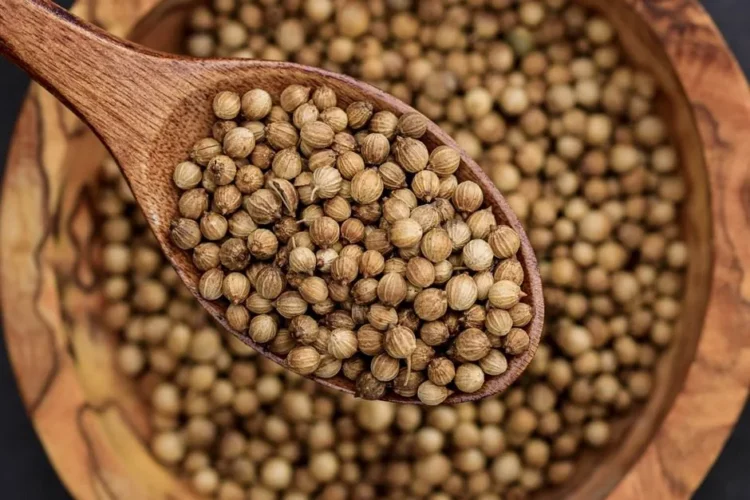
Coriander seeds are the dried, spherical fruits of Coriandrum sativum, valued for their warm, citrusy, slightly nutty aroma and used as a cornerstone spice across Middle Eastern, South Asian, Latin American, and European cuisines.
CategorySpices
Scientific nameCoriandrum sativum
OriginMediterranean basin and the Near East, with archaeological remains found in Neolithic settlements; later disseminated eastward through ancient trade into the Indian subcontinent.
History & Origins
Coriander is one of the oldest known spices, with seeds recovered from the tomb of Tutankhamun (c. 1323 BCE) and referenced in the Ebers Papyrus of ancient Egypt. It appears in the Sanskrit texts of India and in classical Greek writings, and was carried along the Roman spice routes into northern Europe during the first millennium CE.
Nutrition Facts
Per 100 g, edible portion (estimated)
- 298 kcalCalories
- 12.4 gProtein
- 17.8 gFat
- 55 gCarbs
- 41.9 gFiber
- 0 gSugars
- 1268 mgPotassium
- 21 mgVitamin C
- 0 mcgVitamin A
Culinary Uses
- Whole seeds dry-toasted and ground for curry powders, garam masala, and Ethiopian berbere.
- Added to pickling brines for vegetables, eggs, and cured meats.
- Tempered in hot oil to flavor dals, lentil soups, and South Indian rasam.
- Used in European baking, Belgian witbier, gin botanicals, and German rye breads.
Known Benefits
- Traditional digestive and carminative aid in Ayurveda and Greco-Arabic medicine.
- Rich in antioxidant polyphenols, especially the terpene linalool.
- Source of dietary fiber, iron, and magnesium.
Hidden Benefits
- Contains (E)-dodecenal, a compound with documented antibacterial activity against foodborne pathogens like Salmonella.
- May support modest reductions in LDL cholesterol and fasting blood glucose in animal studies.
- Provides lutein and zeaxanthin carotenoids that accumulate in retinal tissue.
Cautions & Considerations
- Rare contact dermatitis and oral allergy syndrome, particularly in people sensitive to related Apiaceae plants.
- May potentiate diabetes and blood-pressure medications; consult a clinician when consumed in large supplemental amounts.
- Pregnant women should avoid concentrated coriander essential oil internally.





