 (No Ratings Yet)
 Loading...
Akassa is a traditional Beninese fermented corn paste with a tangy, slightly sour flavor developed through natural fermentation of maize. The smooth dough is portioned, wrapped in banana leaves or corn husks, and gently boiled until firm, then served with spicy pepper sauce, fried fish, or okra stew.
Prep Time30 mins
Cook Time45 mins
Total Time75 mins
Servings6
Yield6 wraps
Nutrition Facts
Per serving (estimated)
- 385 kcalCalories
- 5 gFat
- 1 gSaturated Fat
- 78 gCarbs
- 9 gFiber
- 2 gSugar
- 11 gProtein
- 320 mgSodium
- 380 mgPotassium
- 30 mgCalcium
- 3 mgIron
- 2 mgVitamin C
- 20 mcgVitamin A
Ingredients
For the fermented corn paste
- 4 cups dried white maize kernels (about 700 g)
- 8 cups room-temperature water for soaking
- 1/2 cup sour buttermilk or plain yogurt (optional fermentation starter)
- 1 teaspoon fine sea salt
For wrapping and boiling
- 6 large banana leaves or dried corn husks, softened over a flame
- 2 cups hot water (for softening the leaves)
- Cotton kitchen twine
- 4 cups fresh water for the pot
For serving (traditional accompaniments)
- Pan-seared whole tilapia or smoked mackerel
- Benin-style hot pepper-tomato sauce
- Sliced red onion, lime wedges, and fresh tomato
- Fried ripe plantains (optional)
Directions
- Rinse the dried maize under cool water, then place it in a large glass or food-grade plastic bowl. Cover with the 8 cups of room-temperature water, stir in the buttermilk if using, cover loosely with a clean cloth, and leave at room temperature for 48 to 72 hours until the corn smells pleasantly sour and the water looks slightly cloudy.
- Drain the fermented corn, reserving about 1 cup of the soaking liquid. Working in batches, grind the kernels in a food processor, blender, or traditional mortar until you get a smooth, thick paste; add small splashes of the reserved liquid as needed so it stays creamy but holds a soft mound on a spoon.
- Stir the salt into the paste and taste; it should be tangy, slightly salty, and dense enough to hold its shape when scooped. Cover and let rest at room temperature for 1 more hour to deepen the flavor.
- While the paste rests, prepare the banana leaves by passing each one briefly over an open flame or dipping in hot water until pliable. Pat dry and cut into roughly 20 by 25 cm rectangles.
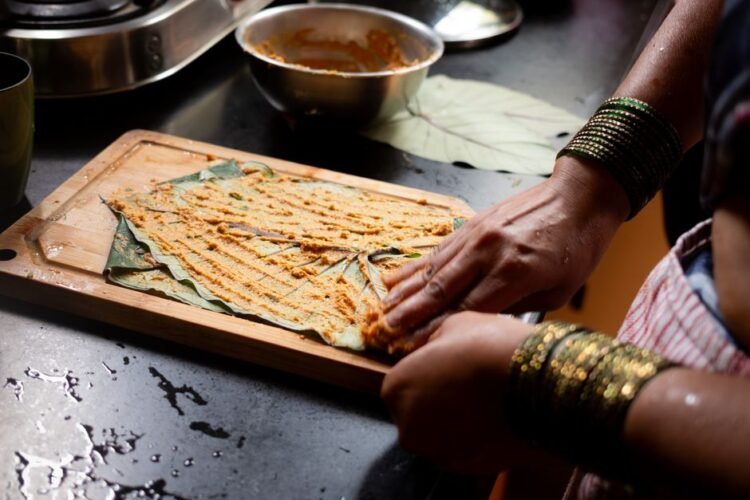
- Place about 1/2 cup of the corn paste in the center of each leaf. Fold the sides over the paste, then roll up from one end to the other to form a tight, flat parcel about the size of a deck of cards. Tie securely with twine so no water can seep in during cooking.
- Arrange the wrapped parcels in a single layer in a wide, heavy pot, pour in the 4 cups of fresh water, cover, and bring to a gentle boil. Reduce heat and simmer steadily for 35 to 45 minutes, turning once halfway through, until the paste feels firm when pressed through the leaf.
- Remove the parcels with tongs and let them rest, still wrapped, for 10 minutes so the inside sets fully. Unwrap just before serving and plate alongside fried fish, pepper sauce, and fresh vegetables.
- Eat akassa with your fingers or a fork, breaking off pieces and dipping them into the sauce. Leftover wrapped akassa keeps in the refrigerator for up to 3 days and can be re-steamed for 10 minutes before serving.
Cook’s Notes
- Fermentation is the soul of akassa; if your kitchen is cool, give the corn an extra day on the counter rather than rushing it, and skim any foam that forms on top.
- For a quicker version, soak 3 cups of fine cornmeal in 2 cups of warm water with 1/4 cup buttermilk for 8 to 12 hours instead of using whole kernels.
- Banana leaves add subtle aroma and prevent the paste from washing out; if unavailable, use corn husks or unbleached parchment secured with twine.
- Do not over-hydrate the paste – it should be thicker than pancake batter so it sets firmly when boiled, not soft or crumbly.
- Traditional accompaniments include smoked or fried fish, fried plantains, and a fiery sauce made with scotch bonnets, onion, and ripe tomatoes.