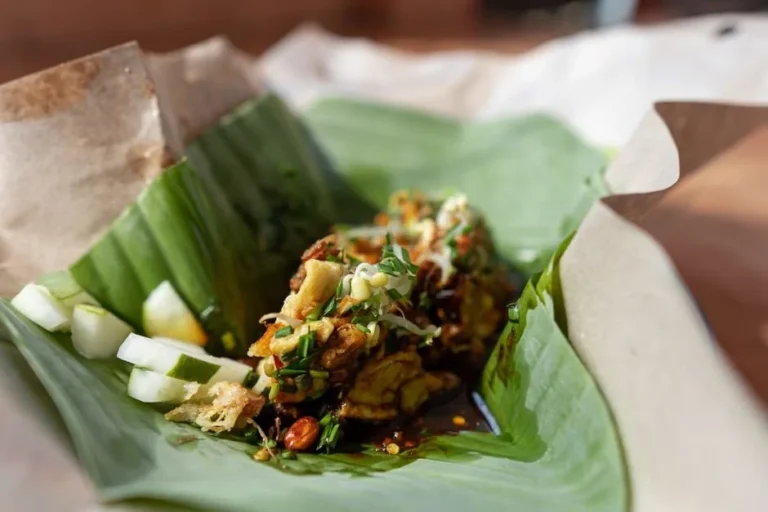
A treasured dish from Cameroon's Cross River region, these aromatic parcels feature freshly grated cocoyam wrapped in tender cocoyam leaves and slow-cooked with smoked fish in rich, red palm oil. Each bundle reveals a soft, savory interior that soaks up the deeply flavored sauce, making this a true celebration of West African home cooking.
Prep Time30 mins
Cook Time55 mins
Total Time85 mins
Servings4
Yield4 servings
Nutrition Facts
Per serving (estimated)
- 525 kcalCalories
- 31 gFat
- 12 gSaturated Fat
- 46 gCarbs
- 6 gFiber
- 3 gSugar
- 21 gProtein
- 480 mgSodium
- 920 mgPotassium
- 95 mgCalcium
- 4 mgIron
- 18 mgVitamin C
- 320 mcgVitamin A
Ingredients
For the cocoyam parcels
- 2 lbs (about 900 g) fresh cocoyam tubers, peeled
- 12 to 15 fresh tender cocoyam leaves, washed and stems trimmed
- 1 teaspoon fine sea salt
- 1/2 teaspoon ground black pepper
For the palm oil sauce and filling
- 1 cup (240 ml) red palm oil
- 12 oz (340 g) smoked mackerel or stockfish, deboned and flaked
- 1 large yellow onion, finely chopped
- 2 tablespoons ground dried crayfish
- 1 small seasoning cube (optional)
- 1/2 cup (120 ml) warm water
Directions
- Finely grate the peeled cocoyam tubers using the smallest holes of a box grater or a food processor; work quickly so the paste does not oxidize or get watery. Season with salt and pepper and set aside.
- Lay each cocoyam leaf flat, vein-side up. Place about 2 tablespoons of grated cocoyam near the stem end and roll the leaf around the filling, tucking the sides in to form a tight cylindrical parcel roughly 3 inches long.
- Line the bottom of a heavy, deep pot with a few extra cocoyam leaves or banana leaves to prevent scorching. Arrange the parcels in a snug circular layer, seam-side down.
- Scatter about one-third of the flaked smoked fish over the first layer of parcels. Repeat with remaining parcels and fish, building 2 to 3 layers until everything is tightly packed.
- In a small bowl, whisk together the palm oil, chopped onion, ground crayfish, crumbled seasoning cube, and warm water until well combined.
- Pour the palm oil mixture evenly over the layered parcels. Place a small heat-safe plate directly on top of the parcels to keep them submerged and prevent them from unraveling as they cook.
- Cover the pot tightly with a lid, set over medium-low heat, and cook undisturbed for 45 to 55 minutes, until the cocoyam is fork-tender, the leaves have darkened, and most of the oil has been absorbed into the parcels.
- Carefully lift the plate, transfer the parcels to a warm serving dish, and spoon the remaining rich sauce over the top. Serve hot as a main dish, traditionally accompanied by cold water or a light vegetable soup.
Cook’s Notes
- Use only the youngest, most tender cocoyam leaves; older leaves are too fibrous and will not soften properly during cooking.
- If the grated cocoyam releases a lot of liquid, drain it gently in a sieve before wrapping so the parcels hold their shape and the sauce stays rich.
- For a more traditional Ekwang Ibibio variation, substitute half the cocoyam leaves with waterleaf (Talinum triangulare) for a slightly tangier flavor.
- Traditional cooks often add a few slices of ripe plantain or a handful of egusi between the layers for extra body and sweetness.
- Leftover parcels reheat beautifully in a dry skillet over low heat, which crisps the leaves while keeping the inside soft and moist.
More Cameroon Recipes You’ll Love
Craving more flavors from Cameroon? Try these traditional recipes:
- Ndolè: Cameroon’s National Dish That Captivates the World
- Cameroon Eru Soup with Smoked Fish and Beef
- Cameroonian Palm Nut Soup with Smoked Fish and Beef