 (No Ratings Yet)
 Loading...
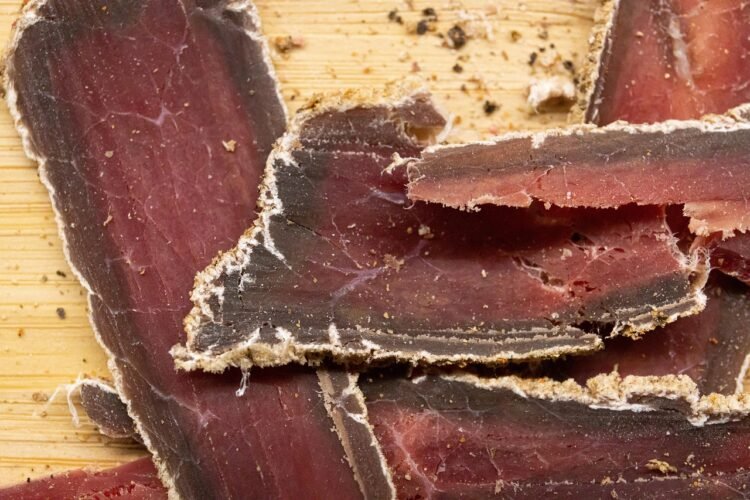
Kitoza is Madagascar's beloved preserved meat, traditionally made by salting strips of beef and slowly smoking them over a wood fire. The resulting chewy, savory morsels are eaten as a snack, packed for travel, or served alongside rice for a satisfying protein boost. This homemade version captures the smoky, slightly peppery character of the original.
Prep Time30 mins
Cook Time360 mins
Total Time390 mins
Servings4
YieldAbout 200 g dried meat (4 servings of 50 g)
Nutrition Facts
Per serving (estimated)
- 190 kcalCalories
- 8 gFat
- 3 gSaturated Fat
- 1 gCarbs
- 0 gFiber
- 0 gSugar
- 28 gProtein
- 950 mgSodium
- 360 mgPotassium
- 15 mgCalcium
- 3.5 mgIron
- 0 mgVitamin C
- 10 mcgVitamin A
Ingredients
For the beef
- 500 g lean beef (round or flank), trimmed of excess fat
- 2 tablespoons coarse sea salt
- 1 tablespoon freshly ground black pepper
- 2 garlic cloves, finely grated
- 1 teaspoon grated fresh ginger
- 1 teaspoon sugar
For the smoking
- 2 large handfuls hardwood chips or chunks (eucalyptus or fruitwood if available)
- 1 tablespoon uncooked rice (optional, for a faint smoky aroma)
- 2 dried bay leaves
Directions
- Slice the beef against the grain into long, even strips about 1.5 cm thick, 4 cm wide, and 15 cm long; trim away any visible silver skin so the cure can penetrate evenly.
- In a non-reactive bowl, combine the salt, pepper, garlic, ginger, and sugar, then rub the mixture thoroughly into every strip, pressing it into the fibers so the beef glistens with moisture.
- Layer the strips in a shallow glass or ceramic dish, cover, and refrigerate for 12 to 18 hours, turning once halfway through so the cure distributes evenly.
- Remove the beef, rinse briefly under cool water, and pat dry with clean kitchen towels; lay the strips on a wire rack set over a tray and let them air-dry uncovered in the refrigerator for 4 to 6 hours until a tacky pellicle forms on the surface.
- Prepare a stovetop or outdoor smoke setup: line a heavy pot or wok with foil, add the wood chips and rice, place a wire rack above, and lay the bay leaves on top. Set the meat strips on the rack without touching one another.
- Smoke the beef over low, smoldering heat (ideally 70 to 90 degrees C / 160 to 195 degrees F) for 3 to 4 hours, replenishing chips once and turning the strips every 45 minutes so they color evenly without cooking through.
- After the initial smoke, transfer the strips back to the refrigerator rack and let them continue drying uncovered for another 12 to 24 hours until they feel firm, leathery, and noticeably lighter in weight.
- Once the kitoza bends without snapping and feels dry to the touch, brush lightly with a bit of neutral oil if desired, slice into smaller pieces, and serve at room temperature alongside steamed rice or as a snack.
Cook’s Notes
- Choose a lean cut like eye of round; fat does not dry well and can turn rancid during the long smoking process.
- Traditional cooks in Madagascar smoke kitoza over an open wood fire for a full day; if using a stovetop setup, keep the heat low and never let the chips catch flame, or the meat will taste acrid.
- For the most authentic flavor, eucalyptus twigs and leaves are ideal, though apple, cherry, or hickory work nicely as substitutes.
- Store finished kitoza wrapped in paper (not plastic) in a cool, dry place for up to 3 weeks, or vacuum-seal and refrigerate for several months.
- If you do not have a smoker, you can replicate a similar effect by drying the cured strips in a 70 degrees C oven with the convection fan on and a pan of wood chips placed on the lowest rack.