 (No Ratings Yet)
 Loading...
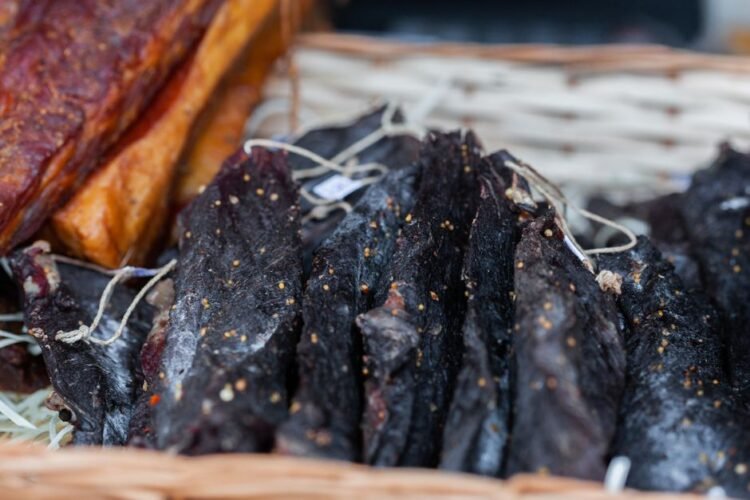
A traditional Zimbabwean cured and air-dried beef snack with bold peppery, slightly tangy notes from vinegar and aromatic spices. Biltong has been a high-protein staple across Southern Africa for centuries, made by marinating strips of beef before drying them to a tender, chewy texture. This homemade version is deeply satisfying and keeps well for weeks, perfect for hiking, road trips, or pairing with a cold drink.
Prep Time30 mins
Cook Time480 mins
Total Time510 mins
Servings8
YieldAbout 500 g dried biltong (8 servings)
Nutrition Facts
Per serving (estimated)
- 230 kcalCalories
- 10 gFat
- 4 gSaturated Fat
- 2 gCarbs
- 0 gFiber
- 1 gSugar
- 30 gProtein
- 980 mgSodium
- 420 mgPotassium
- 30 mgCalcium
- 3.5 mgIron
- 0 mgVitamin C
- 10 mcgVitamin A
Ingredients
For the Meat and Marinade
- 1 kg (2.2 lbs) beef topside or silverside, trimmed of large fat pieces
- 60 ml (1/4 cup) malt vinegar or white vinegar
- 30 ml (2 tbsp) Worcestershire sauce
- 1 tbsp brown sugar
For the Spice Rub
- 3 tbsp coarse sea salt
- 2 tbsp freshly cracked black pepper
- 1 tbsp crushed coriander seeds
- 1 tbsp hot paprika or chili powder
- 1 tsp ground cloves (optional, for depth)
Directions
- Slice the beef against the grain into strips about 2 cm thick, 5 cm wide, and 15-20 cm long, trimming excess fat which can go rancid during drying.
- Whisk together the vinegar, Worcestershire sauce, and brown sugar in a large bowl. Add the meat strips and toss to coat thoroughly. Cover and refrigerate for 1 hour, turning occasionally.
- In a separate bowl, combine the salt, cracked black pepper, crushed coriander, paprika, and cloves. Mix well.
- Remove meat from the marinade and pat dry with paper towels. Press the spice rub firmly into every surface of each strip, coating them generously on all sides.
- Thread a long needle or metal skewer through one end of each strip and arrange them on a wire rack so no pieces touch and air can circulate freely around them.
- Dry in a dehydrator at 60°C (140°F) for 8-10 hours, or in an oven set to its lowest temperature (around 70°C/160°F) with the fan running and the door propped open 2-3 cm with a wooden spoon, drying for 6-8 hours.
- The biltong is ready when dark and firm on the outside but still has a slight give and shows a reddish-pink interior when cut; traditional air-drying takes 3-5 days in a cool, dry, well-ventilated space away from direct sunlight.
- Brush off any loose spice, wrap loosely in paper towel, and let rest at room temperature for 6-12 hours to equalize moisture, then store in an airtight container for up to 4 weeks.
- Slice thinly across the grain with a sharp knife just before serving. Enjoy on its own, with dried fruits and nuts, or alongside a cold lager.
Cook’s Notes
- For authentic Zimbabwean flavor, lean more heavily on cracked black pepper and chili and use less coriander compared to South African biltong—a hotter, pepper-forward profile is characteristic.
- Air-drying is the traditional method: hang strips in a fly-proof, cool, dry spot with good airflow (a converted cupboard with a small fan works well) for 3-5 days.
- Test for doneness by pressing the meat: it should feel firm with just a little give, bending slightly without snapping, and show a rosy pink center when cut.
- Don't skip trimming the surface fat—fat doesn't cure like the lean meat, stays greasy, and can quickly go rancid and spoil the whole batch.
- For a wetter, more tender biltong pull strips 1-2 hours early; for a drier 'chalk-like' version favored in some regions, dry longer until almost brittle.