 (No Ratings Yet)
 Loading...
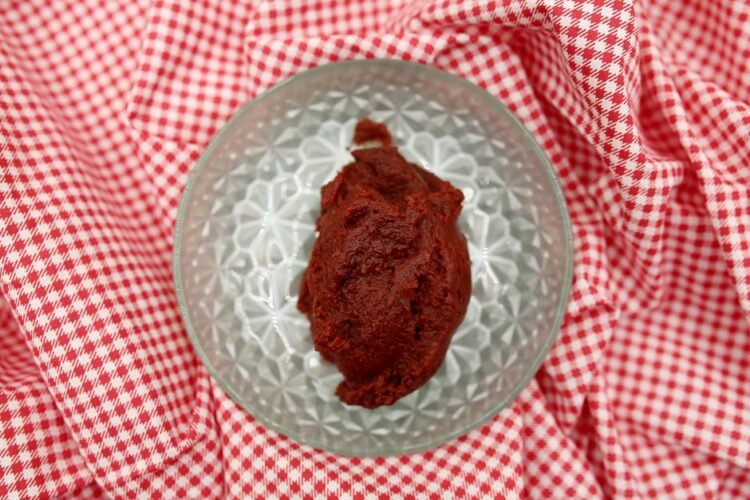
Poi is the traditional Hawaiian staple made from pounded taro root (kalo), revered for centuries as a sacred Polynesian crop. This classic preparation produces a smooth, mildly tangy paste that naturally thickens as it rests. Best served fresh alongside traditional Hawaiian fare like kalua pork or lomi salmon.
Prep Time15 mins
Cook Time45 mins
Total Time60 mins
Servings4
Yield4 servings (about 3 cups)
Nutrition Facts
Per serving (estimated)
- 170 kcalCalories
- 0.5 gFat
- 0 gSaturated Fat
- 39 gCarbs
- 6 gFiber
- 1 gSugar
- 3 gProtein
- 30 mgSodium
- 615 mgPotassium
- 110 mgCalcium
- 1.2 mgIron
- 5 mgVitamin C
- 5 mcgVitamin A
Ingredients
For the Poi Paste
- 2 lbs fresh taro root (kalo), about 2 medium roots
- 1/2 to 1 cup warm filtered water, as needed
- 1/4 tsp sea salt, optional
- 1 tbsp coconut milk, optional, for richer flavor
Directions
- Wash the taro roots thoroughly under cold running water, scrubbing the skin to remove all dirt and rootlets; do not peel before cooking.
- Place the whole taro roots in a steamer basket over boiling water, cover, and steam for 40 to 45 minutes until a fork pierces the flesh easily, or boil them in salted water for 30 to 35 minutes.
- Remove the cooked taro and let it cool just enough to handle while still warm. Slice each root in half lengthwise and slip off the skin with a paring knife, removing any tough fibrous parts near the core.
- Cut the warm taro flesh into chunks and transfer immediately to a large poi board or sturdy bowl. Pound with a traditional stone poi pounder or mash with a potato masher until completely smooth with no lumps.
- Add warm water a tablespoon at a time, mixing continuously, until the paste reaches a thick, spoonable consistency. Stir in the salt and coconut milk if using, blending until uniform.
- Cover the poi with a clean cloth and let it rest at room temperature for several hours so it naturally thickens and develops a subtle tangy note as wild yeasts ferment the starches.
- Serve fresh at room temperature with traditional accompaniments, or transfer to an airtight container and refrigerate for up to one week, stirring in a splash of water before each use as it thickens further when chilled.
- If a fermented, sour poi is desired, leave the paste at room temperature for 24 to 48 hours, then refrigerate; it will develop a pleasantly tart flavor prized by many locals.
Cook’s Notes
- Always wear gloves or wash hands thoroughly after handling raw taro; the calcium oxalate crystals can irritate skin and cause itching, and raw taro must never be eaten.
- Choose heavy, hairy-skinned taro roots with visible rings at the top; older corms yield sweeter, more flavorful poi.
- Traditional poi is graded by thickness from 'one-finger' (eaten with chopsticks) to 'three-finger' (dipped with fingers); adjust water accordingly.
- For purple-tinted poi with a slightly sweeter, nuttier flavor, seek out Hawaiian 'Piko' or 'Lehua' taro varieties at Asian markets.
- Poi is naturally gluten-free, vegan, and one of the most hypoallergenic foods, making it ideal for sensitive diets.