 (No Ratings Yet)
 Loading...
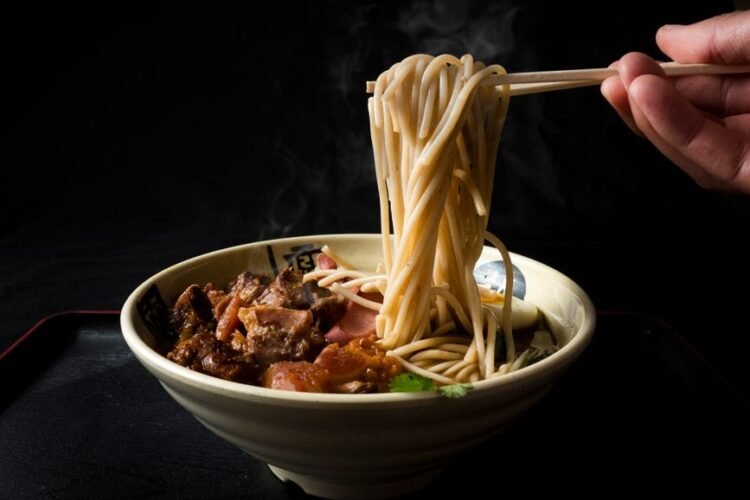
A signature Hong Kong noodle shop bowl featuring gelatinous braised beef tendon in a clear, deeply savory beef broth, served over springy egg noodles with fresh scallions and pickled chilies on the side.
Prep Time25 mins
Cook Time180 mins
Total Time205 mins
Servings4
Yield4 servings
Nutrition Facts
Per serving (estimated)
- 560 kcalCalories
- 20 gFat
- 7 gSaturated Fat
- 52 gCarbs
- 2 gFiber
- 6 gSugar
- 38 gProtein
- 1280 mgSodium
- 720 mgPotassium
- 85 mgCalcium
- 5.5 mgIron
- 8 mgVitamin C
- 60 mcgVitamin A
Ingredients
For the beef tendon
- 1.5 lbs (680 g) beef tendon, cut into 2-inch pieces
- 1 lb (450 g) beef brisket or beef shank, optional for added body
- 2 tablespoons Shaoxing wine
- 8 cups cold water for parboiling
For the broth and braise
- 3 lbs (1.4 kg) beef bones, marrow or knuckle
- 12 cups water, divided
- 1 large onion, halved
- 4 inches fresh ginger, smashed
- 6 garlic cloves, smashed
- 3 star anise, 2 cinnamon sticks, 4 whole cloves, 2 bay leaves, 1 tsp white peppercorns
- 1/4 cup (60 ml) light soy sauce
- 2 tablespoons dark soy sauce
- 1 oz (28 g) rock sugar
- 1 tablespoon salt, plus more to taste
For the noodles
- 1 lb (450 g) fresh Hong Kong style egg noodles or wonton noodles
- 1 teaspoon sesame oil
- Large pot of boiling unsalted water
- Cold water for rinsing
For serving and garnish
- 4 scallions, finely sliced
- 1/2 cup fresh cilantro leaves
- 1/4 cup pickled green chilies, sliced
- 2 tablespoons Chinese mustard greens, rinsed and shredded
- 1 tablespoon chili oil, optional
- 1 teaspoon toasted white sesame seeds
Directions
- Rinse the beef tendon and brisket under cold water. Place in a large pot, cover with cold water, and bring to a boil over high heat. Boil for 5 minutes, skimming off all the gray foam that rises to the surface, then drain and rinse the meat thoroughly under warm water to remove all scum.
- While the meat parboils, prepare the broth: blanch the beef bones in a separate pot of boiling water for 5 minutes, then drain and rinse. Return the bones to a clean stockpot with 10 cups fresh water, the onion, ginger, garlic, and the combined sachet of star anise, cinnamon, cloves, bay leaves, and white peppercorns. Bring to a boil, reduce to a gentle simmer, and cook uncovered for 90 minutes to extract maximum flavor.
- Strain the broth through a fine-mesh sieve into a clean pot and discard the bones and aromatics. Return the strained broth to the stove, add the parboiled tendon, brisket, Shaoxing wine, light soy sauce, dark soy sauce, rock sugar, and salt. Bring back to a simmer, then reduce the heat to low and cover.
- Braise gently for 2 to 2.5 hours, or until the tendon is completely tender and yields easily when pierced with a chopstick, and the brisket is fork-tender. Skim any surface fat occasionally, then taste and adjust seasoning with additional salt if needed.
- Remove the tendon and brisket from the braising liquid and set aside. Strain the braising liquid and combine it with the reserved beef bone broth, adding the remaining 2 cups of water if a lighter soup is preferred. Keep hot over low heat.
- Bring a large pot of unsalted water to a rolling boil. Add the fresh egg noodles and cook according to package directions, usually 2 to 3 minutes until just tender but still springy. Drain immediately, rinse briefly under warm water to remove surface starch, then toss with sesame oil to prevent sticking.
- To assemble each bowl, place a portion of warm noodles in a deep soup bowl. Arrange several pieces of braised tendon and slices of brisket on top. Ladle 1.5 to 2 cups of the hot broth over the noodles and meat.
- Garnish generously with sliced scallions, cilantro leaves, pickled green chilies, and shredded mustard greens. Finish with a drizzle of chili oil if desired and a sprinkle of toasted sesame seeds. Serve immediately with extra broth on the side, since the noodles will continue to absorb it.
Cook’s Notes
- Use an Instant Pot or pressure cooker to cut the tendon braising time to about 50 minutes at high pressure.
- For the cleanest Cantonese-style broth, chill the finished soup overnight and lift off the solidified fat layer before reheating and serving.
- Always blanch the tendon and bones first to remove blood and impurities that would otherwise cloud the broth.
- If fresh Hong Kong noodles are unavailable, substitute thin Japanese ramen noodles or fresh Chinese-style egg noodles.
- The broth should taste slightly stronger than you think it should, since the plain noodles will dilute the seasoning once added to the bowl.