 (No Ratings Yet)
 Loading...
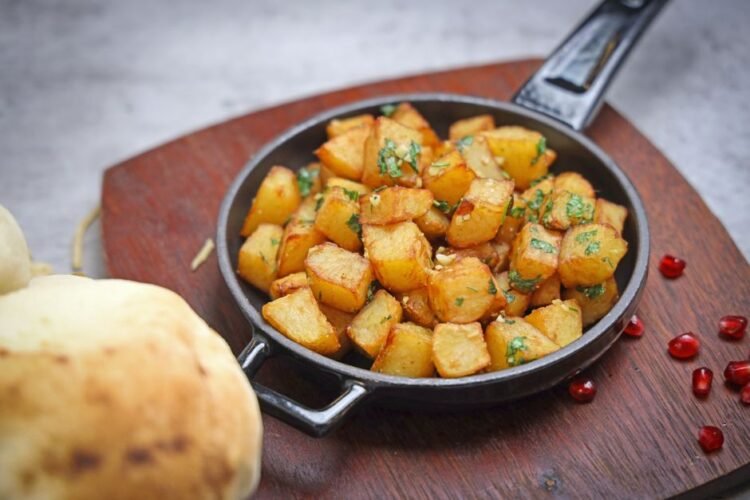
Ojakhuri is a beloved Georgian home-style skillet that roasts juicy pork and golden potatoes together with onions and warm spices. Traditionally finished under a clay lid, this version uses a heavy cast-iron pan to deliver the same crispy-edged meat and tender spuds. It is hearty, deeply savory, and perfect alongside a tomato-and-cucumber salad.
Prep Time15 mins
Cook Time40 mins
Total Time55 mins
Servings4
Yield4 servings
Nutrition Facts
Per serving (estimated)
- 640 kcalCalories
- 30 gFat
- 9 gSaturated Fat
- 42 gCarbs
- 5 gFiber
- 5 gSugar
- 34 gProtein
- 820 mgSodium
- 1280 mgPotassium
- 65 mgCalcium
- 3.4 mgIron
- 22 mgVitamin C
- 8 mcgVitamin A
Ingredients
For the pork and potatoes
- 1.5 lb boneless pork shoulder, trimmed and cut into 1.5-inch cubes
- 1.5 lb Yukon gold or russet potatoes, peeled and cut into 1.5-inch cubes
- 2 large yellow onions, halved and sliced into thick half-moons
- 4 cloves garlic, finely minced
- 3 tbsp sunflower or canola oil
- 1.5 tsp kosher salt, plus more to taste
- 1 tsp freshly ground black pepper
- 1.5 tsp ground coriander
- 1 tsp sweet paprika
- 0.5 tsp ground blue fenugreek (optional, traditional)
- 0.25 tsp ground marigold petals (optional, for color)
For finishing and serving
- 0.5 cup chopped fresh cilantro or flat-leaf parsley
- 1 small red onion, very thinly sliced for garnish
- Lemon wedges, for serving
Directions
- Pat the pork cubes and potato cubes very dry with paper towels; moisture is the enemy of a good crust in this dish.
- Heat the oil in a large cast-iron skillet over medium-high until it just begins to shimmer. Add the pork in a single layer, season with 1 teaspoon of the salt and half the pepper, and sear without moving for 3 to 4 minutes until deeply browned on one side. Turn and brown the second side, about 3 more minutes. Transfer the pork to a plate.
- Lower the heat to medium. Add the sliced onions to the same skillet with a pinch of salt and cook, stirring occasionally, for 5 to 6 minutes until softened and lightly caramelized. Stir in the garlic, coriander, paprika, blue fenugreek, and marigold if using, and toast the spices for about 45 seconds until fragrant.
- Add the potatoes to the skillet along with the seared pork and any juices. Season with the remaining salt and pepper, toss to coat in the spiced oil, and spread everything in an even layer. Cover tightly with a lid or foil and cook over medium-low for 20 minutes, stirring once at the halfway point, until the potatoes are fork-tender.
- Uncover, raise the heat back to medium-high, and cook another 6 to 8 minutes, stirring gently, until the potato edges turn crisp and golden and the pork renders a final hit of crackling flavor.
- Taste and adjust salt. Off the heat, scatter the cilantro over the top and let the skillet rest, covered, for 2 minutes so the herbs wilt.
- Serve hot straight from the pan, topped with the raw red onion and lemon wedges for squeezing over each portion.
Cook’s Notes
- Use pork shoulder with some fat marbling for the juiciest result; lean loin will dry out under the long cover-and-crisp method.
- A heavy cast-iron or carbon-steel pan gives the best crust; nonstick will brown but won't develop the lightly charred edges that make ojakhuri special.
- If you can't find blue fenugreek, substitute an extra 0.5 teaspoon of dried savory plus a small pinch of mustard powder for a similar earthy-nutty note.
- Drying the potatoes and pork thoroughly before searing is the single biggest step toward a non-soggy skillet.
- Serve with a simple tomato-cucumber-walnut salad (called "pkhali-adjika" companion) and a wedge of plain country bread to soak up the pan juices.