 (No Ratings Yet)
 Loading...
A traditional Indian fruit leather made by slowly drying sweetened mango pulp into thin, chewy sheets. This naturally glossy snack captures the sunshine flavor of ripe mangoes and is enjoyed across the Indian subcontinent as a teatime treat or travel-friendly sweet. The process concentrates the tropical fruit into vibrant amber ribbons with an intense mango essence.
Prep Time25 mins
Cook Time60 mins
Total Time85 mins
Servings6
Yield12 strips (6 servings)
Nutrition Facts
Per serving (estimated)
- 185 kcalCalories
- 2.5 gFat
- 1 gSaturated Fat
- 43 gCarbs
- 2 gFiber
- 36 gSugar
- 1 gProtein
- 5 mgSodium
- 285 mgPotassium
- 22 mgCalcium
- 0.5 mgIron
- 38 mgVitamin C
- 95 mcgVitamin A
Ingredients
For the mango pulp
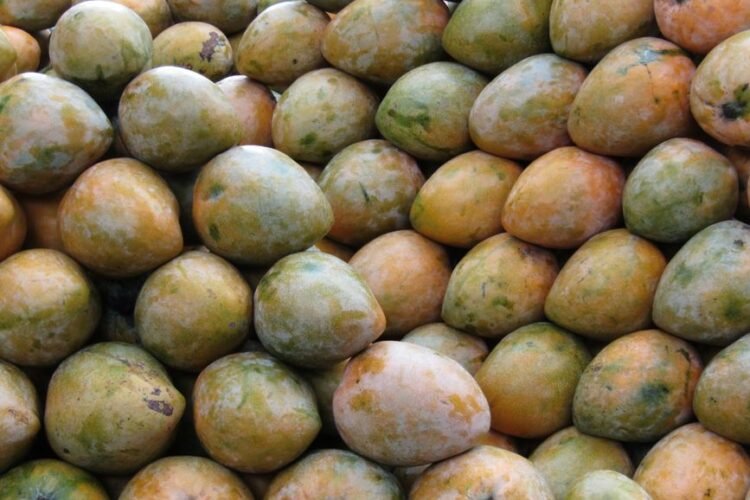
- 6 large ripe mangoes (about 4 cups pulp, preferably Alphonso or Kesar)
- 3/4 cup granulated sugar (adjust to mango sweetness)
- 1/2 teaspoon ground cardamom
- 1/4 teaspoon citric acid or 1 tablespoon fresh lemon juice
- 1/4 cup water
- Pinch of saffron threads (optional)
For drying
- 1 tablespoon ghee or neutral oil for greasing
- 2 sheets parchment paper or silicone baking mats
Directions
- Peel the mangoes, slice the flesh away from the pit, and roughly chop. Combine the chopped mango in a heavy saucepan with 1/4 cup water and simmer for 8-10 minutes until very soft, mashing with a potato masher.
- Transfer the cooked mango to a blender or food processor and puree until completely smooth. You should have about 4 cups of thick pulp.
- Pour the puree back into the saucepan, add sugar, cardamom, citric acid, and saffron if using. Cook over medium-low heat, stirring constantly, for 18-22 minutes until the mixture thickens considerably and a wooden spoon leaves a trail on the bottom for 2-3 seconds.
- Preheat the oven to its lowest setting (around 170 degrees F or 75 degrees C). Line two large rimmed baking sheets with silicone mats or parchment paper lightly greased with ghee.
- Pour the thickened mango puree onto the prepared sheets and spread into an even layer about 1/8-inch thick using an offset spatula. Tap the trays gently to level the surface.
- Place the trays in the oven with the door slightly ajar (wedge a wooden spoon in the door) to allow moisture to escape. Dry for 4-6 hours, rotating trays every hour, until the surface is tacky but no longer sticky and the leather peels cleanly from the mat.
- Cut the leather into 2-inch wide strips using kitchen scissors or a sharp knife. If desired, roll each strip tightly into a spiral and wrap in wax paper.
- Store the rolls in an airtight container at room temperature for up to 3 weeks, or refrigerate for up to 2 months. The chewy texture will soften slightly when stored.
Cook’s Notes
- Choose fully ripe, fragrant mangoes for the deepest flavor; underripe fruit will produce a tart leather that needs more sugar.
- For a traditional sun-dried version, spread the pulp on greased stainless steel trays and cover with fine mesh; dry in direct sunlight for 2-3 days, bringing trays inside at night.
- Test for doneness by pressing the center with a clean fingertip; it should feel firm and leathery, not squishy or wet.
- If the leather sticks when peeling, dry it for another 30-60 minutes; humidity levels affect drying time significantly.
- Add a tablespoon of rose water or a pinch of dried ginger powder at the end of cooking for an aromatic variation popular in some regional preparations.