 (No Ratings Yet)
 Loading...
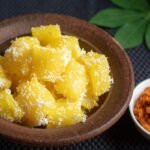
A classic Javanese snack made from steamed cassava that is mashed smooth with sugar, then shaped into soft, pale cakes and rolled in fresh coconut. The result is gently sweet, slightly fibrous, and unmistakably homey, the kind of treat sold by street vendors on warm afternoons. It comes together with very few ingredients and showcases the natural creaminess of fresh cassava.
Prep Time15 mins
Cook Time25 mins
Total Time40 mins
Servings6
Yield6 small cakes
Nutrition Facts
Per serving (estimated)
- 320 kcalCalories
- 3 gFat
- 1.5 gSaturated Fat
- 73 gCarbs
- 4 gFiber
- 32 gSugar
- 3 gProtein
- 130 mgSodium
- 380 mgPotassium
- 35 mgCalcium
- 0.6 mgIron
- 28 mgVitamin C
- 4 mcgVitamin A
Ingredients
For the cakes
- 1 kg fresh cassava (about 2.2 lb), peeled and cut into 4 cm chunks
- 150 g granulated sugar, or 175 g grated palm sugar
- 1/4 tsp fine sea salt
- 1 tsp vanilla extract
- 2 pandan leaves, knotted (optional)
- 2–3 tbsp hot water, only if needed
For the coating
- 100 g freshly grated coconut, loosely packed
- 1/4 tsp fine sea salt
Directions
- Place the cassava chunks in a steamer basket over vigorously boiling water, add the knotted pandan leaves on top if using, cover, and steam until a skewer slides through with no resistance, 20 to 25 minutes.
- While the cassava steams, combine the grated coconut with 1/4 tsp salt in a small bowl and steam it for 3 to 4 minutes until just heated through and lightly moist; set aside to cool slightly.
- Drain any pooled water from the steamer, discard the pandan leaves, and while the cassava is still very hot, pass it through a fine ricer or the smallest holes of a box grater into a large bowl to break up all fibers.
- Add the sugar and salt to the warm cassava and mash with a sturdy spoon or wooden spatula until the sugar melts and the mixture holds together when pressed; stir in the vanilla. If the mash feels dry, drizzle in 1 to 2 tablespoons of hot water until pliable.
- Divide the mixture into 6 equal portions and, with lightly oiled hands, shape each into a tight rectangular or cylindrical patty about 2 cm thick, pressing firmly so the surface stays smooth and compact.
- Roll each warm cake in the steamed coconut to coat evenly on all sides, then arrange on a plate and let rest 10 minutes so the flavors settle and the texture firms up just slightly.
- Serve at room temperature as a snack with black coffee or jasmine tea; store any leftovers in an airtight container and eat within 1 day for the best texture.
Cook’s Notes
- Choose cassava roots that feel heavy for their size with smooth, unbroken skin; avoid any with dark streaks running through the flesh, which indicates the root is past its prime.
- Peel the cassava just before steaming; cut away the tough central core and any woody parts for the smoothest texture.
- If you do not have a ricer, push the warm cassava through a fine-mesh sieve using the back of a ladle to achieve a similarly silky mash.
- For a more traditional look, tint half the mash with a drop of pink or green food coloring and twist two colors together before shaping.
- Palm sugar (gula merah) gives a deeper, caramel-like sweetness that is closer to the original Javanese version than white sugar.