 (No Ratings Yet)
 Loading...
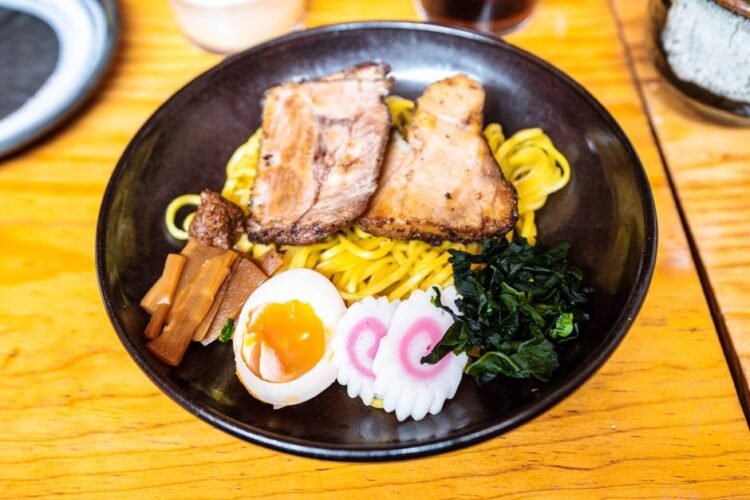
Abura soba is a beloved Tokyo-born style of soupless ramen that delivers deep, savory flavor through a concentrated oil-and-soy sauce tossed with thick noodles and rich toppings. Each bowl is built around a slick of rendered pork fat and aromatic tare, then crowned with chashu, a jammy ramen egg, nori, and menma. The fun is in the final mix: every diner tosses everything together until glossy and fully coated.
Prep Time15 mins
Cook Time25 mins
Total Time40 mins
Servings4
Yield4 bowls
Nutrition Facts
Per serving (estimated)
- 720 kcalCalories
- 38 gFat
- 11 gSaturated Fat
- 65 gCarbs
- 4 gFiber
- 5 gSugar
- 32 gProtein
- 1450 mgSodium
- 480 mgPotassium
- 90 mgCalcium
- 5 mgIron
- 4 mgVitamin C
- 180 mcgVitamin A
Ingredients
For the oil-soy sauce base
- 4 tablespoons Japanese soy sauce
- 2 tablespoons rice vinegar
- 1 tablespoon Chinkiang black vinegar
- 2 tablespoons mirin
- 1 tablespoon toasted sesame oil
- 3 tablespoons rendered pork back fat or lard, warm and liquid
- 4 cloves garlic, finely grated on a microplane
- 1 teaspoon fresh ginger, grated
- 1 tablespoon Japanese chili oil (rayu)
- 1 teaspoon granulated sugar
- 2 tablespoons warm noodle cooking water
For the noodles
- 4 portions (about 100 g each) fresh thick wheat ramen noodles
- 8 cups water for boiling
- 1 teaspoon salt for the cooking water
For the toppings
- 240 g chashu pork, sliced 5 mm thick
- 4 large eggs (for ramen eggs)
- 4 sheets toasted nori, halved
- 120 g menma (seasoned bamboo shoots), drained
- 3 scallions, thinly sliced on the bias
- 2 teaspoons toasted white sesame seeds
- 2 tablespoons crispy fried garlic chips
- 1 sheet nori, julienned (optional)
Directions
- Bring a large pot of salted water to a rolling boil for the noodles. While the water heats, slice the chashu, drain the menma, slice the scallions, and halve the nori sheets.
- Cook the ramen eggs: lower the eggs into simmering water and cook exactly 6 minutes 30 seconds for jammy yolks, then transfer to an ice bath for 5 minutes, peel carefully, and halve lengthwise.
- Cook the noodles in the boiling water according to package directions, typically 3 to 4 minutes until just al dente. Reserve 2 tablespoons of starchy cooking water before draining; rinse the noodles very briefly under cool water to remove surface starch and shake off excess moisture.
- Meanwhile, whisk the soy sauce, rice vinegar, black vinegar, mirin, sesame oil, rendered pork fat, grated garlic, ginger, chili oil, and sugar together in a bowl until emulsified. Stir in the 2 tablespoons of reserved warm noodle water to loosen the sauce.
- Warm the chashu slices in a small skillet over medium heat for about 30 seconds per side, just until edges caramelize slightly.
- Divide the sauce evenly among 4 wide, deep serving bowls (about 3 tablespoons per bowl), swirling to coat the bottom.
- Add the hot drained noodles to each bowl, piling them over the sauce so the heat helps the fat cling to the strands.
- Artfully arrange the toppings on each mound of noodles: a few slices of warm chashu, one halved ramen egg, a folded sheet of nori, a spoonful of menma, and a generous shower of scallions.
- Finish with a sprinkle of toasted sesame seeds and crispy garlic chips, and add the julienned nori if using. Serve immediately with chopsticks and a large soup spoon.
- Tell diners to mix thoroughly for about 30 seconds before lifting their first bite, ensuring every strand is glossy with sauce and fat.
Cook’s Notes
- Use fresh, thick ramen noodles (around 22 to 24 mm diameter) for the proper chewy bite; dried ramen works in a pinch but loses some elasticity.
- Render pork back fat slowly over low heat until golden and liquid; leftover fat can be stored in the fridge for up to 2 weeks and used to amplify any ramen.
- Add a raw egg yolk on top just before mixing for an even richer, glossier sauce that clings like a custard.
- For a spicier bowl, stir 1 teaspoon of tobanjan or doubanjiang into the sauce base and finish with extra chili oil.
- The sauce base keeps refrigerated in a sealed jar for up to 7 days, making weeknight bowls come together in under 10 minutes.