 (No Ratings Yet)
 Loading...
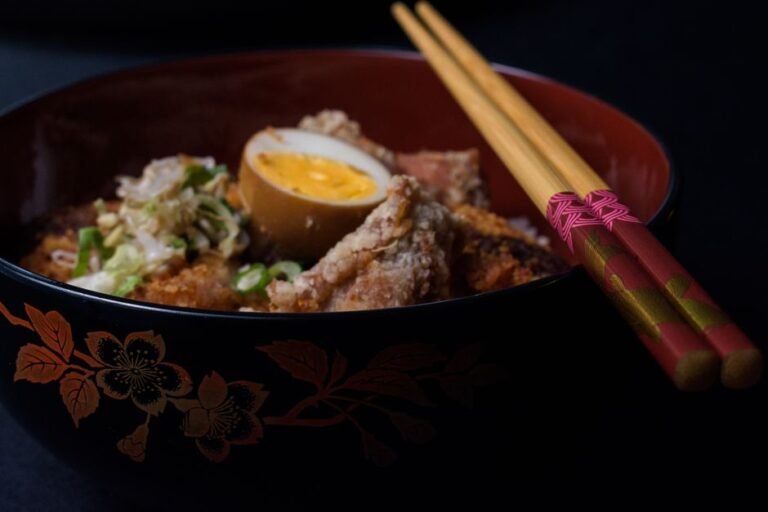
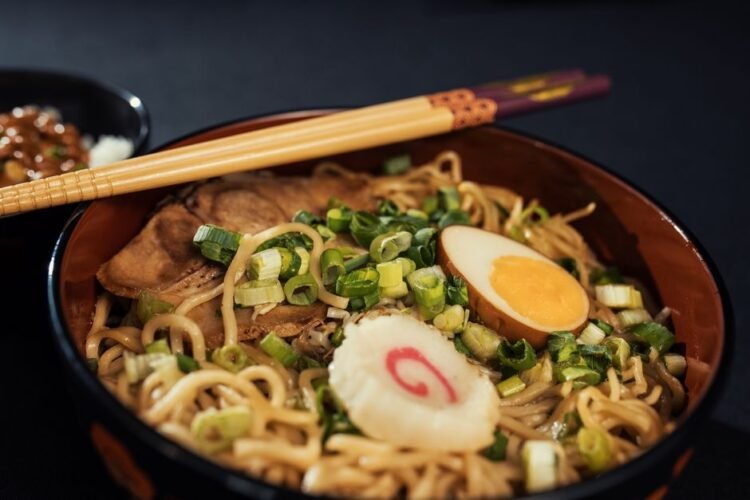
Bring the ramen-ya experience home with this intensely rich dipping ramen, built on a slowly simmered pork bone broth that turns creamy and milky-white from hours of collagen extraction. Thick, chewy fresh noodles are served alongside — not in — the deeply concentrated broth, then dipped bite by bite for maximum flavor in every slurp. Topped with melt-in-your-mouth chashu, soft-boiled eggs, nori, and a drizzle of smoky black garlic oil.
Prep Time20 mins
Cook Time240 mins
Total Time260 mins
Servings4
Yield4 servings
Nutrition Facts
Per serving (estimated)
- 760 kcalCalories
- 38 gFat
- 13 gSaturated Fat
- 62 gCarbs
- 3 gFiber
- 4 gSugar
- 44 gProtein
- 1880 mgSodium
- 620 mgPotassium
- 95 mgCalcium
- 5 mgIron
- 4 mgVitamin C
- 55 mcgVitamin A
Ingredients
For the pork bone broth
- 3 lb pork neck bones
- 1 lb pork trotters, split lengthwise
- 2 large yellow onions, halved (skin on)
- 1 whole head garlic, halved crosswise
- 2 inch piece fresh ginger, sliced
- 12 cups cold water
For the dipping broth seasoning
- 1/4 cup soy sauce
- 3 tbsp white miso paste
- 2 tbsp mirin
- 1 tbsp rice vinegar
- 1 tbsp toasted sesame oil
- 2 tsp kosher salt
- 1 tsp ground white pepper
For serving
- 1 lb fresh ramen noodles
- 4 large eggs, for soft-boiling
- 4 sheets nori, halved
- 2 scallions, thinly sliced
- 1 1/2 cups sliced chashu pork (braised pork belly)
- 2 tbsp black garlic oil (mayu)
- 1 tsp toasted sesame seeds, for garnish
Directions
- Place the pork neck bones and trotters in a large stockpot, cover with cold water, and bring to a rolling boil. Boil hard for 10 minutes, then drain and rinse the bones under cold running water to purge impurities and excess scum.
- Return the blanched bones to a clean stockpot. Add the onions, garlic, and ginger, then pour in 12 cups of cold water. Bring to a boil over high heat, reduce to a vigorous simmer, and cook partially covered for 4 hours, skimming foam during the first hour and topping up with hot water as needed to keep the bones fully submerged.
- Strain the broth through a fine-mesh sieve into a large saucepan, discarding the solids. Whisk in the soy sauce, miso, mirin, rice vinegar, sesame oil, salt, and white pepper. Simmer the seasoned broth for 15 to 20 more minutes until reduced by about one-quarter and noticeably thicker and saltier than a soup-style broth.
- Meanwhile, bring a large pot of unsalted water to a boil. Add the fresh ramen noodles and cook 2 to 3 minutes, just until tender with a firm bite. Drain immediately, rinse briefly under cold water to remove surface starch, and divide among four wide, deep serving bowls.
- Lower the eggs into gently simmering water and cook exactly 6 minutes 30 seconds for a jammy yolk. Transfer to an ice bath to cool, then peel carefully and halve lengthwise just before serving.
- Divide the hot dipping broth among four individual deep bowls or small donabe pots. Top each bowl of noodles with nori, scallions, sliced chashu, a halved soft-boiled egg, a drizzle of black garlic oil, and a pinch of toasted sesame seeds.
- To eat, lift a small bundle of noodles with chopsticks, dip generously into the concentrated broth, let excess drip back for a second, and slurp immediately. Repeat between sips of broth straight from the dipping bowl.
Cook’s Notes
- For the classic opaque-white Hakata-style broth, extend the simmer to 8 to 10 hours and increase the ratio of trotters to neck bones for maximum collagen and body.
- Always start the broth with cold water and bring it up gradually — this slow ramp extracts far more flavor and emulsified fat than dropping bones into already-boiling water.
- Use fresh ramen noodles from a Japanese grocer or refrigerated section; dried ramen works in a pinch but lacks the chewy bite essential to a proper tsukemen dip.
- The dipping broth should taste noticeably saltier and more concentrated than a soup-style ramen broth because only a thin coating clings to each bite of noodle.
- Leftover strained broth keeps refrigerated for up to 3 days or frozen in 2-cup portions for up to 2 months; reheat gently and reseason before serving again.