 (No Ratings Yet)
 Loading...
Dhido is a rustic Nepali staple made by slowly sprinkling flour into boiling water while stirring constantly with a flat wooden paddle until it forms a smooth, glossy, dough-like mound. This version blends buckwheat and millet flours for an earthy, nutty flavor and pairs traditionally with lentil soup, gundruk, or fiery pickles.
Prep Time5 mins
Cook Time20 mins
Total Time25 mins
Servings4
Yield4 servings
Nutrition Facts
Per serving (estimated)
- 220 kcalCalories
- 2 gFat
- 0.4 gSaturated Fat
- 45 gCarbs
- 5 gFiber
- 1 gSugar
- 8 gProtein
- 480 mgSodium
- 280 mgPotassium
- 25 mgCalcium
- 2 mgIron
- 0 mgVitamin C
- 0 mcgVitamin A
Ingredients
For the porridge
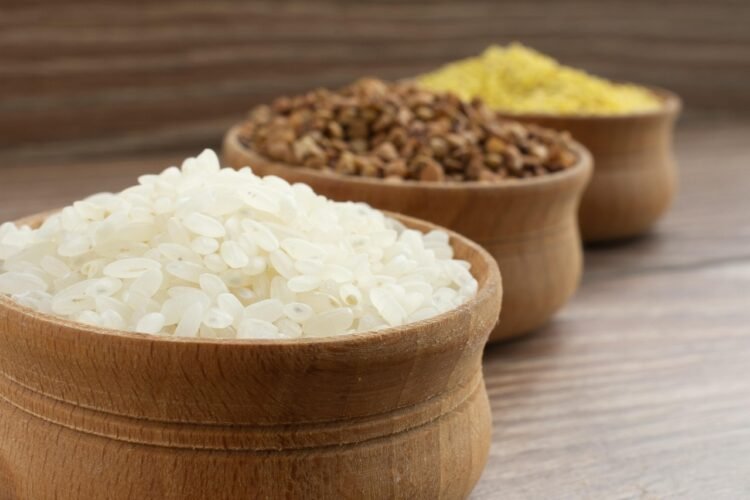
- 1 1/2 cups (180 g) buckwheat flour (kuttu)
- 1/2 cup (60 g) finger millet flour (kodo)
- 4 cups (960 ml) water
- 1 tsp fine sea salt
- 1 tbsp ghee or unsalted butter, optional, for serving
To serve (optional)
- 2 cups warm lentil dal (masoor or moong)
- 1 cup gundruk ko soup or sautéed greens
- 2 tbsp Nepali tomato pickle or chili achar
- Steamed greens such as spinach or mustard leaves
Directions
- Bring the water and salt to a vigorous rolling boil in a heavy-bottomed pot, then reduce the heat to medium so the water stays at a steady, bubbling simmer.
- In a small bowl, whisk the buckwheat and millet flours together so they will incorporate evenly into the water.
- Hold the bowl of flour in your non-dominant hand and a flat wooden paddle or sturdy spatula in the other. Begin sprinkling the flour into the boiling water in a thin, steady stream while stirring continuously in a circular motion.
- Maintain a constant rhythm: flour in one hand, paddle moving in the other. Stop adding flour only when the mixture begins to thicken and resist the paddle, then resume once it loosens.
- Once all the flour is incorporated, keep stirring vigorously for 8 to 10 minutes, pressing the dough against the sides of the pot. The dhido is ready when it forms a single smooth, glossy mass that pulls cleanly away from the pot.
- Cover the pot, remove from the heat, and let the dhido rest for 2 minutes so the inside steams through and becomes tender.
- Wet your hands with cold water and quickly shape the warm dhido into four oval mounds on a plate or a banana leaf. Drizzle each mound with a little ghee if using.
- Serve immediately while still soft, alongside warm dal, gundruk soup, or vegetable curry. Tear off pieces with your right-hand fingers and dip into the accompaniments before eating.
Cook’s Notes
- Keep the water at a steady simmer, not a violent boil, to prevent the flour from scorching on the bottom of the pot.
- Always sprinkle the flour slowly and steadily; dumping it in creates lumps that cannot be whisked out once they form.
- A traditional flat wooden paddle (called a dindo) works better than a spoon because its broad edge incorporates the flour smoothly and scrapes the pot clean.
- Wet your hands before shaping the dhido – the dough is very hot and will stick to dry skin.
- Dhido thickens and stiffens as it cools, so serve it within a few minutes of removing from the heat for the silkiest texture.