 (No Ratings Yet)
 Loading...
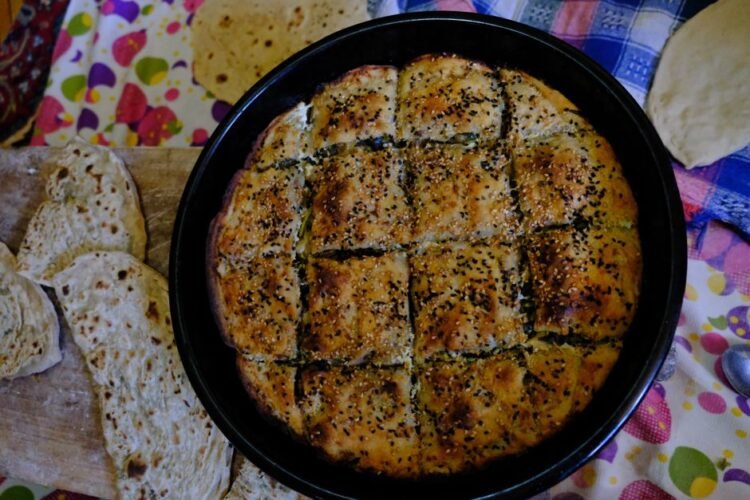
A beloved everyday bread from Iran, this oval-shaped, dimpled flatbread has a pillowy interior and a glossy, slightly crackly crust brushed with butter. The signature topping of sesame seeds and flour-water paste (roomal) gives it a toasty crunch and unmistakable bakery aroma.
Prep Time25 mins
Cook Time13 mins
Total Time38 mins
Servings4
Yield4 oval flatbreads
Nutrition Facts
Per serving (estimated)
- 450 kcalCalories
- 14 gFat
- 5 gSaturated Fat
- 68 gCarbs
- 3 gFiber
- 3 gSugar
- 12 gProtein
- 480 mgSodium
- 180 mgPotassium
- 110 mgCalcium
- 3.5 mgIron
- 0.5 mgVitamin C
- 120 mcgVitamin A
Ingredients
For the dough
- 3 cups (375 g) bread flour, plus more for dusting
- 2 1/4 tsp (7 g) instant yeast
- 1 tsp granulated sugar
- 1 tsp fine salt
- 3/4 cup (180 ml) whole milk, warmed to 110°F (43°C)
- 1/4 cup (60 g) plain whole-milk yogurt
- 1 large egg, room temperature
- 2 tbsp unsalted butter, melted
- 2 tbsp neutral oil, plus more for the bowl
For the roomal (flour paste topping)
- 1/3 cup (45 g) all-purpose flour
- 1/2 cup (120 ml) cool water
- 1/4 tsp baking powder
- 2 tbsp white sesame seeds
For finishing
- 2-3 tbsp melted butter for brushing
- Extra sesame seeds, for sprinkling
Directions
- In a large bowl, whisk the warm milk, sugar, and yeast; let stand 5-10 minutes until foamy and fragrant. Stir in the yogurt, egg, melted butter, oil, and salt until combined.
- Add 2 cups of the flour and mix with a wooden spoon, then add the remaining flour a little at a time and turn out onto a floured surface. Knead 8-10 minutes until smooth, soft, and just slightly tacky (it should spring back when pressed).
- Place the dough in a lightly oiled bowl, cover, and let rise in a warm spot for 1 to 1 1/2 hours, until doubled in size.
- Meanwhile, make the roomal: whisk the flour, water, and baking powder in a small bowl until completely smooth, then set aside. The paste should be thick but pourable, like a thin pancake batter.
- Punch down the dough and divide into 4 equal pieces. On parchment paper, roll each piece into an oval about 8 inches long and 1/4 inch thick. Transfer ovals (on their parchment) to two baking sheets.
- Dip your fingertips in water and press deep, generous dimples all over each oval, almost piercing through to the parchment. Brush each oval generously with a thick coat of roomal so it pools in the dimples, then sprinkle liberally with sesame seeds.
- Cover loosely with a kitchen towel and let rest 25-30 minutes while you preheat the oven to 450°F (230°C) with a rack in the lower third.
- Bake the flatbreads one sheet at a time for 12-14 minutes, rotating halfway, until puffed, golden, and the sesame seeds are toasted.
- Slide onto a rack and brush immediately with melted butter, reapplying once the first coat soaks in. Serve warm, tearing by hand.
- Leftover flatbreads keep in an airtight bag at room temperature for 1 day, or freeze up to 2 months and reheat in a 350°F (175°C) oven for 4-5 minutes.
Cook’s Notes
- Always proof your yeast first in warm (not hot) milk with sugar – if it doesn't foam within 10 minutes, start over with fresh yeast.
- The roomal paste is non-negotiable for authentic texture; it sets into a thin, crackly shell that protects the soft crumb and gives the bread its bakery-style crackle when you bite into it.
- For deeper flavor, bloom 1 teaspoon dried fenugreek leaves (shanbalileh) into the roomal paste – it's a classic Persian touch used in Tehrani bakeries.
- Press the dimples firmly with wet fingers so they don't fill back in; if you skip this step the bread bakes up smooth and flat.
- Cold second rise is better than roomy – after shaping, refrigerate the dimpled, roomal-coated flatbreads for 1-2 hours, then bake straight from the fridge for an even more blistered crust.