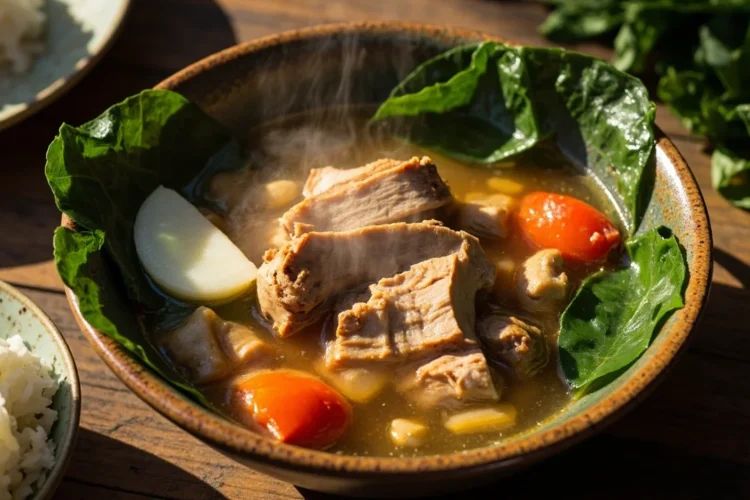
This classic Filipino sour stew brings together tender pork, fresh vegetables, and the bright tang of tamarind in a deeply comforting bowl. Long simmered and ladled over steamed rice, it's the kind of home-style dish that defines Filipino family cooking.
Prep Time20 mins
Cook Time50 mins
Total Time70 mins
Servings5
Yield5 servings
Nutrition Facts
Per serving (estimated)
- 420 kcalCalories
- 28 gFat
- 10 gSaturated Fat
- 12 gCarbs
- 4 gFiber
- 6 gSugar
- 26 gProtein
- 780 mgSodium
- 820 mgPotassium
- 90 mgCalcium
- 3.5 mgIron
- 32 mgVitamin C
- 120 mcgVitamin A
Ingredients
For the pork and broth
- 2 lbs pork belly or pork ribs, cut into 2-inch pieces
- 8 cups cold water
- 1 large yellow onion, quartered
- 2 ripe tomatoes, quartered
- 2 bay leaves
- 1 tbsp fish sauce (patis), plus more to taste
- 1 tsp whole black peppercorns
For the tamarind base
- 1.5 oz fresh or frozen tamarind pulp, or 3 tbsp tamarind paste
- 2 cups warm water, for steeping
For the vegetables
- 1 small daikon radish, peeled and sliced into rounds
- 8 pieces okra
- 1 Chinese eggplant, sliced into thick rounds
- 1 cup long beans, cut into 3-inch lengths
- 2 long green chili peppers
- 2 cups water spinach leaves and tender stems
Directions
- Place pork in a large pot and cover with 8 cups of cold water. Bring to a boil over high heat, skimming off any foam that rises to the surface.
- Add the onion, tomatoes, bay leaves, peppercorns, and 1 tablespoon fish sauce. Reduce heat to medium-low, cover, and simmer gently for 35 to 40 minutes, until the pork is fork-tender.
- While the pork simmers, prepare the tamarind base: place the tamarind pulp in a bowl, pour the 2 cups of warm water over it, and steep for 10 minutes. Mash with your hands, then strain the liquid through a fine sieve, pressing out as much pulp as possible. Discard the solids.
- Pour the strained tamarind broth into the pot with the pork. Bring to a gentle boil and simmer uncovered for 5 minutes to develop the sourness.
- Add the daikon radish and simmer for 3 minutes, then add the okra, eggplant, and long beans. Cook another 4 minutes, until the vegetables are just tender but still vibrant.
- Stir in the long green chili peppers and taste the broth. Adjust seasoning with more fish sauce for saltiness, or more tamarind liquid for a sharper sourness.
- Turn off the heat and add the water spinach; the residual heat will wilt it in about a minute while keeping it bright green.
- Ladle the stew into bowls over steamed jasmine rice, making sure each serving gets a good mix of pork, vegetables, and plenty of the tangy broth.
- Serve hot with extra fish sauce on the side and a small dish of fermented shrimp paste for dipping, if desired.
Cook’s Notes
- For the brightest, most authentic sourness, use fresh or frozen tamarind pulp rather than bottled concentrate, which can taste one-dimensional.
- Cut the pork with the bone in for deeper flavor and a richer broth; pork belly gives a luxurious mouthfeel while ribs deliver a cleaner porkiness.
- Add the vegetables in stages so each one cooks to the right texture — radish and eggplant go in earlier, while water spinach goes in at the very end to keep its color.
- Don't skip the skimming step during the initial boil; it removes impurities and yields a clearer, cleaner-tasting broth.
- If you can't find water spinach, baby bok choy or regular spinach work as substitutes, though kangkong is the most traditional choice.
More Philippines Recipes You’ll Love
Craving more flavors from Philippines? Try these traditional recipes: