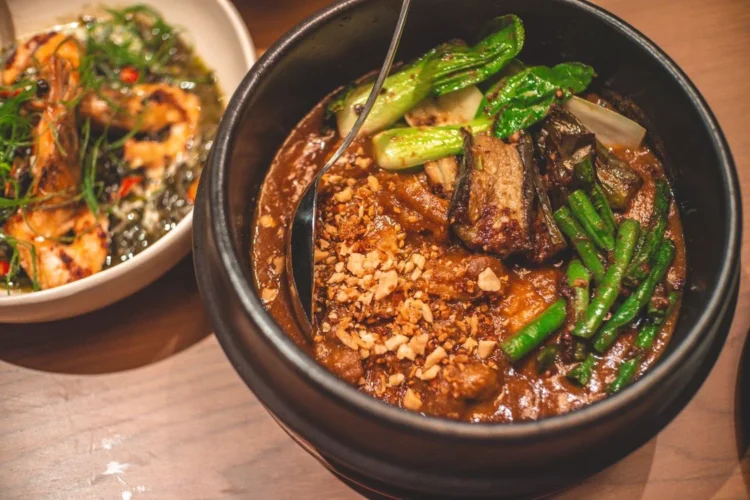
A classic one-pot vegetable stew from the Ilocano region of northern Luzon, this dish layers tender pork belly, bitter melon, squash, eggplant, and okra with fermented fish paste for a deeply savory, slightly pungent flavor. It is traditionally served family-style with plenty of steamed jasmine rice to soak up the rich, briny pan juices.
Prep Time20 mins
Cook Time30 mins
Total Time50 mins
Servings4
Yield4 servings
Nutrition Facts
Per serving (estimated)
- 430 kcalCalories
- 32 gFat
- 11 gSaturated Fat
- 18 gCarbs
- 5 gFiber
- 6 gSugar
- 18 gProtein
- 780 mgSodium
- 760 mgPotassium
- 80 mgCalcium
- 2.5 mgIron
- 38 mgVitamin C
- 290 mcgVitamin A
Ingredients
For the pork and aromatics
- 1 lb (450 g) pork belly, skin-on, cut into 1-inch cubes
- 2 tablespoons vegetable oil
- 1 medium yellow onion, sliced
- 4 garlic cloves, minced
- 1 thumb (about 1 tablespoon) fresh ginger, julienned
- 1 medium ripe tomato, sliced into wedges
For the vegetables
- 1 large bitter melon (ampalaya), halved, seeded, and sliced 1/4-inch thick
- 1 Chinese eggplant, sliced into 1-inch thick rounds
- 1 cup kabocha or calabaza squash, peeled and cubed (about 6 oz)
- 8 to 10 fresh okra pods, tops trimmed
- 1 cup sitaw (long beans) or green beans, cut into 2-inch lengths
For the seasoning and finishing
- 2 to 3 tablespoons bagoong isda (fermented fish paste), to taste
- 1/2 cup water
- 1/4 teaspoon freshly ground black pepper
- Steamed jasmine rice, for serving
Directions
- Prep all the vegetables first: halve and seed the bitter melon and slice it thin; cut the eggplant into thick rounds; cube the squash; trim the okra tops; and cut the long beans into 2-inch pieces. Set them aside in separate piles so they can be added in stages.
- Heat the vegetable oil in a heavy-bottomed pot or Dutch oven over medium heat. Add the pork belly and cook undisturbed for 4 to 5 minutes until the bottom is golden and some fat has rendered, then stir and continue browning for another 3 to 4 minutes.
- Add the sliced onion, garlic, and ginger to the pot and sauté for 1 to 2 minutes until fragrant and softened. Stir in the tomato wedges and cook for 1 minute until they begin to break down.
- Add the bagoong isda to the pot and stir well to coat the pork, cooking for 30 seconds so the paste blooms. Pour in the 1/2 cup of water and bring to a gentle simmer.
- Add the squash first, cover, and simmer for 5 minutes until it begins to soften. Then nestle in the eggplant, bitter melon, long beans, and okra on top in an even layer. Cover and cook for 8 to 10 minutes, stirring once gently halfway through, until the vegetables are tender but still hold their shape.
- Uncover, sprinkle with black pepper, and give the stew one gentle stir. Taste and adjust with more bagoong if you want a saltier, more pungent finish. Let it rest off the heat for 2 minutes so the flavors settle.
- Ladle into shallow bowls, spooning the savory pan juices over the vegetables, and serve immediately with plenty of hot steamed jasmine rice.
Cook’s Notes
- For the most authentic Ilocano flavor, use bagoong isda (fermented fish paste); bagoong alamang (shrimp paste) will give a sweeter, more Visayan character.
- If you are sensitive to bitterness, sprinkle the sliced bitter melon with 1 teaspoon of salt, let it sit for 10 minutes, then rinse and squeeze dry before adding to the pot.
- Do not stir the vegetables too aggressively once added; gentle folding keeps the eggplant and squash from disintegrating into mush.
- Layer the vegetables by cooking time so they finish together: squash goes in first, followed by eggplant, then bitter melon and long beans, with okra last because it cooks fastest.
- Leftovers keep well in the refrigerator for up to 3 days and taste even better the next day as the bagoong flavor deepens.
More Philippines Recipes You’ll Love
Craving more flavors from Philippines? Try these traditional recipes: