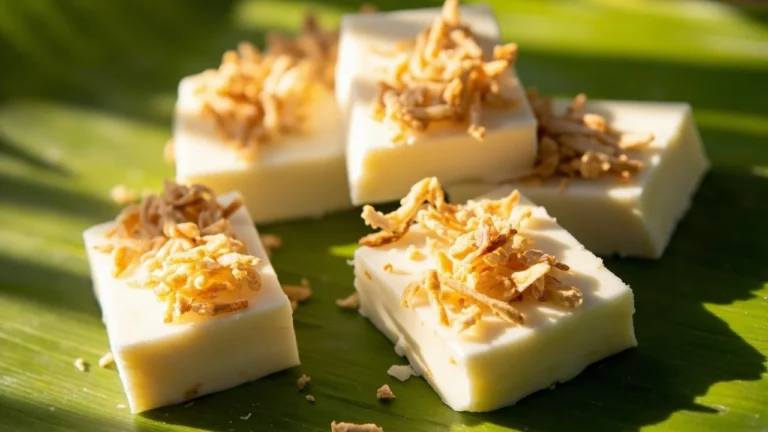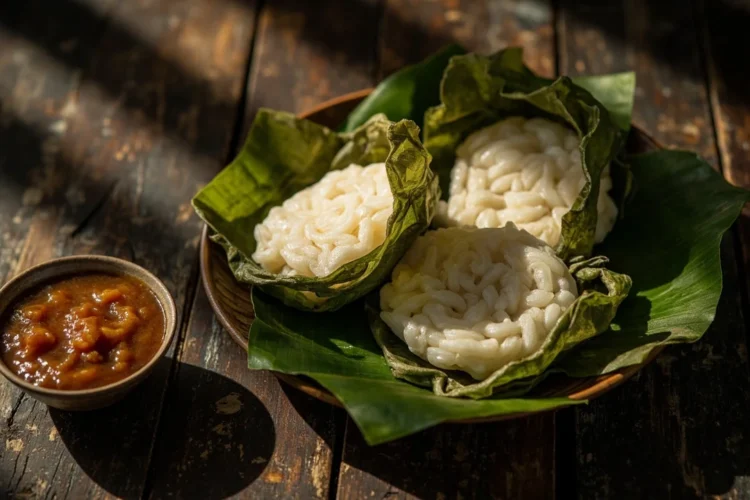
Filipino sticky rice cakes wrapped in banana leaf are a beloved traditional treat, featuring glutinous rice simmered in rich coconut milk until luxuriously creamy. The banana leaf wrapping infuses the rice with a subtle, earthy aroma while keeping each parcel moist during steaming. Served warm with a drizzle of extra coconut sauce or a sprinkle of latik, these sweet little bundles are pure comfort food.
Prep Time20 mins
Cook Time60 mins
Total Time80 mins
Servings6
Yield6 cakes
Nutrition Facts
Per serving (estimated)
- 385 kcalCalories
- 14 gFat
- 11 gSaturated Fat
- 58 gCarbs
- 3 gFiber
- 12 gSugar
- 6 gProtein
- 180 mgSodium
- 210 mgPotassium
- 35 mgCalcium
- 2 mgIron
- 2 mgVitamin C
- 5 mcgVitamin A
Ingredients
For the Sticky Rice
- 2 cups glutinous (sticky) rice, rinsed and drained
- 2 cups coconut milk
- 1/2 cup granulated sugar
- 1/2 teaspoon salt
- 2 pandan leaves, tied into a knot (optional)
- 1 teaspoon vanilla extract
For Wrapping and Finishing
- 6 pieces banana leaf, about 10×10 inches each, wilted over an open flame
- 2 cups grated coconut or shredded coconut, toasted for latik
- 1/4 cup coconut cream, for drizzling
- Pinch of coarse salt, for serving
Directions
- In a heavy-bottomed pot, combine the rinsed glutinous rice, coconut milk, sugar, salt, and pandan leaves if using. Bring to a gentle boil over medium heat, then reduce to low and simmer, stirring frequently, for 20 to 25 minutes until the liquid is mostly absorbed and the rice is tender but still slightly wet.
- Remove from heat, cover, and let the rice rest for 10 minutes so it can finish absorbing steam. Stir in the vanilla extract and fluff gently with a fork; the texture should be thick, sticky, and cohesive enough to hold a shape.
- Prepare the banana leaves by passing each piece briefly over an open flame or hot pan for a few seconds until pliable and glossy. Cut each into a rectangle roughly 10 by 10 inches.
- Spoon about 1/3 cup of the sticky rice onto the center of each banana leaf square. Fold the bottom edge up over the rice, then fold in the sides and roll tightly into a compact log or rectangular packet. Secure the open end by tucking it underneath or by tying with a strip of banana leaf.
- Arrange the wrapped rice cakes seam-side down in a steamer basket. Make sure the water below is boiling but not touching the rice. Steam over rapidly boiling water for 25 to 30 minutes until the rice is fully tender and the banana leaf parcels feel firm and hot to the touch.
- While the rice cakes steam, prepare the latik by toasting grated coconut in a dry skillet over medium heat, stirring constantly for 8 to 10 minutes until golden brown and crisp. Alternatively, simmer 1 cup coconut cream in a small pan until the oil separates and the solids turn golden, about 15 minutes.
- Let the steamed suman rest for 5 minutes before unwrapping. Serve warm in the banana leaf, opened just enough to reveal the sticky rice, and top each portion with a spoonful of latik or toasted coconut, a drizzle of coconut cream, and a tiny pinch of coarse salt for contrast.
Cook’s Notes
- Wilt the banana leaves by passing them over a low flame for just a few seconds; this makes them pliable so they do not crack when folded and releases their natural oils for better aroma.
- Do not skip the resting step after cooking the rice on the stovetop; letting it sit covered allows the grains to absorb residual moisture evenly so the cakes hold their shape when wrapped.
- For an extra aromatic version, replace vanilla with 1/2 teaspoon of pandan extract, or layer a small piece of ripe jackfruit inside each parcel before folding.
- Leftover suman can be reheated by steaming again for 5 to 7 minutes; microwaving tends to make the rice tough rather than soft.
- Serve alongside hot chocolate, salabat (ginger tea), or strong black coffee for a classic merienda snack.
More Philippines Recipes You’ll Love
Craving more flavors from Philippines? Try these traditional recipes: