 (No Ratings Yet)
 Loading...
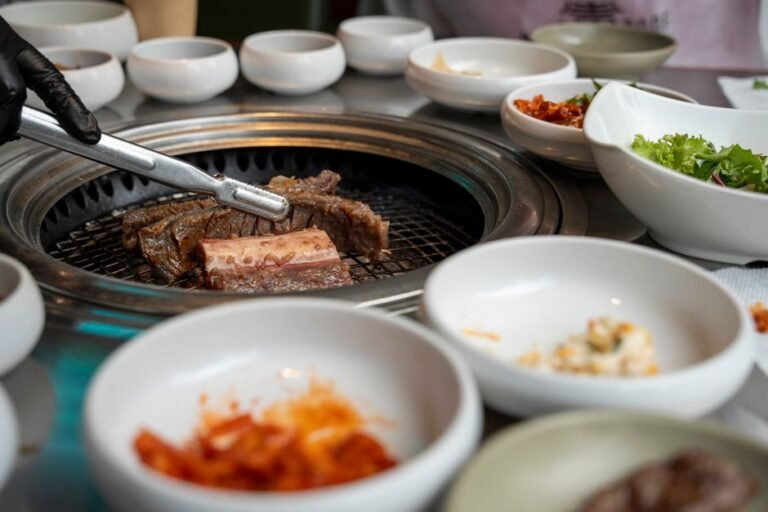
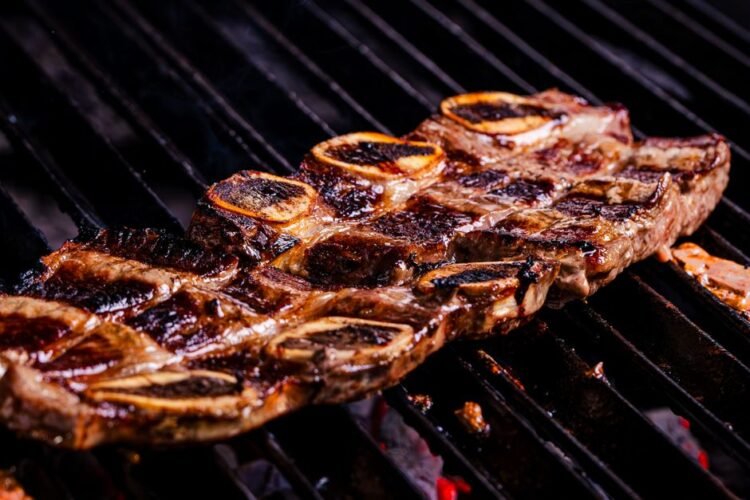
These marinated Korean short ribs are a hallmark of Korean barbecue, featuring paper-thin flanken-cut beef ribs soaked in a sweet-savory soy marinade brightened with grated Asian pear, garlic, and toasted sesame. The fruit enzymes gently tenderize the meat while the sugars create a deeply caramelized crust over screaming-hot coals or a grill pan. Served with crisp lettuce leaves, warm rice, and a bowl of ssamjang for wrapping, this is a hands-on, deeply satisfying meal that defines the Korean BBQ experience.
Prep Time25 mins
Cook Time15 mins
Total Time40 mins
Servings4
Yield4 servings
Nutrition Facts
Per serving (estimated)
- 585 kcalCalories
- 38 gFat
- 15 gSaturated Fat
- 22 gCarbs
- 2 gFiber
- 15 gSugar
- 38 gProtein
- 1240 mgSodium
- 480 mgPotassium
- 65 mgCalcium
- 4 mgIron
- 5 mgVitamin C
- 35 mcgVitamin A
Ingredients
For the marinade
- 1/2 cup soy sauce
- 1/4 cup packed brown sugar
- 1/4 cup rice wine (mirin or sake)
- 2 tablespoons toasted sesame oil
- 1 medium Asian pear, peeled and grated (or 1/2 Fuji apple)
- 1/2 small onion, grated
- 8 cloves garlic, minced
- 1 tablespoon freshly ground black pepper
- 2 green onions, finely chopped
- 1 tablespoon toasted sesame seeds
For the ribs
- 3 lbs beef flanken-cut short ribs (about 1/4-inch thick across the bone)
- 1 tablespoon vegetable oil, for the grill
For serving
- 1 head butter or red leaf lettuce, separated into cups
- 2 cups steamed short-grain white rice
- 1/2 cup ssamjang dipping sauce
- 1/4 cup toasted sesame seeds, for garnish
Directions
- In a large bowl, whisk together the soy sauce, brown sugar, rice wine, sesame oil, grated Asian pear, grated onion, garlic, black pepper, green onions, and sesame seeds until the sugar fully dissolves.
- Place the short ribs in a large resealable plastic bag or a shallow nonreactive dish and pour the marinade over them, turning to coat every piece. Seal and refrigerate for at least 4 hours, preferably overnight, flipping the bag or stirring once halfway through.
- Remove the ribs from the refrigerator 30 minutes before cooking to take the chill off, then pat them dry with paper towels so the marinade can caramelize rather than steam.
- Preheat a gas or charcoal grill to high heat, about 450 to 500°F. Brush the grates with a folded paper towel dipped in vegetable oil to prevent sticking.
- Grill the ribs in batches, laying them flat across the grates, for 2 to 3 minutes per side for medium-rare. The thin cuts cook very quickly, so watch for a deep mahogany color and slight char at the edges.
- Transfer the cooked ribs to a warm platter, tent loosely with foil, and let rest for 3 minutes. Sprinkle generously with toasted sesame seeds.
- Serve immediately on a large platter with the lettuce cups, steamed rice, and ssamjang. To eat, lay a rib on a lettuce leaf, add a spoonful of rice and a dab of ssamjang, then wrap and enjoy in one bite.
Cook’s Notes
- Asian pear contains natural enzymes that tenderize the meat while adding subtle sweetness; do not skip it if you can find one at a Korean or Asian market.
- For best flavor and texture, marinate the ribs overnight (8 to 12 hours) and flip the bag once or twice during that time.
- LA-style flanken cut is essential: ask your butcher to slice across the bones into 1/4-inch-thick strips, which is what allows the marinade to penetrate and the ribs to cook in minutes.
- Cook over very high heat for a short time; overcooking will toughen and dry out these thin cuts. Pull them off the grill the moment they are deeply browned and just cooked through.
- Traditional accompaniments beyond lettuce and rice include sliced raw garlic, fresh green chili peppers (cheong-gochu), and a side of kimchi for a sharp contrast.