 (No Ratings Yet)
 Loading...
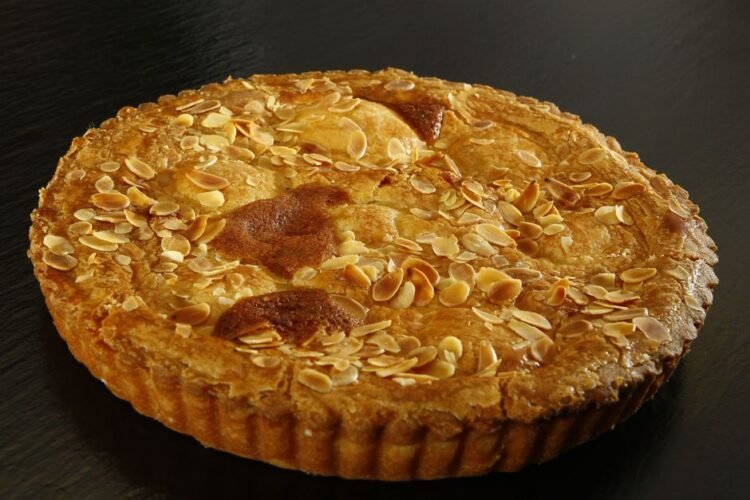
Moroccan Milk Pastilla is a beloved celebratory dessert made by baking a silky, orange-blossom-scented milk custard between layers of paper-thin warqa pastry until the top turns golden and crisp. Served warm or at room temperature with a shower of cinnamon and toasted almonds, it is a hallmark of family gatherings, weddings, and Ramadan iftar tables across the country.
Prep Time20 mins
Cook Time40 mins
Total Time60 mins
Servings6
Yield6 servings
Nutrition Facts
Per serving (estimated)
- 385 kcalCalories
- 16 gFat
- 8 gSaturated Fat
- 50 gCarbs
- 1 gFiber
- 32 gSugar
- 11 gProtein
- 190 mgSodium
- 310 mgPotassium
- 240 mgCalcium
- 1.4 mgIron
- 1 mgVitamin C
- 240 mcgVitamin A
Ingredients
For the milk custard
- 4 cups (960 ml) whole milk
- 1/2 cup (100 g) granulated sugar
- 3 tablespoons cornstarch
- 2 large egg yolks
- 1 vanilla bean, split and scraped (or 1 1/2 tsp vanilla extract)
- 2 tablespoons orange blossom water
- 1 teaspoon rose water (optional)
- Pinch of fine salt
For assembling the pastilla
- 8 sheets warqa pastry (or phyllo dough), thawed if frozen
- 4 tablespoons (55 g) unsalted butter, melted
- 1 tablespoon vegetable oil
- 1 tablespoon powdered sugar for dusting
For the topping
- 2 tablespoons toasted sliced almonds
- 1 teaspoon ground cinnamon
- 1 tablespoon powdered sugar
Directions
- Preheat the oven to 375°F (190°C) and lightly butter a 9-inch round baking dish or springform pan.
- In a heavy saucepan, whisk together the milk, sugar, cornstarch, egg yolks, vanilla bean seeds, and salt until completely smooth with no lumps.
- Place the pan over medium heat and stir constantly with a whisk for 8 to 10 minutes, until the mixture thickens to a creamy pudding-like consistency that coats the back of a spoon.
- Remove from the heat and stir in the orange blossom water and rose water if using. Transfer the custard to a bowl, press plastic wrap directly onto the surface to prevent a skin, and let cool to room temperature, about 15 minutes.
- Brush the bottom and sides of the baking dish with melted butter. Layer 5 sheets of warqa into the dish, brushing each sheet lightly with butter and allowing the edges to drape over the sides of the pan.
- Pour the cooled milk custard into the pastry-lined dish and smooth the top evenly.
- Fold the overhanging warqa edges inward over the custard, then layer the remaining 3 sheets of warqa on top, brushing each with butter and tucking the edges down neatly to seal.
- Drizzle the top with any remaining butter and bake on the middle rack for 25 to 30 minutes, until the top pastry is deep golden brown and crisp.
- Let the pastilla cool for at least 20 minutes so the custard sets, then dust generously with powdered sugar, sprinkle with cinnamon, and scatter the toasted almonds over the top before slicing into wedges.
Cook’s Notes
- If you cannot find warqa, use phyllo dough and increase the layering to about 10 sheets for a comparable flaky texture.
- Whole-fat milk is essential for a rich, creamy custard; lower-fat milk will yield a thinner, less luxurious filling.
- Do not skip the plastic wrap on the custard while cooling, or it will form a rubbery skin that will not blend smoothly into the baked filling.
- Serve the pastilla slightly warm for the silkiest custard texture, or chill it for a firmer, sliceable dessert.
- For extra indulgence, sprinkle a thin layer of toasted ground almonds over the custard before sealing with the top pastry sheets.