 (No Ratings Yet)
 Loading...
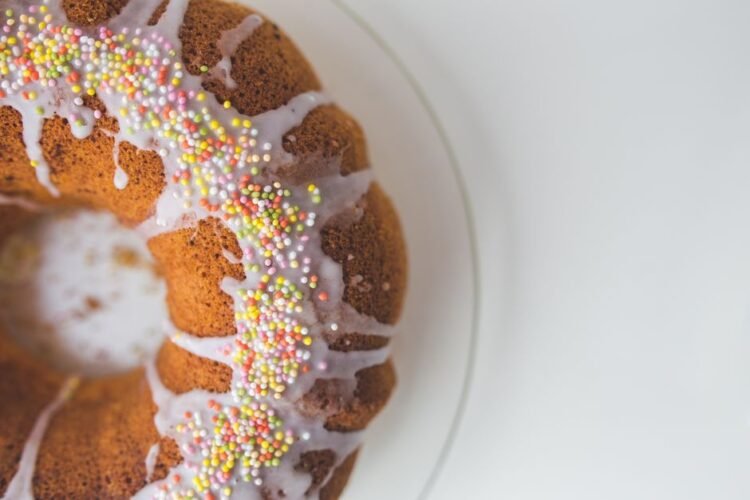
A traditional Polish Easter babka is a tall, tender yeasted cake enriched with butter, eggs, and citrus zest, then crowned with a sweet lemon glaze. This elegant loaf has a soft, pillowy crumb and is a beloved centerpiece on Polish Easter tables. Its tall fluted shape bakes up beautifully golden and keeps well for several days.
Prep Time40 mins
Cook Time50 mins
Total Time90 mins
Servings12
Yield1 babka (12 slices)
Nutrition Facts
Per serving (estimated)
- 385 kcalCalories
- 14 gFat
- 8 gSaturated Fat
- 56 gCarbs
- 2 gFiber
- 25 gSugar
- 7 gProtein
- 115 mgSodium
- 155 mgPotassium
- 45 mgCalcium
- 2 mgIron
- 5 mgVitamin C
- 420 mcgVitamin A
Ingredients
For the sponge
- 1/2 cup warm whole milk (110°F)
- 2 1/4 teaspoons active dry yeast (1 packet)
- 1 tablespoon granulated sugar
- 1/3 cup all-purpose flour
For the dough
- 3 1/2 cups all-purpose flour, plus more for dusting
- 1/2 cup granulated sugar
- 1/2 teaspoon fine sea salt
- 1 tablespoon lemon zest (from 2 lemons)
- 1 tablespoon orange zest
- 4 large eggs, room temperature
- 1/2 teaspoon pure vanilla extract
- 3/4 cup unsalted butter, softened and cubed
- 1/2 cup golden raisins
- 2 tablespoons dark rum or orange juice
For the lemon glaze
- 1 1/2 cups powdered sugar
- 2 tablespoons fresh lemon juice
- 1 tablespoon whole milk
- 1/2 teaspoon lemon zest
Directions
- In a small bowl, combine the warm milk, yeast, 1 tablespoon sugar, and 1/3 cup flour. Stir gently, cover, and let stand for 10 minutes until foamy and bubbly.
- In a stand mixer fitted with the dough hook, combine the remaining flour, sugar, salt, lemon zest, and orange zest. Add the eggs, vanilla, and the activated sponge, then mix on low until a shaggy dough forms.
- With the mixer running, add the softened butter a few cubes at a time, allowing each to incorporate before adding more. Knead on medium for 8 to 10 minutes until the dough is smooth, elastic, and pulls away from the sides of the bowl.
- Plump the raisins in the rum or orange juice for 10 minutes, then drain and gently knead them into the dough. Cover the bowl with a clean towel and let rise in a warm place for 1 1/2 to 2 hours, until doubled in size.
- Grease a 10-cup fluted babka or Bundt pan thoroughly with butter and dust with flour. Punch down the dough, shape into a rope, and coil it into the prepared pan. Cover and let rise again for 45 to 60 minutes until puffy and just cresting the pan.
- Preheat the oven to 350°F. Bake the babka on the center rack for 45 to 50 minutes, until deeply golden and a skewer inserted in the center comes out clean. If the top browns too quickly, tent loosely with foil after 30 minutes.
- Cool the cake in the pan for 15 minutes, then carefully invert onto a wire rack to cool completely before glazing.
- Whisk together the powdered sugar, lemon juice, milk, and zest until smooth and pourable. Drizzle generously over the cooled babka, letting it drip down the fluted sides, and allow the glaze to set before slicing.
Cook’s Notes
- For an even taller, more dramatic babka, divide the dough in half and bake two smaller loaves in 6-cup pans, adjusting bake time to about 35 minutes.
- If you do not have a Bundt pan, bake in a greased and parchment-lined 9×5-inch loaf pan; the cake will be less ornate but equally delicious.
- Soaking the raisins in rum adds wonderful depth, but for an alcohol-free version use warm orange juice or apple juice.
- The dough is enriched and sticky at first; resist adding extra flour beyond what is called for, as a sticky dough produces the lightest crumb.
- Babka keeps beautifully wrapped at room temperature for up to 4 days, and the flavor actually deepens on day two.