 (No Ratings Yet)
 Loading...
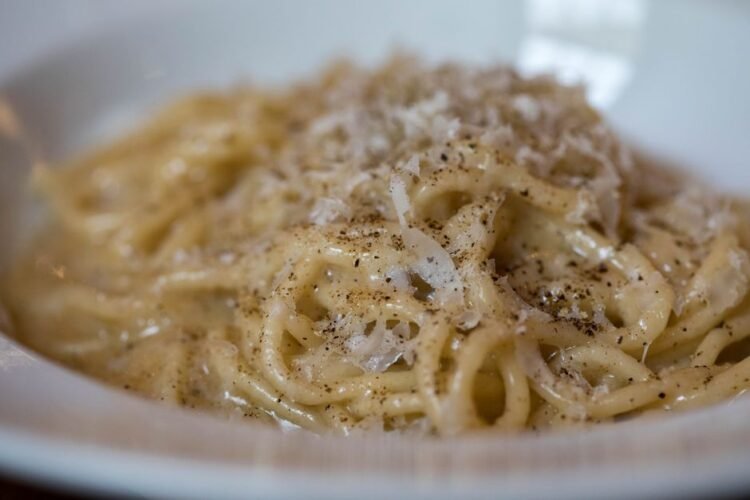
A Roman classic built on just three ingredients — good pasta, sharp Pecorino Romano, and plenty of cracked black pepper. The trick is emulsifying the cheese with starchy pasta water to build a silky, clingy sauce without a drop of cream.
Prep Time5 mins
Cook Time15 mins
Total Time20 mins
Servings4
Yield4 servings
Nutrition Facts
Per serving (estimated)
- 520 kcalCalories
- 22 gFat
- 12 gSaturated Fat
- 55 gCarbs
- 3 gFiber
- 2 gSugar
- 22 gProtein
- 780 mgSodium
- 200 mgPotassium
- 380 mgCalcium
- 3 mgIron
- 0 mgVitamin C
- 200 mcgVitamin A
Ingredients
For the pasta
- 1 lb (450 g) spaghetti or tonnarelli
- 2 tbsp kosher salt, for the cooking water
For the sauce
- 1 1/2 cups (150 g) Pecorino Romano, finely grated, plus more for serving
- 2 tbsp whole black peppercorns, coarsely cracked (or 2 tsp coarsely ground black pepper)
- 2 tbsp unsalted butter
- 1 tbsp extra-virgin olive oil
Directions
- Bring 4 quarts of water to a rolling boil in a large pot, add the salt, and stir in the pasta. Cook until just shy of al dente, about 1 minute less than the package directions.
- Meanwhile, warm the olive oil and butter in a wide skillet over medium-low heat. Add the cracked pepper and toast gently for 1 to 2 minutes, until fragrant and just beginning to bubble — do not let it burn.
- Reserve about 1 1/2 cups of the starchy pasta water with a mug or ladle before draining the pasta.
- In a medium bowl, stir the grated Pecorino with 4 tablespoons of the warm pasta water, mashing with a fork until a thick, smooth paste forms. Add another tablespoon of water if needed; it should resemble warm cream cheese.
- Add the drained pasta to the skillet with the toasted pepper, increase the heat to medium, and toss for 30 seconds so the pasta absorbs the buttery pepper oil. Working off the heat, add the cheese paste a few spoonfuls at a time along with splashes of pasta water, tossing vigorously between additions to build a glossy emulsion.
- Keep tossing and adding small amounts of pasta water as needed until the sauce coats every strand and looks creamy, not clumpy. If it tightens up, a splash more warm water will loosen it.
- Divide between warm bowls, top with extra grated Pecorino and a generous crack of pepper, and serve immediately.
Cook’s Notes
- Always temper the cheese with warm (not boiling) pasta water before adding it to the pan — dumping cold cheese into screaming-hot pasta is what causes clumping.
- Toast the pepper in butter to bloom its oils; this is what gives Cacio e Pepe its signature aromatic heat.
- Use finely grated Pecorino (not pre-shredded), and let it sit at room temperature for 10 minutes so it melts smoothly.
- Toss the pasta vigorously and persistently off the heat — the mechanical action is what creates the emulsion, not heat.
- If the sauce breaks or seizes, whisk a fresh ladle of hot pasta water in a small bowl, then slowly re-incorporate the pasta into it off the heat.