 (No Ratings Yet)
 Loading...
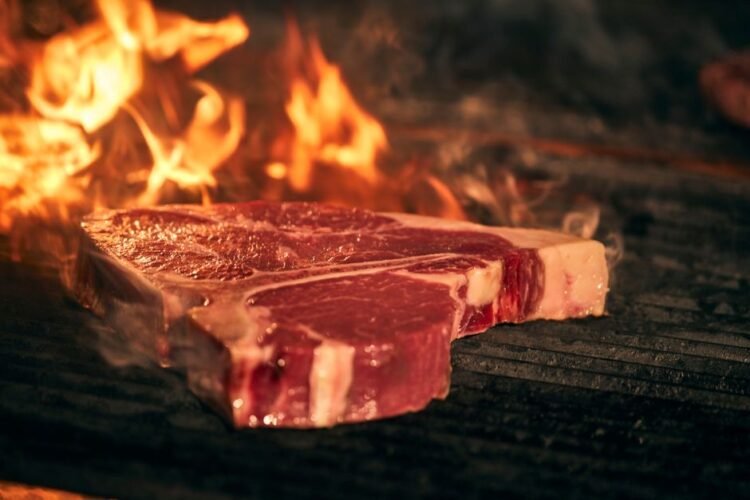
A hallmark of Tuscan grilling, this iconic Florentine steak is a thick-cut T-bone (or porterhouse) simply seasoned with salt, pepper, and olive oil, then seared over blazing wood or charcoal until a deep crust forms while the interior stays rosy and juicy. Served with nothing more than lemon wedges and a finishing drizzle of green-gold extra-virgin olive oil, it celebrates the pure, beefy flavor of premium dry-aged beef.
Prep Time10 mins
Cook Time20 mins
Total Time30 mins
Servings4
Yield4 servings
Nutrition Facts
Per serving (estimated)
- 580 kcalCalories
- 42 gFat
- 14 gSaturated Fat
- 1 gCarbs
- 0 gFiber
- 0 gSugar
- 48 gProtein
- 640 mgSodium
- 720 mgPotassium
- 28 mgCalcium
- 5 mgIron
- 6 mgVitamin C
- 15 mcgVitamin A
Ingredients
For the steak
- 1 bone-in T-bone or porterhouse steak (2.5-3 lb, cut 2 to 2.5 inches thick)
- 3 tbsp extra-virgin olive oil, divided
- 2 tsp flaky sea salt (such as Maldon)
- 1 tsp freshly cracked black pepper
- 2 sprigs fresh rosemary (optional)
- 2 garlic cloves, lightly smashed (optional)
For serving
- 1 lemon, cut into 4 wedges
- Extra-virgin olive oil, for finishing
- Flaky sea salt, to taste
Directions
- Remove the steak from the refrigerator 1 to 2 hours before cooking so it comes to room temperature; pat it completely dry with paper towels (surface dryness is key to a deep crust).
- Rub the steak all over with 2 tablespoons of the olive oil and season very generously on both faces and the edges with the flaky salt and cracked pepper, pressing the seasoning into the meat.
- Prepare a very hot fire: let charcoal or wood coals burn down until covered in white ash, or preheat a gas grill to its highest setting (about 550°F). You want intense radiant heat, not flame.
- Place the steak directly over the hottest part of the grill and sear, turning only once, for 4-5 minutes per side for rare (internal 120-125°F) or 5-6 minutes per side for medium-rare (130°F). Position the bone toward the cooler side if flare-ups occur.
- During the final minute of cooking, add the rosemary and garlic to the grill and baste the steak with the remaining 1 tablespoon of olive oil, picking up the herb aromatics.
- Transfer the steak to a wooden board or warm platter, loosely tent with foil, and let rest 8-10 minutes to let the juices redistribute through the meat.
- Carve the strip and tenderloin sections off the bone in one piece each, then slice across the grain into 1/2-inch-thick pieces; arrange the slices around (or on top of) the bone on a warmed serving platter.
- Finish with a generous drizzle of raw extra-virgin olive oil, a final pinch of flaky salt, and serve immediately with lemon wedges for squeezing over the meat.
Cook’s Notes
- Source matters: seek out a dry-aged, well-marbled T-bone or porterhouse at least 2 inches thick (USDA Prime or Italian Chianina-style). With only a few ingredients, beef quality makes the entire dish.
- Do not skip the 1-2 hour room-temperature rest; a cold steak will not sear properly and will cook unevenly from edge to center.
- Authentic Florentine tradition calls for rare to medium-rare only — target 120-130°F internal. Cooking beyond that dries out the meat and is generally frowned upon in Tuscany.
- Let the steak rest 8-10 minutes before carving; cutting too soon causes the juices to spill out onto the board instead of staying in the meat.
- Classic accompaniments include cannellini beans simmered with sage and tomato (fagioli all'uccelletto), grilled Tuscan bread rubbed with raw garlic, or a simple bitter green salad with a sharp vinaigrette to cut the richness.