 (No Ratings Yet)
 Loading...
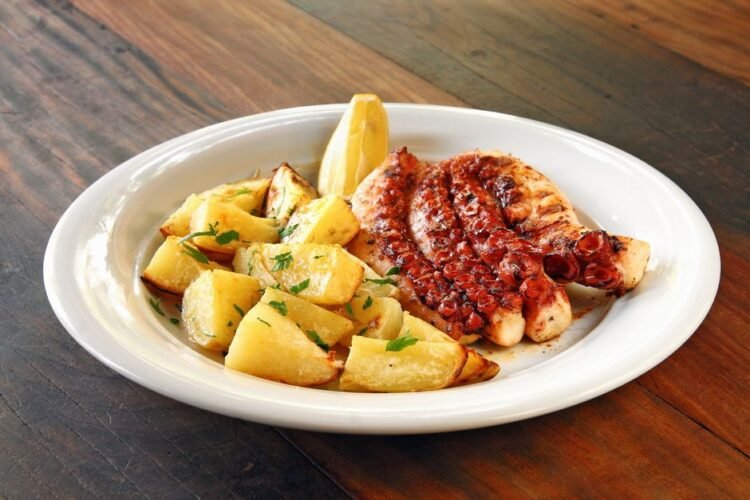
This classic Greek meze transforms humble octopus into a smoky, tender delight by first simmering it until silky, then finishing over high heat for a beautiful char. Bright lemon, good olive oil, and oregano let the sweet flavor of the sea shine through without competing with it.
Prep Time15 mins
Cook Time60 mins
Total Time75 mins
Servings4
Yield4 servings
Nutrition Facts
Per serving (estimated)
- 245 kcalCalories
- 14 gFat
- 2.5 gSaturated Fat
- 4 gCarbs
- 1 gFiber
- 1 gSugar
- 28 gProtein
- 580 mgSodium
- 720 mgPotassium
- 95 mgCalcium
- 6 mgIron
- 15 mgVitamin C
- 45 mcgVitamin A
Ingredients
For the Octopus
- 1 whole octopus (about 1.8 kg / 4 lb), cleaned, beak and ink sac removed
- 2 litres water, to cover
- 1 bay leaf
- 1 clean wine cork (optional, traditional tenderizer)
- 1 tbsp sea salt
For the Lemon-Oregano Dressing
- 1/3 cup extra virgin olive oil, plus more for brushing
- 3 tbsp fresh lemon juice (from 1 to 2 lemons)
- 2 garlic cloves, finely grated
- 2 tsp dried Greek oregano
- 1 tbsp red wine vinegar
- 1/2 tsp freshly ground black pepper
- 2 tbsp fresh flat-leaf parsley, finely chopped
- Lemon wedges, to serve
Directions
- Bring a large pot of water to a boil with the bay leaf, wine cork, and sea salt. Dip the whole octopus in and out of the simmering water three times to curl the tentacles, then submerge it fully.
- Reduce the heat so the water stays at a gentle, barely-there simmer and cook uncovered for 40 to 50 minutes, until a paring knife slides easily into the thickest part of a tentacle. Avoid a rolling boil or the flesh will turn rubbery.
- While the octopus cooks, whisk together the olive oil, lemon juice, grated garlic, oregano, red wine vinegar, and black pepper in a small bowl. Stir in the parsley just before serving.
- Lift the octopus from the cooking liquid and let it cool on a tray until comfortable to handle, about 10 minutes. Pat very dry with paper towels; surface moisture prevents good char.
- Cut the tentacles from the body where they naturally divide, and slice the body crosswise into about 2 cm (3/4 inch) rounds. Lightly brush all pieces with olive oil.
- Heat a charcoal or gas grill to high, about 230°C / 450°F. Grill the octopus pieces for 2 to 3 minutes per side, pressing lightly with tongs, until deep char marks form and the edges crisp.
- Transfer the grilled octopus to a platter and spoon about two-thirds of the dressing over the warm pieces, tossing gently to coat. Let rest 2 minutes so the flavors absorb.
- Drizzle the remaining dressing over the top and serve immediately with lemon wedges and an extra pinch of oregano.
Cook’s Notes
- The wine cork trick: Greeks traditionally drop a clean cork into the simmering water because the natural tannins help tenderize the flesh for a silkier bite.
- For maximum tenderness, let the cooked octopus rest in its cooking liquid off the heat for 15 to 20 minutes before draining; carryover cooking finishes it gently.
- Always pat the octopus completely dry before grilling, otherwise it will steam rather than char and may stick to the grates.
- Cooked octopus freezes beautifully; portion it in its cooking liquid for up to 2 months and grill straight from thawed for a quick weeknight meze.
- No grill available? A screaming-hot cast-iron grill pan delivers the same smoky char indoors.